Definition and Meaning of Kabin Nama
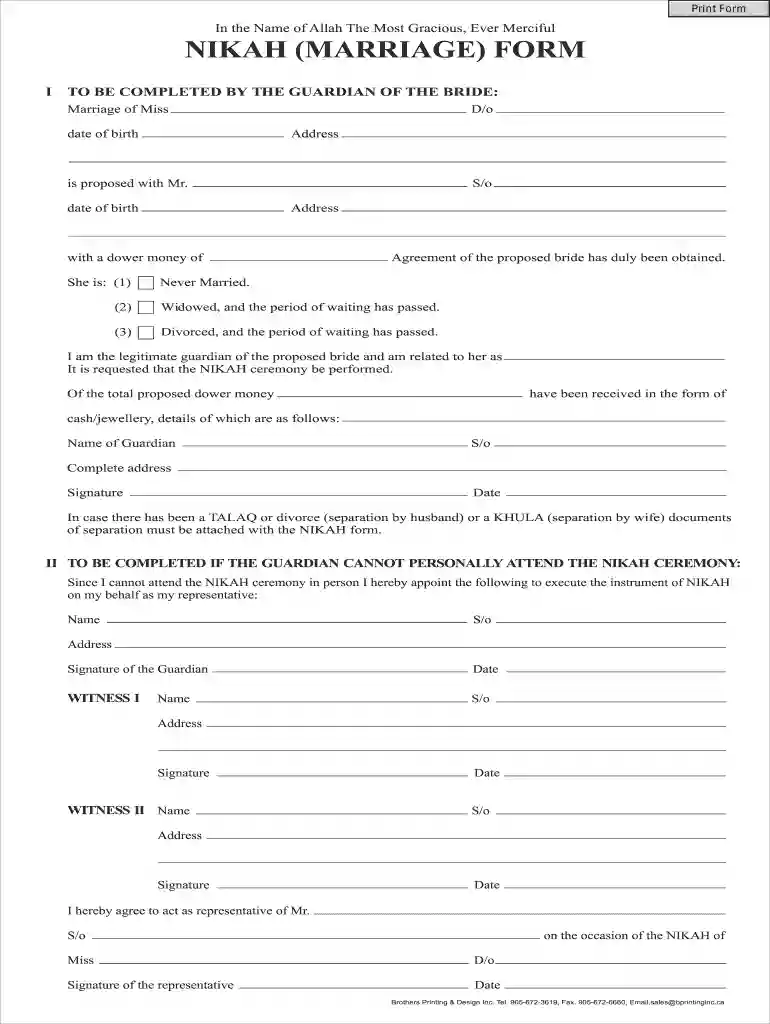
Kabin nama refers to the marriage contract form used in Islamic law, detailing essential information required during the marriage ceremony. This document is significant for both parties as it establishes a formal agreement that outlines the rights and responsibilities of the bride and groom. It plays a crucial role in legitimizing the marriage within Islamic jurisdiction.
The kabin nama includes several key elements:
- Personal Information: Includes the full names, ages, and nationalities of the bride and groom.
- Guardian's Details: Information about the guardian of the bride is recorded, including their name and relationship to the bride.
- Witnesses: The names and signatures of two witnesses are required for validation of the form.
- Mahr (Dower): Specifies the agreed-upon dower money that the groom will provide to the bride, protecting her financial rights.
The kabin nama serves as a vital record, ensuring that all parties involved are in agreement on the terms of the marriage.
How to Obtain a Kabin Nama
Acquiring a kabin nama is a relatively straightforward process, typically encompassing the following steps:
- Visit the Local Authority: The couple needs to go to their respective local authorities or the relevant mosque where the marriage will take place.
- Provide Necessary Documents: Present identification documents such as a birth certificate or national ID for both parties. If either party has been previously married, proof of divorce or widowhood must also be provided.
- Complete the Form: Fill out the kabin nama form accurately, including all mandatory information regarding both individuals and their guardians.
- Witness Verification: Two witnesses must be present to sign the document, affirming the marriage agreement.
It is advisable to secure multiple copies of the kabin nama after completion, as they may be needed for legal purposes in the future.
Steps to Complete the Kabin Nama
The completion of the kabin nama is critical to ensure all aspects of the marriage are legally recognized. Here are the steps typically involved:
- Gather Information: Before filling out the form, collect all required details, including personal information and the specifics regarding the dower.
- Fill Out the Form: Clearly write down each detail, ensuring there are no errors. It is crucial that all information matches the official IDs or documents.
- Signature and Date: Both parties must sign the kabin nama, along with their guardians and witnesses. Date the form to validate the agreement.
- Official Registration: Submit the completed kabin nama to the local marriage registrar for official validation. This step is critical for the marriage to be legally acknowledged.
Following these steps ensures that both parties enter the marriage with a clear understanding of their commitments and legal standing.
Important Terms Related to Kabin Nama
Understanding specific terms associated with kabin nama is essential for clarity and compliance. Key terms include:
- Mahr (Dower): The financial compensation agreed upon by the groom, paid to the bride as part of the marriage contract.
- Talaq: Refers to the Islamic procedure of divorce, which outlines how the kabin nama can be dissolved if necessary.
- Wilayah: This term addresses the authority of the guardian (wali) in the marriage process, particularly regarding the bride.
- Iqama: The residency requirement that may affect eligibility and validity of the kabin nama, especially for expatriates.
- Shahada: The declaration of faith that may be necessary for validation in some communities, demonstrating adherence to Islamic principles.
An understanding of these terms will aid in effectively navigating the legalities of the kabin nama and its implications for the marriage.
Examples of Using the Kabin Nama
The kabin nama is utilized in various scenarios that highlight its importance in the marriage process. Here are practical examples:
- Religious Ceremonies: During an Islamic wedding ceremony, the kabin nama is presented to the officiant as proof of the marriage contract before the couple exchanges vows.
- Property Ownership: In instances where property or significant assets are involved, the kabin nama serves as a legal document that can be referenced in ownership disputes or financial agreements.
- Legal Proceedings: If either party seeks a divorce, the kabin nama may be required as evidence in court to ensure that the terms of the marriage, including matters like mahr, are respected.
- Immigration Issues: In cases where one spouse is applying for a visa or immigration status based on marriage, the kabin nama may be necessary to prove the legitimacy of the marriage to authorities.
By understanding how to effectively use a kabin nama in these contexts, couples can better navigate the complexities of legal and religious expectations.
Creating and Managing the Kabin Nama Form Online
In recent years, digital platforms have emerged that enable couples to create and manage their kabin nama forms online. This process typically involves:
- Online Templates: Many websites offer downloadable kabin nama templates that meet local legal requirements. Couples can fill out these forms digitally, reducing paper clutter and storage concerns.
- Verification Processes: Once completed, couples can use online services to submit the kabin nama for verification by local authorities, streamlining the entire process.
- Record Keeping: Digital versions of the kabin nama can be safely stored online with backup options, ensuring easy access for future reference.
Utilizing online tools effectively enhances efficiency and accessibility, enabling those preparing for marriage to manage their documents with ease.