
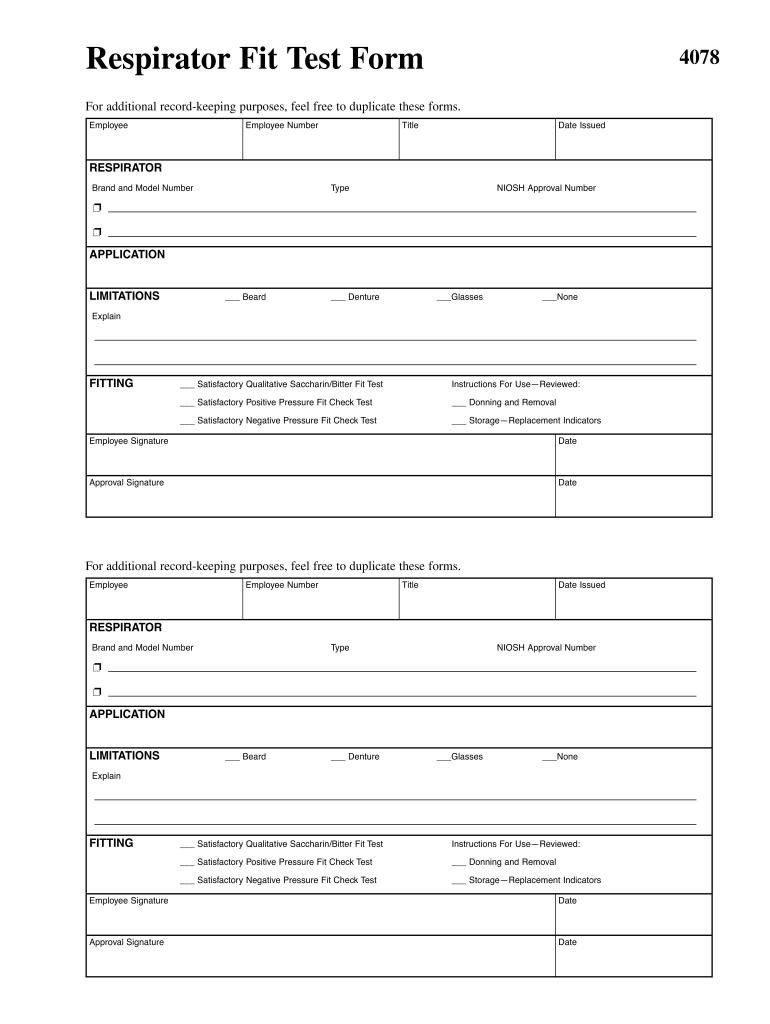







Overview of the Respirator Fit Test Form
The respirator fit test form PDF is a crucial document utilized in occupational health and safety settings to ensure the proper fit and effectiveness of respirators used by employees. This form is vital in documenting the fit testing process, adhering to safety regulations, and providing guidance for respirator use.
Key Components of the Respirator Fit Test Form
-
Employee Information: This section captures relevant details about the employee undergoing the fit test, including their name, job title, and department. Accurate information is essential for tracking individual compliance and performance.
-
Respirator Specifications: The form includes specifics about the type of respirator being tested, such as make, model, and serial number. This ensures clarity regarding which equipment was assessed during the fit test.
-
Fit Testing Methods: Different methods can be utilized for fit testing, including qualitative and quantitative tests. The form should indicate the method used, as this affects the reliability of the results.
Documenting Application Limitations and Results
-
Application Limitations: Part of the fit test form requires documenting the limitations of each respirator type. This ensures that employees understand the conditions under which the respirator provides adequate protection, including situations where its effectiveness may be compromised.
-
Test Results: This section includes numerical scores or pass/fail indicators based on the fit testing conducted. It often requires signatures from the individual administering the test and the employee to confirm understanding and acknowledgment of the results.
Signature and Compliance Section
-
Approval Signatures: The form must be signed by both the tester and the employee. This signifies that the employee has been made aware of the respirator's effectiveness and any limitations identified during the testing process.
-
Compliance with OSHA Standards: The respirator fit test form PDF should align with OSHA guidelines to ensure that companies are meeting safety regulations. This compliance is critical for legal protection and for maintaining a safe work environment.
Importance of Maintaining Records
-
Record Keeping: Employers should retain completed respirator fit test forms for record-keeping purposes. Proper documentation is essential for audits, inspections, and ensuring ongoing compliance with safety regulations.
-
Review and Update Procedures: It's advisable to regularly review and update the fit testing procedures and forms to adapt to any changes in regulations or workplace environments. This proactive approach helps ensure consistent safety practices.
Variants and Accessibility of the Form
-
Different Versions of the Form: Various organizations may have developed their versions of the respirator fit test form. It's important to ensure that the version being used is the most current and compliant with local regulations.
-
Accessibility: Having a printable respirator fit test form allows for ease of access and usage. Employers should ensure that these forms are readily available in both digital (PDF) and physical formats for all employees.
Practical Examples of Usage
-
Workplace Scenarios: Consider a manufacturing facility where employees are required to wear N95 respirators due to hazardous dust. Each employee must complete the respirator fit test form PDF to ensure their mask fits correctly and provides appropriate protection.
-
Emergency Response Teams: Firefighters or emergency response teams may regularly complete fit tests for their respirators to confirm readiness for various conditions. The documentation helps maintain accountability and readiness standards.
Summary of Compliance and Regulatory Guidance
-
OSHA Fit Test Requirements: The Occupational Safety and Health Administration (OSHA) mandates that fit testing must be conducted annually and whenever a change in the respirator type occurs or change in the wearer’s physical condition. The form is essential for documenting these requirements.
-
Legal Implications: Non-compliance with fit testing regulations can result in severe penalties. Maintaining accurate records using the respirator fit test form PDF can protect businesses from potential liabilities and enhance workplace safety.
Final Considerations for Using the Respirator Fit Test Form PDF
Employers should familiarize themselves with the detailed components of the respirator fit test form and integrate it into their safety protocols. Continuous education regarding compliance and the proper use of personal protective equipment—including regular fit testing—will contribute significantly to the overall safety and health of all employees.




