




What a promesse d’embauche means
A promesse d’embauche is a written commitment from an employer that sets out the essential terms of a future hire. In practice, it is often used to confirm that the employer intends to bring a candidate on board and to outline the most important details before the person starts work. In a U.S. context, the closest everyday equivalent is a written job offer letter, although the legal effect can vary depending on the wording and the surrounding facts.
The term is most common in French employment law, where the distinction between a simple offer and a binding promise matters a great deal. That distinction is less formal in the United States, but the same ideas still apply. A document that clearly states the position, compensation, start date, and conditions can create expectations for both sides, and those expectations may matter if the employer later changes course.
A promesse d’embauche usually answers a few basic questions:
- Who is hiring.
- Who is being hired.
- What role the person will perform.
- What compensation and benefits apply.
- When work is expected to begin.
- Whether any conditions must be satisfied before the employment becomes final.
The document can be short or detailed. A brief version may simply confirm the title, salary, and start date. A more complete version may also cover work location, probationary period, exempt or nonexempt status, confidentiality obligations, and whether the offer is contingent on a background check, reference verification, or proof of work authorization.
Examples help clarify the purpose:
- A software company sends a written offer stating that a developer will start on a specific Monday at a stated annual salary.
- A healthcare employer confirms a nurse’s hourly rate, shift schedule, and onboarding requirements.
- A startup sends a letter indicating that the role is reserved, but final employment depends on board approval or completion of visa paperwork.
When the wording is clear, the document helps reduce misunderstandings. It also gives both parties a shared reference point if questions come up later about pay, timing, or the scope of the role.
Legal weight and enforceability
The legal effect of a promesse d’embauche depends on how it is written and how it is used. In some situations, it functions like a binding commitment to hire. In others, it is only a preliminary offer that can still be withdrawn. The exact result depends on whether the document contains enough specific terms to show a real agreement and whether any conditions remain unresolved.
In the United States, employment is often at-will unless a contract says otherwise. That means an employer can usually end employment for lawful reasons, and an employee can usually leave at any time. However, a written offer letter may still matter if it promises compensation, defines a start date, or includes terms that the employer later fails to honor. Even when a document is not a full employment contract, it can still create obligations in certain circumstances.
Common legal issues include:
- Whether the offer was definite or only preliminary.
- Whether the employer reserved the right to revoke it.
- Whether the candidate accepted the offer.
- Whether the candidate relied on the promise, such as by resigning from another job or relocating.
- Whether the terms conflict with at-will language or a separate agreement.
A more definite document usually contains the role, pay, start date, and any contingencies. For example, if an employer writes that a candidate is hired as a senior accountant at a specific salary starting on July 1, and the candidate signs the letter, the agreement may be stronger than a vague email saying, “We hope to move forward soon.”
A weaker document often uses uncertain language, such as:
- “We intend to offer.”
- “We expect to employ.”
- “Subject to approval.”
- “Pending final review.”
Those phrases can preserve flexibility, but they may also create confusion if the candidate interprets them as a firm commitment.
The practical takeaway is that precision matters. A well-drafted promesse d’embauche reduces the risk of disputes, while an unclear one can lead to disagreement over whether a true offer existed at all.
Essential terms to include
A useful promesse d’embauche should contain the terms that define the job clearly enough for both sides to understand what is being agreed. The more complete the document is, the easier it is to compare expectations before the first day of work.
The most common terms include:
- Employer name and contact information.
- Candidate name.
- Job title.
- Department or team.
- Start date.
- Work location or remote-work arrangement.
- Pay structure, such as salary, hourly rate, or commission.
- Payment schedule, such as biweekly or monthly.
- Exempt or nonexempt status, when relevant.
- Benefits eligibility.
- Reporting manager or supervisor.
- Contingencies and conditions.
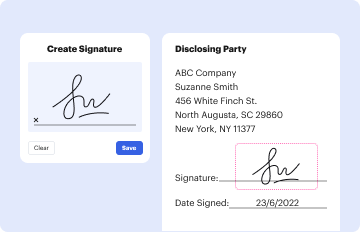
- Signature lines for both parties.
Compensation deserves particular care. A salary should be stated with enough detail to avoid confusion, such as annual salary, hourly rate, or commission formula. If bonuses, overtime, or equity are part of the package, the document should say whether those items are guaranteed, discretionary, or subject to a separate plan.
Work arrangement is another important area. A letter may say:
- In-office full time.
- Hybrid schedule.
- Fully remote.
- Travel required.
- Primary work site in another state.
This matters because location can affect tax withholding, wage law compliance, benefits, and state labor rules. A remote worker in one state may be subject to a different legal regime than an employee working in the employer’s headquarters state.
Other helpful terms include:
- A probationary or introductory period, where allowed.
- Background check requirements.
- Drug screening, if applicable and lawful.
- Proof of authorization to work in the United States.
- Confidentiality and intellectual property obligations.
- Whether the offer replaces prior oral statements.
A well-drafted document also avoids contradictions. For example, saying “full-time permanent position” and “temporary assignment ending in 3 months” creates uncertainty. Clear language helps the parties understand whether the role is permanent, temporary, seasonal, or project-based.
How to complete the document
Completing a promesse d’embauche usually involves entering the employer’s details, the job details, and the conditions of the offer in a consistent and readable format. The process is not just about filling in blanks. It also requires checking that the terms match the actual hiring decision and any internal approvals.
A practical completion process often looks like this:
- Confirm the position and compensation.
- Enter the employer and candidate information.
- State the start date and work arrangement.
- Add any contingencies or required documents.
- Review the language for clarity and legal consistency.
- Obtain the necessary signatures or acknowledgments.
- Store the final version in a secure format.
The employer name should match the legal entity that will actually hire the worker. That distinction matters when a parent company, subsidiary, or affiliated business is involved. If the wrong entity is listed, payroll and tax reporting can become more complicated later.
The job description should be specific enough to identify the role but not so broad that it creates uncertainty. For example:
- “Marketing coordinator, social media and content support” is clearer than “Marketing staff.”
- “Warehouse associate, second shift” is clearer than “Operations employee.”
- “Customer support specialist, English and Spanish” is clearer than “Support representative.”
Dates should be entered carefully. The start date should reflect the first day of employment, not the date the letter is signed. If there is an onboarding period before work begins, that can be stated separately.
If the offer is contingent, the condition should be written plainly. Examples include:
- “This offer is contingent upon successful completion of a background check.”
- “Employment is contingent upon verification of eligibility to work in the United States.”
- “This role is subject to final budget approval.”
The final review should focus on consistency. A common issue is using one salary figure in the body of the letter and a different figure in an attached appendix or email. Another common issue is describing the role as exempt while also promising overtime pay. Those conflicts should be resolved before the document is finalized.
Common legal differences by state
State law can affect how an employment offer is interpreted, even when the underlying document is short. The United States does not apply one single statewide rule set for every employment issue, so a promesse d’embauche or offer letter may have different consequences depending on where the worker will perform the job.
Some states follow broader at-will employment principles, while others impose more detailed rules around wage statements, final pay, noncompete restrictions, paid sick leave, or notice requirements. Even when the offer letter itself looks the same, the surrounding legal obligations may differ significantly.
Key state-sensitive issues often include:
- At-will disclaimers.
- Salary transparency and pay range rules.
- Noncompete enforceability.
- Required leave or scheduling protections.
- Final paycheck timing.
- Remote-work tax and labor issues.
- Background check and ban-the-box limitations.
For example, a hiring letter for a worker in California may need to align with stricter wage and hour expectations than a similar letter for a worker in another state. A role in New York may also implicate pay transparency obligations or local labor standards. In Massachusetts, Illinois, or Colorado, the employer may need to pay close attention to specific state-level hiring disclosures.
A multi-state employer should also consider where the employee will physically work, not just where the company is headquartered. A remote employee in Texas, for instance, may raise different payroll and employment compliance questions than an on-site employee in New York.
Common examples of state variation include:
- A state that restricts noncompete clauses more heavily than others.
- A state that requires specific salary range disclosures in job postings or offers.
- A state that demands quicker final pay after separation.
- A state that has unique rules for meal and rest breaks.
Because these differences can affect the practical meaning of the offer, a one-size-fits-all letter is often not ideal. The language should be reviewed with the employee’s work location in mind.
Who uses this document
A promesse d’embauche is used by employers, recruiters, HR teams, and sometimes legal departments when they want to document the terms of a pending hire. It is especially common when a company wants the candidate to have a written record before resigning from another job, relocating, or making other life changes.
The main users often include:
- Private employers hiring full-time or part-time staff.
- Staffing agencies extending offers on behalf of client companies.
- Startups making early-stage hires.
- Large employers standardizing onboarding.
- Professional firms hiring specialists or executives.
Candidates also rely on the document because it provides a concrete summary of the job before work begins. A written offer can be especially important when the role involves relocation, a salary change, a signing bonus, or a delayed start date.
In practice, the document is used in many scenarios:
- A graduate accepts a first professional job after reviewing salary and start date.
- A manager changes employers and needs the offer details in writing before resigning.
- A temporary employee receives a permanent offer with revised pay and benefits.
- A remote worker accepts a position that depends on relocation to another state.
Different industries use the document in different ways. Tech companies may focus on title, equity, remote-work terms, and IP assignment. Healthcare employers may emphasize license verification and shift assignment. Professional services firms may include confidentiality, conflict-of-interest provisions, and bonus eligibility.
The document is also helpful where internal approvals are involved. For example, if a finance team has approved only a specific salary band, the written offer helps keep the hiring process aligned with that approval. If the company later needs to revise the terms, the changes are easier to track when the original offer is clearly documented.
Related terms and variations
Several terms are closely related to promesse d’embauche, and the meaning can shift depending on the jurisdiction and the wording used. In U.S. settings, the closest term is usually “job offer letter,” but that is not always identical to a binding promise.
Related terms often include:
- Offer letter.
- Employment offer.
- Conditional offer.
- Employment agreement.
- Letter of intent.
- Pre-employment confirmation.
- Hiring letter.
A job offer letter usually summarizes the role and the main terms of employment. An employment agreement is often more detailed and may include restrictive covenants, dispute resolution terms, intellectual property assignments, and termination provisions. A letter of intent is often less binding and may signal interest without creating a firm commitment.
It can also help to distinguish between:
- A conditional offer, which depends on a future event.
- A final offer, which is intended to be accepted as written.
- A preliminary discussion, which may not create enforceable rights.
Examples show why the distinction matters:
- “We are pleased to offer you the position, contingent on your background check” is more protective than a final unconditional offer.
- “We intend to hire you pending board approval” is weaker than a signed offer with no conditions.
- “This letter confirms your hire effective August 1” is more definitive than “We are discussing terms for your possible hire.”
Some employers use a promesse d’embauche as a bridge between verbal acceptance and the formal onboarding package. Others use it as the primary written offer and attach additional agreements later. Both approaches can work, but the relationship between the documents should be clear so the employee understands which terms control.
Risks and common mistakes
Mistakes in a promesse d’embauche often come from vague language, missing terms, or inconsistent information. Because the document may influence major life decisions, even small errors can create real problems.
Common mistakes include:
- Leaving out the start date.
- Omitting the compensation structure.
- Using the wrong legal entity name.
- Forgetting to state contingencies.
- Conflicting with at-will language.
- Promising benefits without checking plan eligibility.
- Failing to identify the work location.
- Using an outdated title or reporting line.
One frequent problem is uncertainty about whether the candidate can rely on the offer. If the letter sounds final and the candidate resigns from another job, a later withdrawal can create dissatisfaction or legal exposure. Clear conditional language reduces that risk when conditions still need to be met.
Another issue involves hidden assumptions. For example, a recruiter may verbally describe a role as fully remote, but the letter may say the employee must work from the office three days a week. If the written terms do not match the conversation, disputes can follow quickly.
Examples of risky wording include:
- “You will be hired soon.”
- “We expect to move forward.”
- “Salary to be confirmed later.”
- “Benefits will be discussed after onboarding.”
More precise wording is usually better:
- “Employment will begin on September 9, subject to completion of the required pre-employment checks.”
- “Annual salary will be $82,000, paid biweekly.”
- “The employee will work remotely from Illinois, unless the company approves a different arrangement in writing.”
Another common mistake is failing to preserve records. A signed copy, an email trail, and any attached contingencies should be retained in a secure place. That documentation can matter if later questions arise about what was promised and when it was accepted.
Digital and paper formats
A promesse d’embauche can be created and signed digitally or on paper, and both formats may be useful depending on the employer’s workflow. Digital handling is often faster, easier to store, and simpler to share with multiple stakeholders. Paper may still be preferred in some traditional settings or where internal policy requires a physical file.
A digital version is often used when the company wants:
- Faster turnaround.
- Remote hiring.
- Electronic signatures.
- Easy version control.
- Secure storage and audit history.
A paper version may still be used when:
- The employer has a legacy HR process.
- The candidate requests a printed copy.
- The hiring process is taking place in person.
- Internal procedures require physical signatures.
From a practical perspective, a digital offer can reduce delays. For example, a candidate in another state can review, sign, and return the document without mailing anything. If the employer uses a document platform, the completed version can be stored, organized, and retrieved easily later.
Paper documents can still be useful where a wet signature is preferred or where a manager wants to hand over the offer in person. In that case, the paper version should still be reviewed carefully before signing, since handwritten edits and informal changes can create ambiguity.
A few best practices apply to both formats:
- Keep the terms identical across versions.
- Save the signed final copy.
- Make sure signatures are dated.
- Preserve any attached schedules or addenda.
- Confirm that the candidate received the full document set.
When digital signatures are used, the process is often more convenient, but the legal significance of the document still depends on the content and the circumstances, not just the format.
Practical examples and scenarios
The details of a promesse d’embauche often make more sense when viewed through specific hiring scenarios. Different roles require different levels of detail, and the document should reflect that reality.
One example is a salaried office employee. The letter may say:
- Job title: Project coordinator.
- Work arrangement: Hybrid.
- Start date: October 2.
- Salary: $68,000 per year.
- Benefits: Eligible on the first of the month after 30 days.
- Conditions: Successful completion of a background check.
A second example is an hourly worker in operations. The letter may say:
- Job title: Warehouse associate.
- Shift: Second shift, 3:00 p.m. to 11:30 p.m.
- Pay: $21 per hour.
- Overtime: Paid in accordance with applicable law.
- Location: Distribution center in Ohio.
- Contingency: Proof of work authorization.
A third example is a remote technology hire. The letter may say:
- Job title: Software engineer.
- Work location: Remote from Colorado.
- Compensation: $140,000 annual salary.
- Equity: Subject to separate equity grant documentation.
- Equipment: Company-issued laptop.
- Confidentiality: Separate IP agreement required.
A fourth example is an executive-level offer. That version may include:
- Title and reporting line.
- Base salary.
- Annual bonus eligibility.
- Severance terms.
- Relocation reimbursement.
- Restrictive covenants, where lawful.
- Board or compensation committee approval.
These examples show that the same document type can vary widely depending on the role. What stays constant is the need for clarity. The stronger the clarity, the easier it is for both employer and employee to understand the commitment being made.
Review and signing checklist
Before a promesse d’embauche is finalized, a structured review helps reduce avoidable errors. A careful checklist is especially important when the role is senior, remote, multi-state, or contingent on several pre-employment steps.
A practical review checklist includes:
- Confirm the correct legal employer name.
- Verify the candidate’s name and title.
- Check the start date and work location.
- Confirm the pay rate, schedule, and classification.
- Review benefits language for accuracy.
- Add any contingencies that still apply.
- Ensure the wording matches internal approvals.
- Check for consistency with at-will language and other agreements.
- Obtain the required signatures and dates.
- Save the final version in a secure record system.
The review should also consider whether the document is intended to be binding or conditional. If the company wants flexibility, that intent should be expressed clearly. If the company wants the offer to be firm, the language should avoid uncertainty.
A final signing review should focus on practical questions:
- Is the salary the approved amount?
- Is the start date realistic?
- Has the employee’s location been confirmed?
- Are all necessary attachments included?
- Does the offer reflect the actual employment arrangement?
For employers, consistency across the offer letter, onboarding forms, payroll setup, and benefits enrollment matters. For candidates, the signed document should match what was discussed verbally. When those details align, the promesse d’embauche serves its core purpose: a clear written record of the future employment relationship.