




Definition & Meaning
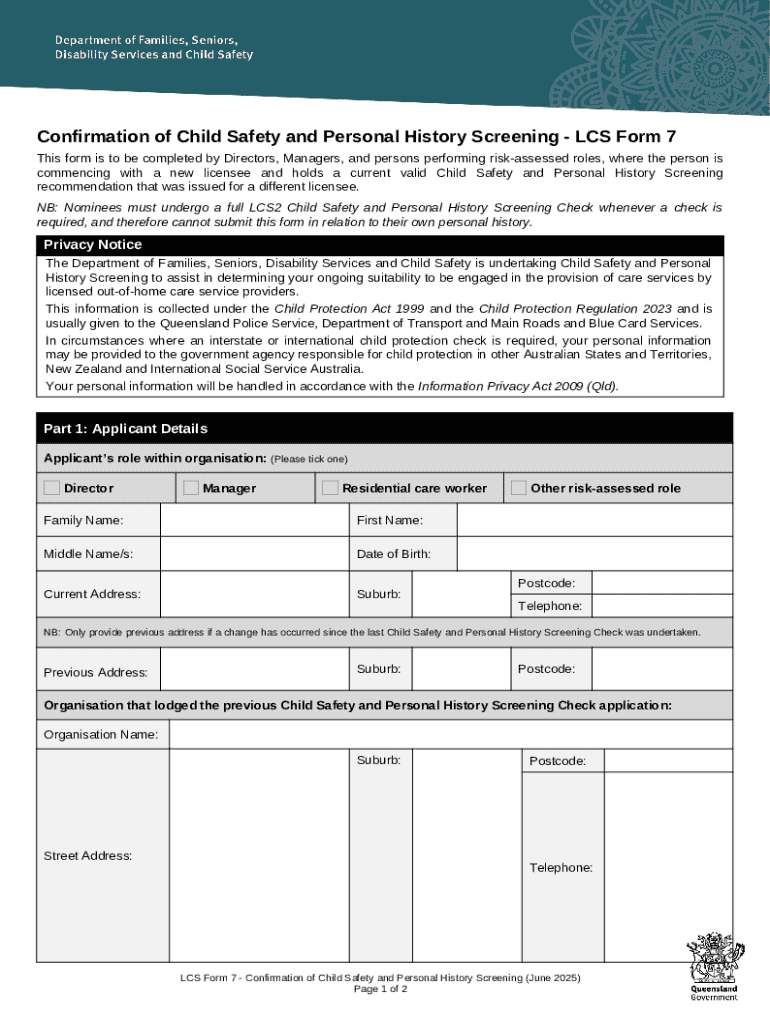
The LCS Form 7 - Child Safety and Personal History Screening is an essential document designed to assess individuals performing roles that involve direct contact with children. This form is typically used by organizations that require a thorough background check to ensure child safety and compliance with legal standards. It collects personal history, including previous employment, education, and any changes since the last screening. Its primary purpose is to maintain safety standards and protect children from potential harm by evaluating the suitability of individuals for certain roles.
How to Use the LCS Form 7 - Child Safety and Personal History Screening
Preparing for the Form
- Gather necessary personal information, including identification details, previous work history, and educational background.
- Ensure you have a record of any changes in personal circumstances since your last screening or employment.
- Be ready to provide detailed information on any legal issues or incidents related to child safety.
Completing the Form
- Review each section thoroughly to understand the information required.
- Follow instructions closely, ensuring that all mandatory fields are completed accurately.
- Double-check personal details and ensure consistency with any previously submitted forms to avoid discrepancies.
Steps to Complete the LCS Form 7 - Child Safety and Personal History Screening
-
Personal Identification Section
- Fill in your full name, date of birth, and current address.
- Include government-issued identification numbers as required.
-
Employment History
- List past roles that involved child interaction, detailing job titles, responsibilities, and durations.
- Provide contact details for previous employers for reference verification.
-
Educational Background
- Record your educational qualifications, focusing on degrees or certifications relevant to child care or safety.
- Include institution names and graduation dates.
-
Legal History and Changes
- Disclose any changes or incidents that occurred since the last screening involving legal matters connected to child safety.
- Attach supporting documentation if requested.
Who Typically Uses the LCS Form 7 - Child Safety and Personal History Screening
- Directors and Managers: Individuals with overseeing authority in organizations that involve child interaction, ensuring their team complies with safety standards.
- Volunteers and Staff Members: Anyone involved in activities or roles that require unsupervised access to children.
- Childcare Providers: Those involved in daycare, schools, or recreational programs.
These users rely on the LCS Form 7 to establish trust and verify compliance with child safety regulations.

Key Elements of the LCS Form 7 - Child Safety and Personal History Screening
- Personal Information: Basic identification needed to verify identity and background.
- Professional Background: Employment and educational history relevant to child safety roles.
- Legal Disclosures: Any previous offenses or legal actions that might influence the applicant's interaction with children.
- References: Contact details for previous employers or supervisors who can validate the applicant’s credibility and history.
Legal Use of the LCS Form 7 - Child Safety and Personal History Screening
Ensuring the legal use of the LCS Form 7 involves:
- Compliance with State Laws: Each submission must adhere to local regulations concerning child safety screening.
- Confidentiality: Safeguarding applicant information and adhering to privacy laws.
- Regular Updates: Assessing and updating personal history regularly to remain compliant with current laws.
State-Specific Rules for the LCS Form 7 - Child Safety and Personal History Screening
State regulations vary and can heavily influence the completion or submission process:
- Specific Background Check Parameters: Some states may require additional checks beyond what the form requests.
- Additional Mandatory Disclosures: State-specific incidents or information may need to be included.
Understanding these differing rules ensures that the form submission is legally compliant and reduces the risk of processing delays or rejections.
Form Submission Methods (Online / Mail / In-Person)
The LCS Form 7 can typically be submitted through the following methods, contingent upon organizational or state instructions:
- Online Submission: Secure digital platforms allow for quick and efficient form submission.
- Mail: Traditional postal service offers a physical submission option when electronic submission is not available.
- In-Person Submission: Direct handover of the form at the relevant organization office ensures immediate receipt and can answer submission-related queries directly.
Selecting the correct submission method based on convenience and security preferences can significantly impact the processing time and accuracy of form reception.