





Definition & Meaning
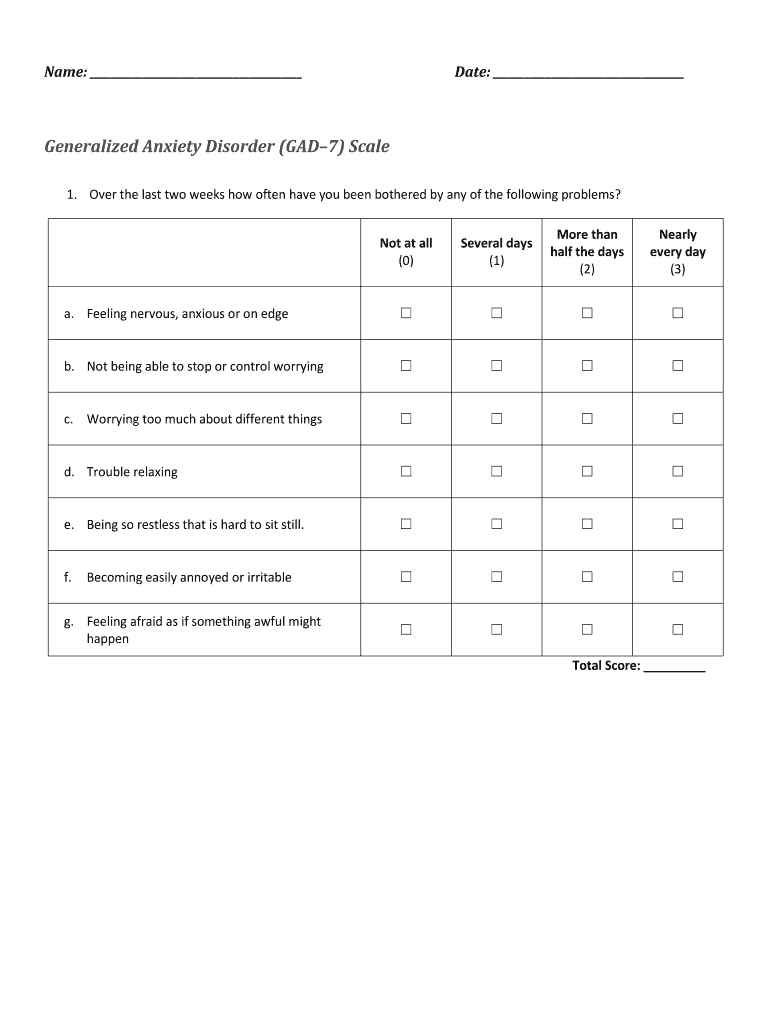
The Generalized Anxiety Disorder (GAD-7) Scale is a clinical screening tool used to identify and assess the severity of generalized anxiety disorder. Developed by Pfizer, it consists of seven questions that evaluate the experiences of anxiety symptoms over the past two weeks. Each question is scored from zero to three, with the total score indicating the severity of the anxiety. This tool is widely implemented in both clinical and research settings due to its simplicity and effectiveness in diagnosing generalized anxiety disorder among patients.
Key Features of the GAD-7 Scale
- Seven Questions: Each question reflects a symptom of anxiety, such as feeling nervous, trouble sleeping, or being unable to stop worrying.
- Scoring System: Responses are scored on a scale from zero (not at all) to three (nearly every day), creating a cumulative score range from zero to 21.
- Severity Levels: Scores are categorized into severity levels: zero to four (minimal anxiety), five to nine (mild anxiety), ten to 14 (moderate anxiety), and 15 to 21 (severe anxiety).
How to Use the Generalized Anxiety Disorder (GAD-7) Scale
To effectively utilize the GAD-7 scale, respondents should reflect on their experiences over the previous two weeks and answer each of the seven questions thoughtfully. The scale is designed for simplicity, allowing individuals and healthcare professionals to quickly assess anxiety levels.
Steps for Administration
- Introduction: Briefly explain the purpose of the assessment to the individual.
- Answer Each Question: Respondents should consider each symptom, indicate how frequently they experienced it, and select the most relevant response for each item.
- Calculate Total Score: Add the scores of individual items to obtain the total score.
- Interpret Scores: Based on the total score, categorize the severity of the condition to guide further clinical actions or interventions.
Steps to Complete the Generalized Anxiety Disorder (GAD-7) Scale
Completing the GAD-7 scale involves a straightforward series of steps that allows for a clear evaluation of one's anxiety symptoms.
Procedure
- Set the Environment: Choose a quiet, comfortable space for the respondent to consider each question without pressure.
- Provide Instructions: Ensure the respondent understands that each question pertains to experiences over the past two weeks.
- Complete the Questionnaire: Answer all seven questions, selecting from four possible frequencies (not at all, several days, more than half the days, nearly every day).
- Review and Score: Review responses with the respondent for accuracy, then total the scores for an overall anxiety assessment.
Importance of the Generalized Anxiety Disorder (GAD-7) Scale
The GAD-7 scale is essential in mental health care due to its validated efficacy in identifying and measuring the severity of anxiety symptoms.
Benefits of Using GAD-7
- Early Detection: Facilitates early identification of generalized anxiety disorder, which can lead to timely intervention and treatment.
- Track Progress: Allows healthcare professionals to track changes in anxiety symptoms over time and modify treatment plans accordingly.
- Routine Screening: Incorporates seamlessly into routine health assessments, providing a regular measure for ongoing mental health evaluation.
Who Typically Uses the Generalized Anxiety Disorder (GAD-7) Scale
The GAD-7 scale is used by a wide variety of professionals beyond clinical psychologists due to its ease of use and informative nature.

Key Users
- Healthcare Providers: General practitioners, psychiatrists, and mental health therapists use the scale for diagnosing anxiety.
- Researchers: Utilized in clinical studies to assess anxiety levels in study populations and measure treatment outcomes.
- Education and Workplaces: School counselors and human resources departments may implement the scale to support student and employee wellness programs.
Key Elements of the Generalized Anxiety Disorder (GAD-7) Scale
Understanding the components of the GAD-7 scale is crucial for accurately interpreting its results and applying them effectively.
Essential Components
- Symptom-Based Questions: Focus on specific anxiety-related symptoms, such as feeling anxious or having trouble relaxing.
- Frequency of Experience: Assesses how often symptoms are experienced, offering insight into the impact on daily functioning.
- Cut-Off Points: Defines severity thresholds that suggest when clinical attention might be warranted.
Software Compatibility
The GAD-7 scale's simplicity lends itself well to various digital formats, making it versatile for integration with multiple software tools.
Digital Integration
- Electronic Health Records (EHRs): Incorporated into EHR systems for seamless patient monitoring and documentation.
- Mobile Apps: Numerous mental health apps include the GAD-7 scale for self-assessment and progress tracking.
- Telehealth Platforms: Frequently used in virtual consultations to provide insightful data remotely and efficiently.
Examples of Using the Generalized Anxiety Disorder (GAD-7) Scale
Real-life examples illustrate the practical use of the GAD-7 scale in diverse settings, demonstrating its adaptability and effectiveness.
Clinical Setting
- Primary Care: A patient presents with general unease; the doctor uses the GAD-7 to quickly assess anxiety levels, leading to immediate therapeutic suggestions.
Research Applications
- Mental Health Studies: Researchers studying medication efficacy in treating anxiety disorders use the GAD-7 to evaluate symptoms' initial severity and monitor reductions.
Workplace Wellness
- Employee Assistance Programs: Employers provide the scale to assess workforce stress levels, fostering a proactive approach to workplace mental health.