




Definition & Meaning
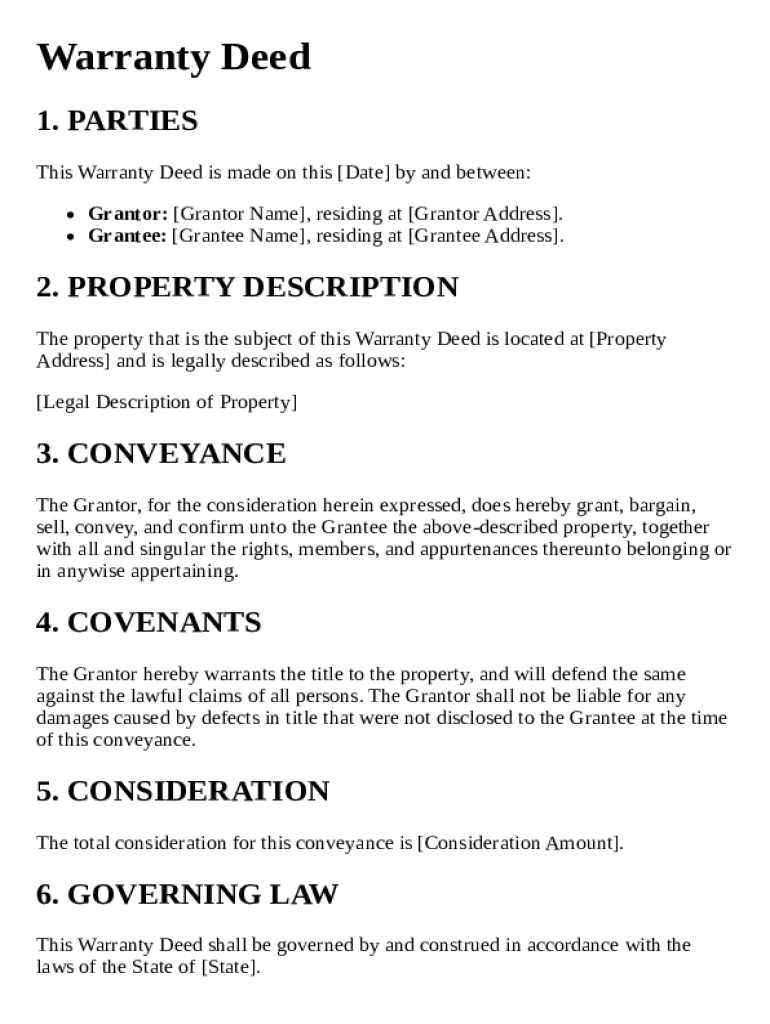
A warranty deed is a legal document utilized in real estate that facilitates the transfer of property ownership from the grantor to the grantee. This document provides assurances about the property's title, guaranteeing that the grantor holds clear title to the property, free of liens or encumbrances, except those specified in the deed. The use of a warranty deed is crucial in real estate transactions as it offers the buyer various protections and signifies that the seller will defend the title against any claims.
How to Use the Warranty Deed Template
The warranty deed template simplifies the process of drafting a legally binding deed. It serves as a foundational document where users can input specific information related to their real estate transaction. The template ensures that all necessary legal terms and obligations are included. To use the template effectively, you should fill in details such as the names of the grantor and grantee, the property's legal description, and any exceptions to the warranties.
Steps for Filling the Template
- Obtain the Template: Access the template from reliable sources like legal websites or document platforms.
- Enter Grantor and Grantee Information: Fill in the full legal names and contact information.
- Describe the Property: Accurately input the property's legal description to specify what is being transferred.
- Include Warranties: Ensure the template includes standard warranties about the title's status and quality.
- Signatures: Gather signatures from all relevant parties, typically in the presence of a notary public.
Key Elements of the Warranty Deed Template
Several critical components must be present in a warranty deed to ensure its validity and enforceability. These include:
- Grantor's Details: Complete identification of the grantor, ensuring clarity about who is transferring the property.
- Grantee's Details: Information on the receiving party, i.e., the grantee.
- Property Description: A precise legal description, detailing the exact property being conveyed.
- Consideration Clause: Indicates the amount or terms of the exchange involved in the property transfer.
- Covenant Clauses: These include promises by the grantor, such as the warranty of seisin, right to convey, against encumbrances, quiet enjoyment, and warranty forever.
- Signature and Notarization: The document must be signed by grantor(s) and notarized to be legally effective.
Legal Use of the Warranty Deed Template
Warranty deeds are primarily used to convey real estate and assure the grantee that the grantor has a clear title to the property. Legally, this document is indispensable in transactions involving the sale of residential or commercial properties. Notably, it provides legal recourse for the grantee should any title issues arise after the sale. Understanding state-specific regulations concerning warranty deeds is crucial, as these can vary significantly across different jurisdictions.
State-Specific Rules for the Warranty Deed Template
While the general structure of a warranty deed remains consistent, individual states might impose additional requirements or alterations. For instance, some states require the property value to be disclosed explicitly, while others mandate various declarations related to the property's taxation status or existing liens. It is advisable to consult state laws or a legal professional to ensure that all regional legal requisites are fulfilled.
Examples of State-Specific Regulations
- California: Requires acknowledgment by a notary public and specific grant deed language.
- Texas: Inclusion of the grantor's marital status and a detailed property tax statement might be required.
Examples of Using the Warranty Deed Template
The warranty deed template has a wide range of applications within the real estate sector. For example, a homeowner selling their property uses the template to ensure a smooth transfer. The document serves as proof that the seller has the legal right to sell the property. In family transfers, a warranty deed can assure familial buyers that their relative has no outstanding claims against the property. In each instance, the template provides a structured, legally compliant framework for completing the transaction.
Steps to Complete the Warranty Deed Template
Completing the warranty deed template involves several straightforward but critical steps to ensure legality and accuracy. Here is a step-by-step guide:
- Review the Template: Familiarize yourself with each section and its legal requirements.
- Gather Necessary Information: Collect all required data, including property details, grantor and grantee information, and consideration terms.
- Complete the Template: Insert the gathered details into the correct sections of the template, ensuring accuracy.
- Seek Legal Review: Although not mandatory, having a legal professional review the completed deed can prevent errors or omissions.
- Execute the Document:
- Sign the document in front of a notary.
- Ensure all parties, including spouses if applicable, sign the document.
- Record the Deed: Submit the signed and notarized deed to the appropriate county recorder's office to make it publicly recorded.
Important Terms Related to Warranty Deed Template
Understanding key terms associated with warranty deeds is paramount for a smooth transaction process:
- Grantor: The party transferring the property ownership.
- Grantee: The recipient of the property title.
- Encumbrance: Any claim or lien on the property by a party other than the seller.
- Notarization: The process by which a notary public authenticates the signatures on the document.
Recognizing these terms enhances comprehension of the legal obligations and protections involved.


