





Definition and Meaning of Attestation sur l'honneur
An "Attestation sur l'honneur" is a written declaration made by an individual affirming the truthfulness of certain statements. Often used within a legal or official context, this document serves as a formal assertion on one's honor regarding a specific fact or set of facts. Unlike notarized affidavits, these attestations generally do not require a witness' signature or an official seal, relying instead on the declarant's integrity. Recognized by legal systems, any false information provided in an attestation sur l'honneur can lead to serious legal consequences as stipulated by laws such as Article 441-7 of the French penal code, which outlines penalties for false declarations.
How to Use the Attestation sur l'honneur
The attestation sur l'honneur can be utilized in various scenarios where an individual must confirm the accuracy of information without the necessity of third-party verification. Examples include affirming residency status for educational purposes, certifying payment information for governmental procedures, or verifying personal circumstances for administrative requests. This form is particularly useful when there’s a need to quickly and assertively provide an assurance of fact without the process of notarization, carrying legal significance based on the individual's assertion of truthfulness.
How to Obtain the Attestation sur l'honneur
Typically, an attestation sur l'honneur does not follow a universally standardized format; it can be self-generated or provided by an institution requiring a declaration. While individuals can create their own attestation using a simple text editor, numerous templates are available online to guide proper formatting and ensure all essential information is included, such as name, date of birth, and address. Alternatively, some institutions might provide a template to ensure consistency and completeness in the declarations they receive.
Steps to Complete the Attestation sur l'honneur
-
Draft the Statement: Start by writing a clear and concise statement affirming the truthfulness of the specific information. Ensure it addresses the relevant details required by the requesting entity.
-
Include Personal Information: Clearly write your full name, date and place of birth, and current address. This personalizes the declaration and provides context for the statement made.
-
Specify the Purpose: Indicate clearly the purpose of the attestation. Mention relevant details that substantiate the claims being made, tailored to the scenario you are addressing.
-
Affirmation Statement: Include a line that explicitly states you are attesting to the truthfulness of the information 'on your honor.'
-
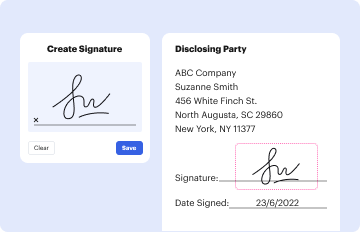
Signature and Date: Sign and date the document. While witness or notary signatures are generally not required, your signature formally concludes the affirmation process.
Key Elements of the Attestation sur l'honneur
- Declarant's Name and Contact Information: Essential for identification and contact purposes.
- Statement of Truthfulness: A clear declaration of facts being sworn as truthful by the declarant.
- Legal Acknowledgment: Understanding and mentioning the potential legal consequences of false declarations enhances the document's legitimacy.
- Signature and Date: Necessary for validating when and by whom the assertion was made.
Legal Use of the Attestation sur l'honneur
In legal contexts, attestations sur l'honneur offer a practical solution for formal affirmations where quick declarations are needed without extensive verification. Common legal applications include declarations of residency, financial disclosures, or other personal affirmations required by courts or official bodies. Despite its informality compared to notarized documents, its legal weight stems from the personal accountability it invokes.
Examples of Using the Attestation sur l'honneur
Several situations across various fields can necessitate the use of an attestation sur l'honneur:
- Applying for Social Benefits: An individual may need to affirm unemployment status to access specific governmental aid.
- Enrollment in Educational Institutions: Students might be required to confirm residency status to qualify for local tuition rates.
- Contractual Obligations: Parties in a contract could use this form during negotiations to declare certain conditions or agreements.
Penalties for False Attestation
Submitting an inaccurate attestation sur l'honneur can result in severe penalties, especially if used to deceive official entities or gain unwarranted benefits. Legal frameworks typically categorize false declarations under fraudulent practices, which can lead to fines, revocation of benefits, or potentially imprisonment, as seen in jurisdictions like France, which strictly penalizes false attestations under specific articles such as Article 441-7 of its penal code.
Important Terms Related to Attestation sur l'honneur
- Declarant: The person making the attestation.
- Affirmation: The statement of truth being made.
- Perjury: The act of lying or making verifiably false statements under oath or in a legal document, including attestations sur l'honneur.
- Legal Autonomy: The capacity of this document to stand as a formal declaration without notarization.
Why Should You Use an Attestation sur l'honneur
This form serves multiple purposes, such as simplifying bureaucratic procedures and minimizing the need for cumbersome verification steps, allowing for quicker processing of applications or claims. It assures recipient entities of your honesty and commitment to truthfulness, ultimately serving as a bridge of trust between individuals and institutions in various administrative processes.