
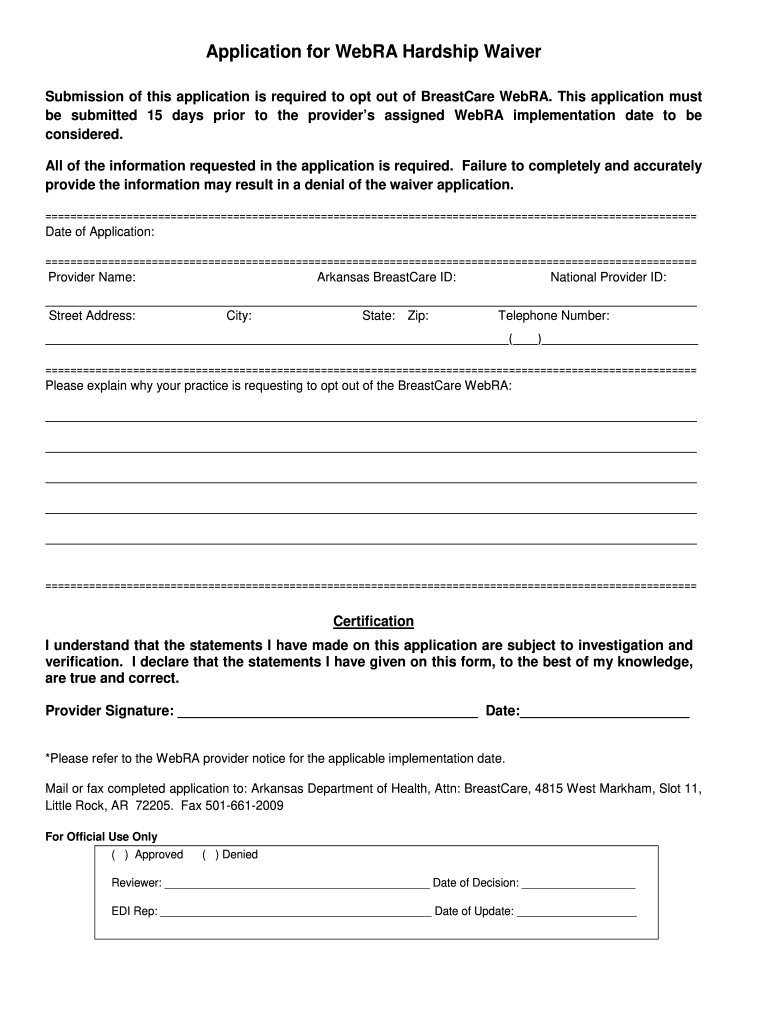







Definition & Meaning of a Hardship License in Arkansas
A hardship license in Arkansas is a special type of restricted driving permit granted to individuals who have lost their driving privileges due to certain violations, such as DUI offenses or accumulating excessive points on their driving record. This license allows drivers to operate a vehicle under specific conditions designed to mitigate the hardship of losing their ability to drive.
Purpose of a Hardship License
- Enable Essential Activities: Provides individuals with the ability to engage in necessary activities such as attending work, school, or medical appointments, which may otherwise be hindered by a suspension.
- Legal Compliance: Offers a means to comply with legal requirements while still addressing personal and professional responsibilities.
The hardship license is not a full reinstatement of driving privileges but serves as a temporary solution for individuals facing significant challenges due to their inability to drive.
Requirements to Obtain a Hardship License in Arkansas
To qualify for a hardship license in Arkansas, applicants must meet specific conditions and requirements set by the Arkansas Department of Finance and Administration (DFA).
Eligibility Criteria
- Age: Generally, applicants must be at least fourteen years old.
- Suspension Status: Must have their driving privileges suspended or revoked, typically due to a DUI or the accumulation of points.
- Completion of Penalties: All court-mandated penalties, including fines and community service, must be completed.


Required Documents
- Proof of Identity: Valid state-issued identification or social security number.
- Court Information: Documentation regarding the offenses leading to suspension, including case numbers and court details.
- Completion of Driver’s Education: Depending on age and circumstance, proof of completing a driver’s education course may be required.
Failure to meet these requirements may lead to denial of the application for a hardship license.
Application Process for Arkansas Hardship License
The process for obtaining a hardship license in Arkansas involves several steps that applicants must follow:
Steps to Apply
- Gather Required Documents: Compile all necessary documents such as identification, court records, and proof of completed penalties.
- Complete the Application Form: Fill out the Arkansas hardship license application, providing requested information accurately.
- Submit Application: Applications can typically be submitted in person at a local DFA office or through the mail, accompanied by required fees.
- Await Processing: The DFA will review the application for completeness and adherence to requirements. This process may take some time.
Expedited Requests
In certain time-sensitive scenarios, applicants can request expedited processing by demonstrating immediate need, such as imminent employment or medical obligations.
Duration of Hardship License Validity
Once issued, a hardship license in Arkansas is usually valid for a limited period, allowing the holder to drive legally only under specific circumstances.
General Duration
- Time Frame: Hardship licenses are often valid for up to one year, depending on the decision of the court or DFA.
- Renewal and Extension: License holders may be eligible for renewal, provided they demonstrate compliance with driving restrictions and any continued legal obligations.
Restrictions
License holders must adhere to restrictions regarding driving times and purposes, such as only using the vehicle for work or educational purposes, which are strictly enforced.
Driving with a Hardship License: Rules and Limitations
Driving with a hardship license comes with specific rules that individuals must follow to avoid further legal complications.
Common Restrictions
- Driving Hours: Typically restricted to certain hours, often limited to daytime driving.
- Purpose of Driving: Must be related to specific needs such as school, work, or medical appointments.
- Passenger Limitations: Some licenses may limit the number of passengers or specific individuals that can be in the vehicle.
Consequences of Non-Compliance
Violation of the hardship license rules can result in further penalties, including longer license suspensions or denial for future applications.
Factors Affecting Approval Time for Hardship Licenses in Arkansas
The approval time for a hardship license can vary based on multiple factors, affecting how quickly individuals can resume driving.
Contributing Factors
- Application Volume: High volumes of applications at the DFA can lead to longer processing times.
- Completeness of Documentation: Missing documents or incomplete forms can significantly delay the approval process.
- Legal Complications: Outstanding legal issues or additional court requirements can lead to extended approval times.
By understanding these factors, applicants can take steps to streamline their application process and minimize delays.
Examples of Hardship License Use Cases in Arkansas
Real-world scenarios illustrate how individuals utilize hardship licenses to address their specific needs while adhering to legal requirements.
Case Study: Employment
- Situation: An individual loses their driver’s license due to a DUI conviction, impacting their ability to commute to work.
- Outcome: By applying for a hardship license, they regain limited driving privileges, allowing them to maintain stable employment and meet regular work hours.
Case Study: Educational Needs
- Situation: A student faces a license suspension due to minor traffic violations affecting their ability to attend school.
- Outcome: The student secures a hardship license, enabling them to drive to school and extracurricular activities.
These examples underscore the importance of hardship licenses in helping individuals navigate everyday responsibilities despite driving restrictions.




