
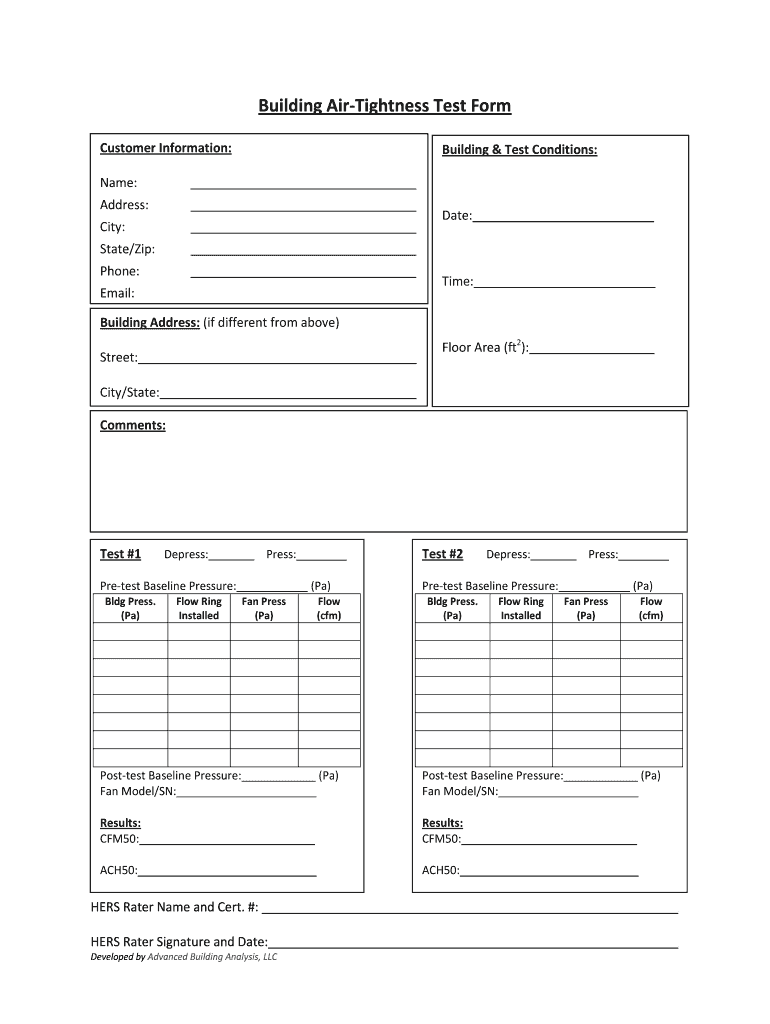







Definition and Importance of a Drainage Air Test Certificate
A drainage air test certificate is an official document that verifies the integrity of a drainage system's air-tightness. This test is crucial in ensuring that a drainage system does not allow the escape of harmful gases, such as sewer gases, and is capable of managing excess water efficiently. Building standards and regulations often require this test prior to the completion of construction or major renovations to ensure safety and compliance.
Key Points of the Certificate
- Air-tightness Verification: Confirms that the drainage system is sealed correctly to prevent leaks.
- Regulatory Compliance: Necessary for meeting local building codes and health regulations.
- Safety Assurance: Protects occupants by ensuring harmful gases do not enter living areas.
- Property Value Preservation: Having a valid certificate can enhance the value and marketability of a property.
Steps to Complete the Drainage Air Test Certificate Template
Completing the drainage air test certificate template involves several critical steps to ensure accuracy and compliance with legal requirements.
-
Gather Required Information: Before filling out the template, collect essential details such as the property address, type of drainage system, and inspector details.
-
Conduct the Air Test: Perform the drainage air test according to established methods, typically involving a pressure test to gauge the air-tightness of the drainage system.
-
Record Observations: Document all findings from the air test, including pre-test and post-test pressures, flow characteristics, and any anomalies detected during the testing process.
-
Fill Out the Template: Input the gathered data into the drainage air test certificate template, ensuring all fields are populated accurately.
-
Review and Sign: Verify the entered data for accuracy and completeness. The inspector should then sign the certificate to validate the findings.
-
Issue the Certificate: Provide the completed certificate to the property owner or relevant authorities, ensuring that copies are retained for records.
Who Typically Uses the Drainage Air Test Certificate Template
The drainage air test certificate is primarily used by professionals and entities involved in property construction, maintenance, and regulation. Key users include:
- Construction Contractors: Often required during building inspections and compliance checks.
- HERS Raters: Energy efficiency professionals who evaluate home performance in relation to air-tightness.
- Building Inspectors: Local authorities inspect compliance with building codes.
- Real Estate Agents: Utilize the certificate to assure potential buyers of the property's safety and compliance status.
- Homeowners: Homeowners need this certificate for renovations or when selling their property to demonstrate adherence to safety regulations.


Legal Use of the Drainage Air Test Certificate Template
The legal standing of a drainage air test certificate stems from its role in ensuring safety and compliance with local building codes. Various jurisdictions may have specific regulations regarding the format and content of the certificate. Therefore, understanding these rules is essential for both the issuer and recipient.
- Regulatory Compliance: Certificates must meet standards set by local building authorities to ensure they are legally recognized.
- Documentation for Claims: In case of disputes or legal claims related to property issues, a valid certificate serves as proof of compliance with safety standards.
- Liability Protection: Proper certification can protect contractors and property owners from liability by demonstrating adherence to legal requirements.
Important Terms Related to the Drainage Air Test Certificate
Understanding key terminology associated with the drainage air test certificate can enhance the effectiveness of its use and improve communication among professionals involved.
- Air Tightness: A measure of how effectively a drainage system prevents air leakage.
- Pressure Test: A procedure used to assess the integrity of a drainage system’s sealing under pressure.
- HERS Rater: A professional certified to perform energy audits and assessments for residential buildings.
- Building Codes: Regulations established by local governments dictating construction standards to ensure safety and compliance.
- Occupant Safety: Refers to the measures taken to protect individuals residing within a building from potential hazards.
Example Scenarios of Using the Drainage Air Test Certificate Template
Real-world applications of the drainage air test certificate reveal its practical utility across various situations:
- New Construction Projects: A contractor completing a new home build conducts an air test and submits the drainage air test certificate to local authorities for final inspection and approval.
- Home Renovations: A homeowner undergoing significant alterations to their drainage system is required to provide a drainage air test certificate to assure compliance with updated building standards.
- Property Sales: A real estate agent preparing for a property showing includes the drainage air test certificate in the marketing materials to demonstrate compliance and instill buyer confidence.
Each of these scenarios underlines the importance of maintaining updated and valid drainage air test certificates to meet legal requirements and ensure occupant safety.




