
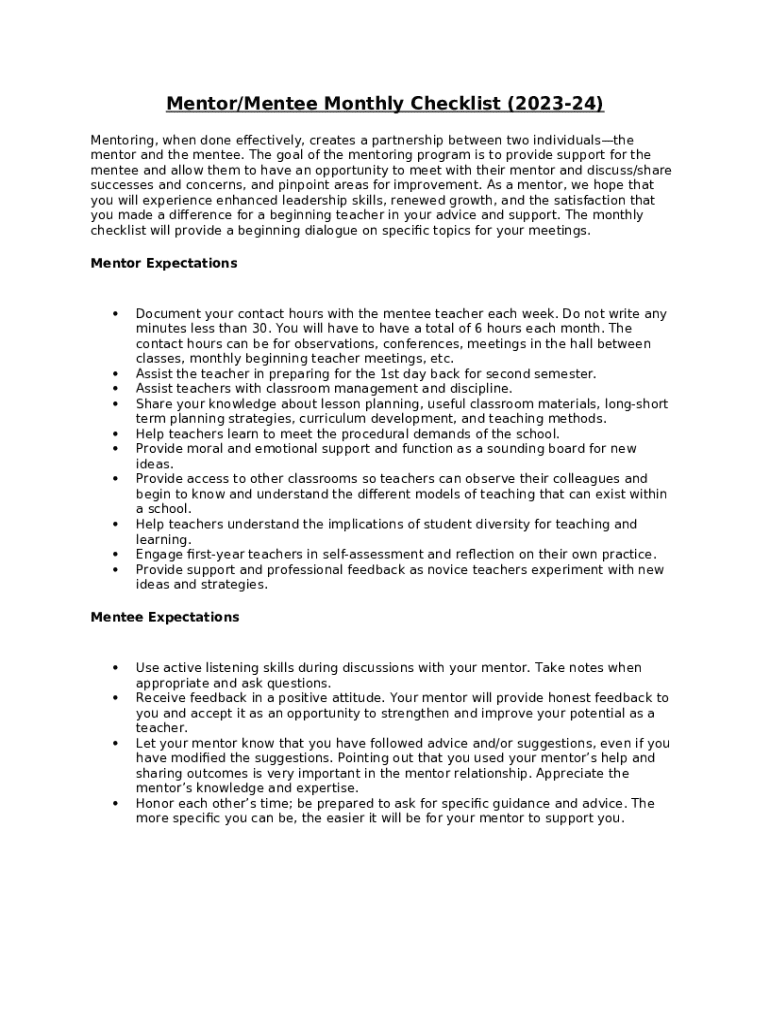







Definition & Meaning
The "Mentor Mentee Monthly Checklist" is an organized guide designed to assist mentors and mentees in maximizing the effectiveness of their collaboration. This checklist serves as a structured framework to facilitate regular evaluations and discussions, ensuring both parties remain aligned with their goals. Typically used within educational or professional development contexts, this checklist highlights essential activities and areas of focus for each month, promoting consistent progress throughout the mentoring relationship. By engaging with this checklist, mentors can offer timely advice and mentees can receive constructive feedback, fostering a supportive and impactful mentorship experience.
Key Elements of the Mentor Mentee Monthly Checklist
The core components of the Mentor Mentee Monthly Checklist are crucial in maintaining a productive mentor-mentee relationship. These elements typically include:
- Goal Setting: Participants outline specific, measurable objectives for the month to ensure focus and direction.
- Progress Review: A reflection on the achievements and challenges from the previous month to assess the effectiveness of strategies employed.
- Action Plan: Both parties develop an actionable plan addressing areas for improvement and leveraging strengths.
- Feedback Session: Open discussions where constructive feedback is exchanged, promoting transparency and mutual understanding.
- Resource Sharing: Sharing of relevant sources, tools, and networks that can aid in the mentee's development.
Clear articulation of these elements on the checklist ensures each session is purposeful and enhances the mentee's journey.
How to Use the Mentor Mentee Monthly Checklist
Using the Mentor Mentee Monthly Checklist effectively involves several steps:
- Preparation: Before each meeting, both mentor and mentee should review past notes and prepare discussion points.
- Structured Meetings: Follow the checklist during sessions to ensure all topics are covered systematically. This ensures productive use of time and resources.
- Documentation: Continuously document decisions, upcoming tasks, and key insights within the checklist to track progress.
- Adaptability: Tailor the checklist elements to suit specific needs, as mentorship dynamics may vary across different fields or personal goals.
Harnessing the checklist's potential requires both parties to stay committed to its structure and intent.
Steps to Complete the Mentor Mentee Monthly Checklist
The successful completion of the checklist involves a logical sequence of steps ensuring all objectives are met:
- Initial Assessment: Begin with a review of the current status of the goals set from the previous month.
- Goal Discussions: Develop new or revised objectives based on this assessment.
- Strategy Development: Collaboratively develop strategies to achieve these goals, incorporating both mentor insights and mentee aspirations.
- Resource Allocation: Identify and allocate necessary resources such as materials, contacts, or information needed for goal attainment.
- Final Review: Conclude with a final review and summary of what has been discussed, ensuring clarity and consensus on the action plan moving forward.
This structured approach guarantees comprehensive coverage of essential areas.
Who Typically Uses the Mentor Mentee Monthly Checklist
The application of this checklist is seen across a diverse range of fields:
- Educators: Facilitators involved in teacher mentoring programs use the checklist to guide novice teachers.
- Corporate Professionals: Employees participating in workplace mentoring programs adopt this checklist for professional growth.
- Academic Institutions: University mentors support students in research guidance through systematic checklists.
Such use cases underscore the checklist's versatility in fostering effective mentor-mentee relationships across various disciplines.


Examples of Using the Mentor Mentee Monthly Checklist
Practical examples of the checklist's application include:
- High School Mentoring Programs: Mentors assist students in academic and extracurricular planning, using checklists to track progress.
- Corporate Onboarding: New employees work with mentors to quickly adapt to company culture and expectations, ensuring effective onboarding.
- Teacher Development: New educators refine their teaching tactics with guided mentorship sessions using structured checklists to support continuous improvement.
These examples highlight the checklist’s role in ensuring structured and goal-oriented mentoring.
Important Terms Related to Mentor Mentee Monthly Checklist
Understanding critical terms enhances the effective use of this checklist:
- SMART Goals: Specific, Measurable, Achievable, Relevant, Time-bound objectives that guide mentoring activities.
- Feedback Loop: A system where mentors and mentees communicate openly to refine practices based on outcomes.
- Actionable Insights: Critical observations that translate into strategic actions for the development of the mentee.
Familiarity with these terms facilitates a more effective and meaningful engagement with the checklist.
Software Compatibility for the Mentor Mentee Monthly Checklist
The checklist can be utilized with various software tools to enhance accessibility and collaboration:
- Google Workspace: Allows shared access and real-time updates on the checklist.
- Microsoft Office Suite: Utilizes Word and Excel for creating and maintaining checklist records.
- DocHub: Offers document editing and sharing capabilities, enabling efficient collaboration between mentors and mentees.
Leveraging the right software ensures seamless interaction and effective tracking of mentoring progress.




