






Definition and Meaning of Composers’ Monthly Answers
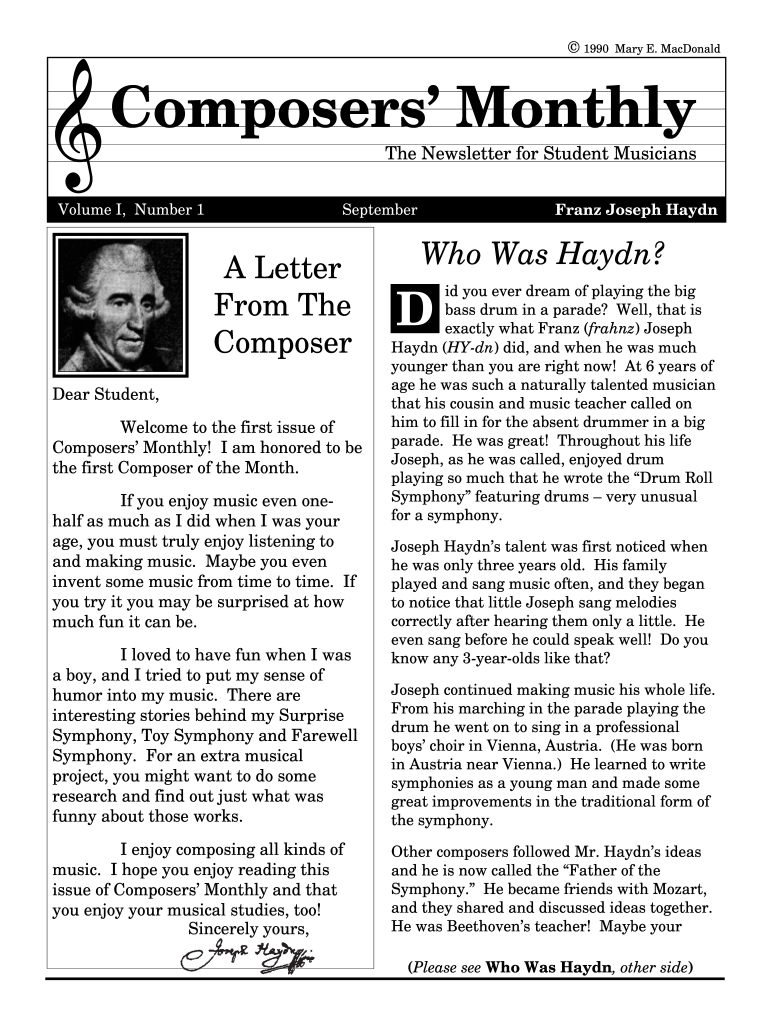
Composers’ Monthly Answers is a resource within the 'Composers’ Monthly' newsletter, aimed specifically at student musicians. This section provides answers to questions related to music composition, historical context, and insights into the works of various composers. It serves as an educational tool, enhancing students' understanding of music theory and history.
Features
- Focused on Education: Designed to support music students in their learning journey.
- Historical Context: Offers background information and context about composers and their works.
- Engagement: Encourages active participation through quizzes, questions, and answers.
How to Use Composers’ Monthly Answers
To effectively use Composers’ Monthly Answers, students should engage with the questions and answers presented in each issue. This section functions best as a supplement to music education, connecting theoretical knowledge with real-world examples.
Steps
- Read the Newsletter: Begin by reviewing the entire 'Composers’ Monthly' issue.
- Focus on Q&A: Pay special attention to the Composers’ Monthly Answers section.
- Research Further: Use the answers as a basis for further research or classroom discussion.
- Practice with Music: Apply the insights gained to your own musical practice or studies.
How to Obtain Composers’ Monthly Answers
To access Composers’ Monthly Answers, one must subscribe to the 'Composers’ Monthly' newsletter. The newsletter can often be found through educational portals, music institutions, or publishers specializing in music education materials.
Subscription Options
- Direct Subscription: Available through educational programs or music departments.
- Library Access: Some libraries offer access to back issues as part of their resources.
- Online Access: Certain music websites and online platforms may host issues for digital viewing.
Steps to Complete the Composers’ Monthly Answers Section
When approaching the Composers’ Monthly Answers section, students should take a systematic approach to ensure comprehensive understanding and retention.
Detailed Procedure
- Identify Questions: Begin by identifying the questions presented in the section.
- Research: Conduct research on any unfamiliar topics or composers mentioned.
- Formulate Answers: Use gathered information to formulate clear and concise answers.
- Check Against Provided Answers: Compare your answers with those provided to ensure understanding.
- Reflect and Review: Reflect on any discrepancies and review materials as necessary.
Why Engage with Composers’ Monthly Answers
Engaging with Composers’ Monthly Answers provides numerous benefits for aspiring musicians and students. It promotes a deeper understanding of music theory and the historical impact of composers, enhancing overall musical education.
Benefits
- Knowledge Expansion: Broadens understanding of complex musical topics.
- Critical Thinking: Encourages students to analyze and apply theoretical knowledge.
- Skill Development: Assists in developing practical skills related to both interpretation and performance.
Key Elements of Composers’ Monthly Answers
Understanding the key elements of Composers’ Monthly Answers is essential for leveraging its educational potential.
Components
- Historical Insight: Offers historical context and significance of various compositions.
- Quizzes and Activities: Engages students through interactive and thought-provoking exercises.
- Detailed Explanations: Breaks down complex theories into understandable concepts.
Examples of Using Composers’ Monthly Answers in Education
Real-world examples highlight the utility and application of Composers’ Monthly Answers within an educational setting.
Use Cases
- Class Discussions: Teachers can use the answers to facilitate class discussions on music history.
- Project Basis: Provides a basis for student projects or presentations about composers.
- Tests and Quizzes: Instructors may incorporate questions into tests to assess student understanding.
Software Compatibility and Integration
Composers’ Monthly Answers can complement various educational software, enhancing the interactive learning experience.
Compatibility
- Music Theory Software: Compatible with software tools designed to teach music theory.
- e-Learning Platforms: Can be integrated into platforms like Google Classroom for enhanced digital learning.
Through these comprehensive and detailed sections, educational institutions and students alike can maximize the benefits of Composers’ Monthly Answers as a tool for learning and engagement in music education.