






Definition & Meaning
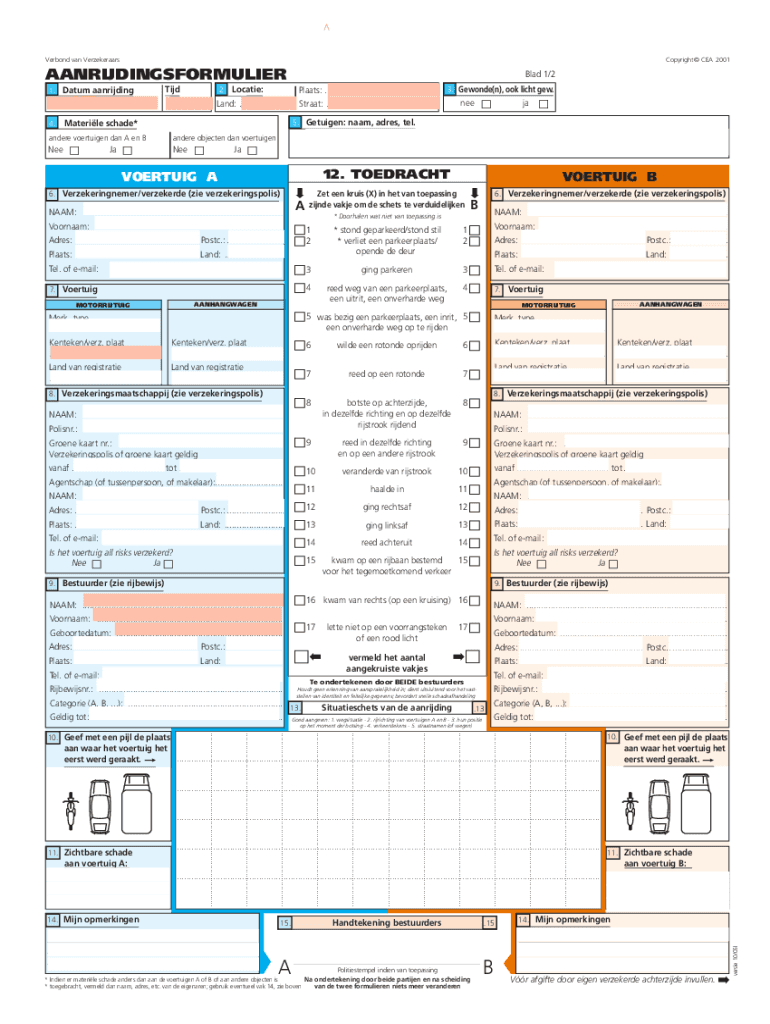
The "Europees schadeformulier Schadeformulier voor schade met bijvoorbeeld uw auto en of uw motor" is a standardized accident report form used within Europe to document vehicle-related incidents. Its primary purpose is to provide a consistent way of reporting the details of an accident, ensuring that all necessary information is captured accurately. This form is crucial for insurance claims, as it serves as an official record of the event, detailing the circumstances of the accident, the parties involved, and the damages sustained. The use of such a document streamlines the process across different jurisdictions by adhering to a standardized format and requirements.
How to Use the Europees Schadeformulier
To properly utilize the Europees schadeformulier, first ensure that it is completed at the accident scene. Follow these steps:
- Personal Information: Document the contact details and insurance information for all parties involved.
- Accident Details: Accurately report the date, time, and location of the accident.
- Diagram of Incident: Include a sketch of the accident scene highlighting vehicle positions at the point of collision.
- Witness Statements: Collect contact information and statements from any witnesses who observed the incident.
- Opposing Party: Ensure the other party provides their version of the events on the same form.
Completing these sections helps in creating a comprehensive report that all parties can agree upon.
Steps to Complete the Europees Schadeformulier
- Initial Observation: Before breathing in detail, take note of any immediate dangers or injuries.
- Exchange of Information: Both parties should provide and verify driver’s license and insurance policy details.
- Detailed Information Collection: Fill out details about each vehicle, using clear information about make, model, registration number, and any apparent damage.
- Incident Diagram: Create a visual representation of the accident as part of your report.
- Signatures: Obtain signatures from all parties to validate the information provided.
Ensuring that each of these steps is meticulously followed guarantees that all pertinent information is documented for use in insurance claims or legal proceedings.
Key Elements of the Europees Schadeformulier
- Personal and Vehicle Details: Captures essential information about the drivers and their vehicles.
- Accident Circumstances: Section dedicated to specifying the exact details of how the accident occurred.
- Sketch Diagram: Visual depiction of the accident scene to support written accounts.
- Witness Section: Provides space for witness details and statements.
- Signatures: Authenticates the accuracy and truthfulness of the reported information.
Beyond filling out these sections, users should ensure spelling accuracy and legibility, as these details are crucial for claims processing.
Legal Use of the Europees Schadeformulier
This form acts as a legal document in insurance and legal claims following a vehicle accident. Its uniform format ensures that the recorded information is admissible in legal proceedings across the EU and helps mitigate disputes between drivers. Filling out this form is generally a requirement under insurance policies in Europe, reinforcing its importance and validity as a legal document in incident resolution.
Required Documents
When using the Europees schadeformulier, you will need:
- Driver’s License: To prove identity and driving eligibility.
- Vehicle Registration: Verifies ownership and legal status of the vehicle.
- Insurance Information: Confirms coverage for claims processing.
- Identity Card or Passport: Additional verification if required by authorities.
Having these documents readily available facilitates accurate completion and submission of the form.
Who Typically Uses the Europees Schadeformulier
This form is used by:
- Drivers in Accidents: Individuals involved in car or motorcycle collisions.
- Insurance Companies: Used by insurers for claims processing and investigations.
- Legal Counsel: Lawyers may use it as evidence in legal disputes or court cases.
- Law Enforcement: Police might request the form to understand accident specifics.
The form's use by these diverse groups highlights its central role in vehicle damage reporting across the EU.


Examples of Using the Europees Schadeformulier
- Minor Accidents: Documentation of fender benders or minor scrapes in parking lots.
- Serious Collisions: Used during major accidents to record detailed circumstances and witness accounts.
- Disputed Incidents: Helps resolve conflicting narratives by providing a mutually agreed-upon record.
- Insurance Claims: Essential for starting the claims process and ensuring timely resolution.
In these scenarios, the Europeo’s schadeformulier serves as the foundational document for clear, concise accident reporting.