Definition & Meaning
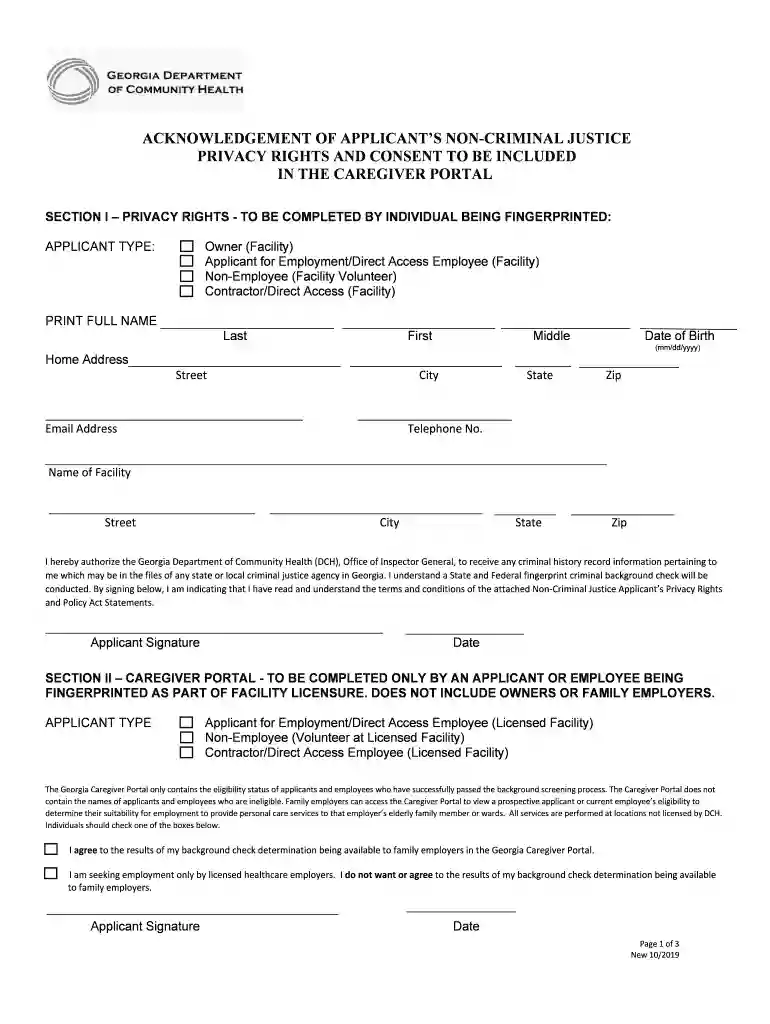
The "acknowledgement of applicant's non-criminal justice privacy rights" refers to a formal consent and information form that outlines the rights of individuals undergoing background checks for non-criminal justice purposes. This document is crucial for individuals such as employees, volunteers, and contractors who must acknowledge the collection and use of their criminal history records. It includes details on how their data will be used, their rights to review and challenge the information, and the processes surrounding these checks.
Purpose and Functionality
- Consent and Transparency: The form serves as an official confirmation that applicants are informed about the collection and use of their fingerprints and other personal data for background checks.
- Notification of Rights: It provides applicants with clear notification of their rights, including the ability to access their records and dispute inaccuracies.
- Legal Compliance: Ensures compliance with privacy and data protection laws by mandating the acknowledgment of privacy rights before processing background information.
How to Use the Acknowledgement Form
To effectively utilize the acknowledgement form, applicants and organizations should follow specific procedures that ensure clarity and legal compliance.
Steps for Organizations
- Prepare the Form: Ensure the form is up-to-date, including the latest legal and regulatory requirements.
- Distribute the Form: Provide the form to each applicant prior to starting the fingerprinting or background check process.
- Collect Signed Copies: Obtain signed copies from applicants, confirming their understanding and agreement to the terms.
Steps for Applicants
- Read Thoroughly: Carefully review the form to understand your privacy rights and the intended use of your background information.
- Sign and Date: Provide your signature to acknowledge acceptance and understanding of the terms stipulated in the document.
- Retain a Copy: Keep a copy for personal records in case you need to reference your rights or use of your information in the future.
How to Obtain the Acknowledgement Form
Securing the acknowledgment form is a straightforward process, often facilitated by potential employers or organizations conducting the background check.
Sources for the Form
- Employers: Typically provided by potential employers or human resources departments prior to conducting checks.
- Online Resources: Many state and organizational websites offer downloadable versions of the form.
- Legal Advisors: Consult with legal advisors who may provide or direct applicants to the appropriate form for specific circumstances.
Steps to Complete the Acknowledgement Form
Completing the form accurately is essential for both legal compliance and personal assurance.
- Gather Required Information: Have personal identification details ready, such as full name, date of birth, and contact information.
- Review Privacy Statement: Read through the attached Privacy Act Statement for complete understanding of data usage.
- Confirm Understanding: Mark sections that indicate your acknowledgment of your privacy rights.
- Signature: Sign and date the document, ensuring all information is accurate and truthful.
Why Acknowledge Non-Criminal Justice Privacy Rights
Acknowledging these rights is a critical component of the background check process, ensuring both legal protection and informed consent for all parties involved.
Benefits for Applicants
- Understanding of Rights: Ensures applicants are aware of how their data will be used.
- Legal Safeguards: Provides legal protection and a mechanism to dispute any inaccuracies in their records.
Benefits for Organizations
- Compliance Assurance: Helps organizations comply with federal and state privacy laws.
- Risk Mitigation: Reduces potential legal disputes by ensuring informed consent.
Common User Groups
- Employees and Job Seekers: Especially in industries where security and trust are paramount.
- Volunteers: Such as those working with vulnerable populations.
- Contractors: Often required for government or security-sensitive projects.
Key Elements of the Acknowledgement Form
Understanding the structure and elements of the form ensures it fulfills its intended purpose effectively.
Main Components
- Privacy Act Statement: Explanation of legal and regulatory context for data collection.
- Applicant Information Section: Personal information fields for accurate identification.
- Consent Section: Areas where applicants signal their understanding and agreement.
Detailed Explanations
- Rights Notification: Sections that detail applicant rights to access and dispute information.
- Data Use: Clarity about the specific uses and restrictions on the collected information.
Legal Use of the Acknowledgement Form
The form plays a fundamental legal role in safeguarding both applicant rights and organizational compliance with data protection regulations.
Compliance and Legal Use Cases
- Data Protection: Ensures all parties adhere to the U.S. privacy standards like the Privacy Act of 1974.
- Evidence of Consent: Serves as documented proof of informed consent in legal disputes involving privacy rights.
By thoroughly understanding these detailed blocks, users can ensure the effective use and management of both the form and the sensitive data it concerns.