






Definition and Meaning
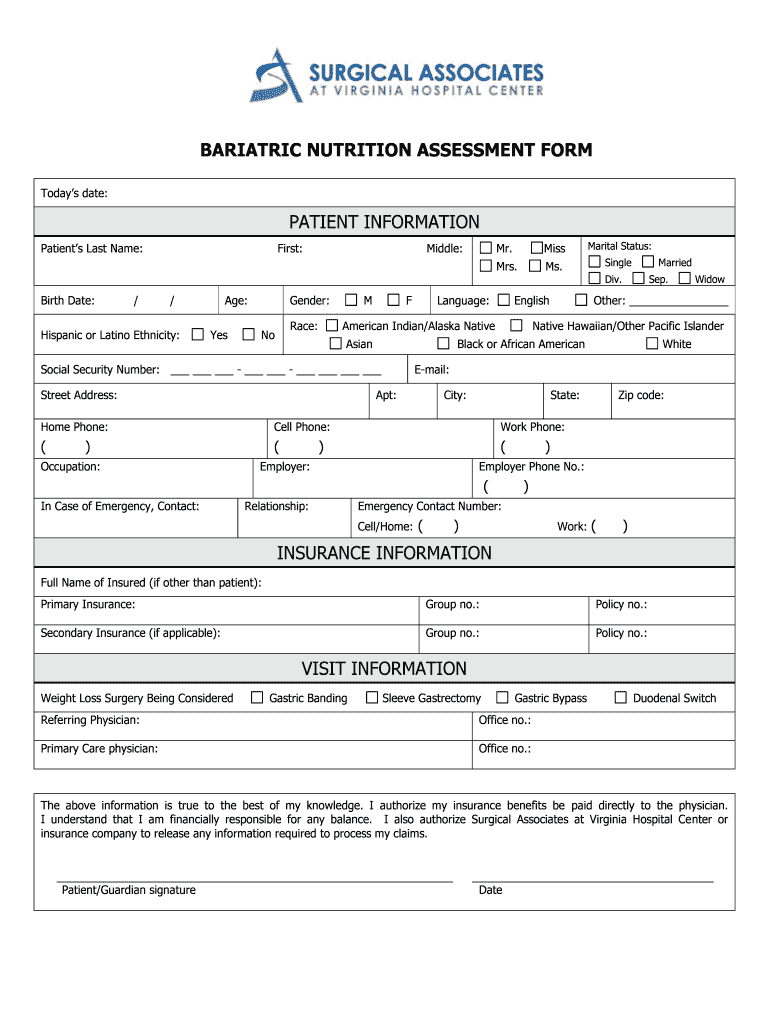
The Bariatric Nutrition Assessment Form is a document specifically designed for patients considering weight loss surgery under the care of the VHC Physician Group. It gathers detailed information on the patient's health, dietary habits, and personal history to guide pre-surgery assessments and post-surgery nutritional planning. This form is an essential part of the surgical preparation process, ensuring that both patients and medical teams have the comprehensive information needed for successful outcomes.
Key Components
- Personal Information: Collects basic details such as name, age, and contact information.
- Medical History: Covers past and current medical conditions that may influence surgery outcomes.
- Weight History: Tracks the patient's weight over time to identify patterns or concerns.
- Medication List: Identifies current medications that could impact surgical decisions or post-operative care.
How to Use the Bariatric Nutrition Assessment Form
To effectively use the Bariatric Nutrition Assessment Form, patients should follow a systematic approach to ensure all relevant information is accurately captured. This involves reviewing each section before filling it out to understand the required details.
Step-by-Step Completion
- Review Instructions: Begin by carefully reading any instructions accompanying the form to ensure clarity in what information is needed.
- Gather Documents: Collect necessary medical records and medication lists before starting the form.
- Complete Sections Sequentially: Fill out each part of the form in order, beginning with personal details and moving through to nutrition habits.
- Double-Check Entries: Verify that all information is accurate and complete before submission to avoid delays in processing.
Steps to Complete the Bariatric Nutrition Assessment Form
Completing the Bariatric Nutrition Assessment Form requires attention to detail and thorough preparation. Each section of the form builds a comprehensive profile, which is crucial for surgery planning.
Detailed Completion Steps
-
Personal Details and Consent:
- Provide full name, contact information, and insurance details.
- Sign any consent forms acknowledging the sharing of medical information.
-
Medical and Weight History:
- List all previous surgeries, chronic conditions, and allergies.
- Record your weight history, noting any significant changes over the past years.
-
Current Medications:
- Provide a detailed list of currently prescribed medications, including dosages and frequency.
-
Dietary Patterns:
- Describe typical meals, snack habits, and any dietary restrictions or preferences.
Common Mistakes to Avoid
- Incomplete Sections: Ensure no sections are left blank unless they are explicitly marked as optional.
- Inaccurate Information: Double-check details like medication names and dosages to prevent errors.
Key Elements of the Bariatric Nutrition Assessment Form
This form comprises several critical elements that each play a vital role in the assessment process. Understanding these can help patients complete the form accurately and effectively.
Main Elements Explained
- Nutrient Deficiency Risks: Identifies potential deficiencies that could affect health post-surgery.
- Lifestyle Assessments: Examines physical activity levels and lifestyle choices influencing weight.
- Financial Responsibilities: Details insurance coverage and any potential out-of-pocket costs associated with surgery.
Who Typically Uses the Bariatric Nutrition Assessment Form
The primary users of the Bariatric Nutrition Assessment Form are patients considering bariatric surgery as a method for weight loss or managing health conditions associated with obesity. Its purpose is to aid healthcare providers in tailoring a nutritional and health plan pre- and post-surgery.


Target Audience
- Prospective Surgery Patients: Individuals preparing for weight loss surgery.
- Healthcare Providers: Doctors and dietitians analyzing patient data to devise tailored nutrition plans.
- Insurance Companies: Assess eligibility and coverage based on medical necessity documented within the form.
Legal Use of the Bariatric Nutrition Assessment Form
The form must be used in compliance with medical and privacy laws, adhering to regulations surrounding patient information.
Compliance Requirements
- HIPAA Compliance: Ensures the protection of personal health information.
- Patient Consent: Necessary to legally utilize the document's information in treatment planning.
Examples of Using the Bariatric Nutrition Assessment Form
Practical applications of the Bariatric Nutrition Assessment Form highlight its indispensability in clinical settings.
Case Study
A patient with a history of diabetes and hypertension uses the form to document medical conditions and dietary preferences. The healthcare team reviews this information to customize an operative plan, which successfully manages the patient's weight while addressing chronic health issues.
- Preoperative Assessment: Utilized to screen for potential surgical risks.
- Postoperative Planning: Guides nutritional counseling and dietary adjustments post-surgery.
Important Terms Related to the Bariatric Nutrition Assessment Form
Familiarity with specific terminology can enhance the understanding and execution of the form.
Glossary of Terms
- Body Mass Index (BMI): A key measure for evaluating weight relative to height.
- Comorbidities: Additional health conditions that could impact the surgery.
- Dietary Compliance: Adherence to prescribed dietary regimens before and after surgery.