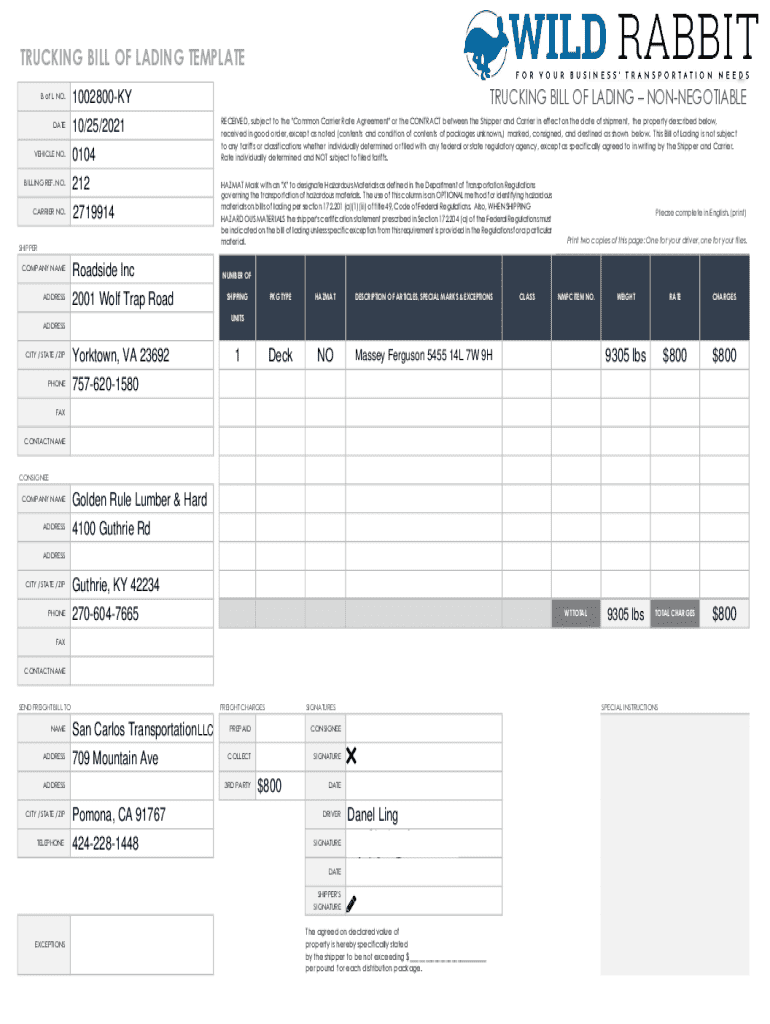







Definition and Meaning of the Trucking Bill of Lading Template
The Trucking Bill of Lading Template is a standardized document used in the transportation industry to outline the details and terms of goods being shipped by a carrier for a shipper. It serves as both a receipt for the freight services rendered and a legal contract for the transportation process. This template typically includes information such as the shipper's and consignee's details, the description of the cargo, weight, charges, and any special instructions required during transit. Furthermore, it addresses regulations for shipping hazardous materials, ensuring compliance with legal safety standards.
Key Elements of the Trucking Bill of Lading Template
Understanding the components of the Trucking Bill of Lading Template is crucial for accurate and effective documentation. Key elements include:
- Shipper and Consignee Information: Clearly identifies the parties involved in the shipping process.
- Vehicle Number and Billing Reference: Provides details on the transportation vehicle and reference numbers for billing purposes.
- Cargo Description and Weight: Lists the type, quantity, and weight of goods being shipped, essential for cost calculation and logistics planning.
- Charges and Special Instructions: Outlines the transportation fees and any specific handling instructions.
- Signatures: Requires signatures from both the shipper and driver, validating the transaction and agreement terms.
Steps to Complete the Trucking Bill of Lading Template
Completing the Trucking Bill of Lading Template involves several detailed steps to ensure accuracy and compliance:
-
Enter Shipper and Consignee Details: Begin by entering the complete contact information for both the shipper and the consignee, ensuring accuracy for communication.
-
Record Vehicle and Billing Information: Insert the vehicle number and a unique billing reference number for accountability.
-
Describe Cargo: Provide a detailed description of the cargo, including the type and weight, which is critical for shipping calculations and legal documentation.
-
Specify Charges and Instructions: Include all transportation charges and any special instructions or requirements needed during transit.
-
Secure Necessary Signatures: Obtain the required signatures from both parties to officiate the agreement and express consent to the transportation terms.
Who Typically Uses the Trucking Bill of Lading Template
The Trucking Bill of Lading Template is predominantly used by:
- Transport Companies: To manage and document the shipping of goods efficiently.
- Businesses Shipping Goods: Including manufacturers and distributors who need to send products to customers or other business entities.
- Freight Brokers: Acting as intermediaries between shippers and carriers to facilitate the transportation process.
Each of these users relies on the template to ensure a smooth, legally compliant shipping experience and maintain records for regulatory and operational purposes.


Importance of Using the Trucking Bill of Lading Template
Adopting the Trucking Bill of Lading Template is vital for several reasons:
- Legal Protection: It protects both the shipper and carrier by clearly outlining the terms and conditions of the shipment, preventing disputes.
- Operational Efficiency: Provides a standardized method for documenting shipments, which can improve workflow and reduce errors.
- Regulatory Compliance: Ensures adherence to shipping laws and regulations, particularly regarding hazardous materials.
By using this template, businesses can streamline their shipping processes and safeguard against potential legal issues.
Legal Use of the Trucking Bill of Lading Template
The Trucking Bill of Lading Template serves as a legally binding contract under U.S. law, making its proper use essential. It helps:
- Define the Relationship: Clearly establishes the roles and responsibilities of each party involved in the transportation process.
- Ensure Compliance with Regulations: Especially important for shipments involving hazardous materials, where specific legal requirements must be met.
- Provide Evidence in Legal Disputes: If any issue arises, the documented terms within the template can serve as evidence in legal proceedings.
Digital vs. Paper Version
With advancements in technology, the choice between digital and paper versions of the Trucking Bill of Lading Template has become pertinent.
- Digital Version: Offers ease of use, quick modifications, and better storage and retrieval options. Platforms like DocHub allow for seamless editing, signing, and sharing of documents online.
- Paper Version: Although more traditional, it is preferred by some for physical verification and tangible recordkeeping.
Each version provides distinct advantages, and businesses may use one or both depending on their operational needs and legal requirements.
State-Specific Rules for the Trucking Bill of Lading Template
Shipping regulations can vary by state, influencing the application of the Trucking Bill of Lading Template:
- State Regulations for Hazardous Materials: Some states have additional requirements that need to be documented within the bill.
- Local Tax Implications: Varying state laws can affect the calculation of shipping charges or taxes.
Familiarity with these state-specific rules is necessary to ensure compliance and avoid legal complications during transportation.