






Definition & Meaning
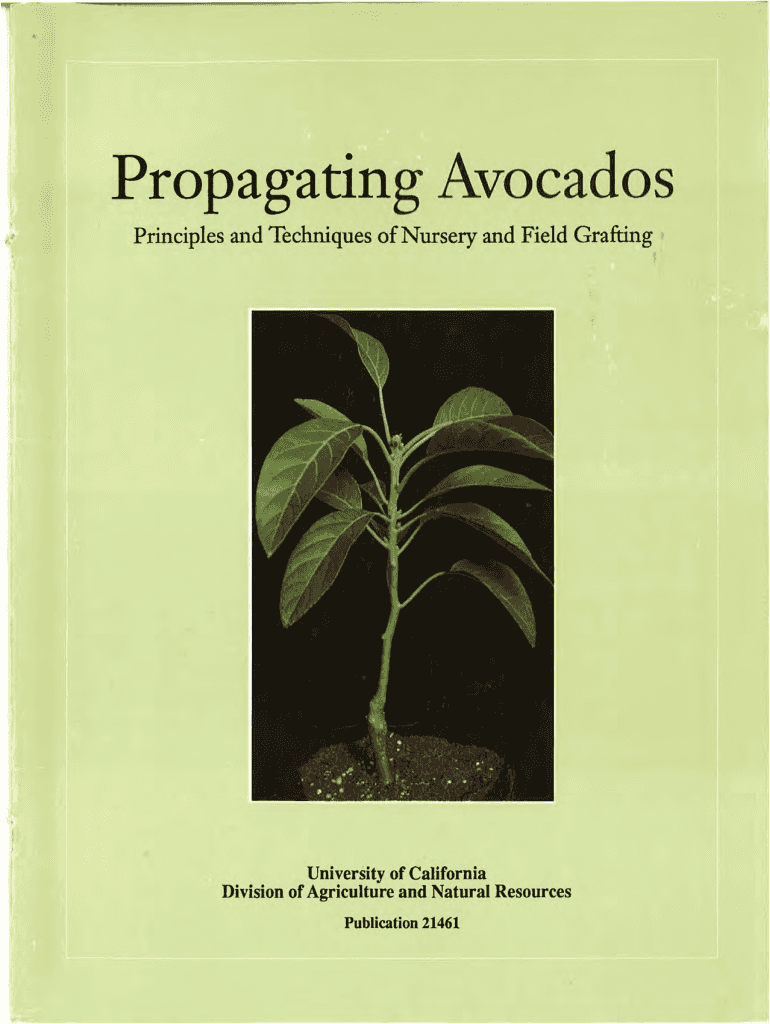
The form "Propagating Avocados: Principles and Techniques of Nursery" is a comprehensive guide outlining the methodologies for avocado propagation, primarily focusing on nursery-level operations. It covers various nursery techniques aimed at cultivating avocado plants from seeds or cuttings, emphasizing methods that ensure healthy growth and increase yield. This guide is crucial for understanding the foundational principles involved in nursery propagation, equipping both novice and experienced growers with the necessary knowledge to perform these tasks effectively.
Key Elements of the Propagating Avocados: Principles and Techniques of Nursery
- Historical Advancements: Discusses significant developments in avocado propagation over time, emphasizing advancements in technology and techniques that enhance efficiency.
- Grafting Techniques: Provides a detailed overview of different grafting methods, including cleft grafting and whip-and-tongue grafting, tailored to avocado plants.
- Tools and Equipment: Describes essential tools required for successful nursery operations, such as grafting knives and protective gear, highlighting the importance of quality equipment for precision and safety.
- Environmental Conditions: Explains optimal conditions for avocado seedling growth, including temperature, humidity, and soil requirements, essential for fostering a conducive growth environment.
- Disease Control Measures: Outlines preventive strategies to safeguard nursery plants from common pests and diseases, ensuring healthy and robust plants.
How to Use the Propagating Avocados: Principles and Techniques of Nursery
- Understanding Basics: Start by gaining a foundational understanding of nursery techniques, focusing on the underlying principles of avocado propagation.
- Grafting Practices: Follow step-by-step instructions on grafting practices, utilizing illustrations and examples to visualize the process.
- Tool Utilization: Learn the proper use of necessary tools, ensuring safety and effectiveness during propagation activities.
- Maintaining Conditions: Implement guidelines to maintain controlled environmental conditions within the nursery setup, facilitating optimal plant growth.
- Disease Management: Apply provided disease control techniques to protect against potential threats throughout the propagation process.
Steps to Complete the Propagating Avocados: Principles and Techniques of Nursery
- Preparation: Gather all necessary tools and materials, ensuring they are clean and in good condition before starting the propagation.
- Selection of Graftwood: Choose high-quality graftwood from disease-free trees to enhance success rates in grafting.
- Grafting Process: Execute selected grafting methods, carefully following procedural steps to ensure precise cuts and alignments.
- Environmental Setup: Adjust nursery conditions to favor growth, considering factors such as light, water, and temperature control.
- Post-Graft Care: Implement post-grafting care measures, such as regular monitoring and adjusting conditions as needed to support recovery and growth.
Who Typically Uses the Propagating Avocados: Principles and Techniques of Nursery
- Commercial Growers: Utilize the guide to optimize mass production of avocado plants, ensuring consistency and quality across large crops.
- Home Gardeners: Hobbyist gardeners seeking to expand their avocado cultivation skills benefit from the detailed, approachable guidance provided in the form.
- Agricultural Researchers: Leverage the information for experimental propagation studies, advancing research in avocado cultivation practices.


Important Terms Related to Propagating Avocados: Principles and Techniques of Nursery
- Graftwood: Refers to the stem or bud used in grafting to produce a new plant.
- Cleft Grafting: A common method of grafting involving the splitting of a stock to insert a scion.
- Scion: The piece of a plant that is grafted onto the rootstock.
- Rootstock: The root or soil-attached part of a plant onto which the scion is grafted.
- Disease Suppression: Techniques aimed at reducing the incidence of disease within plant populations.
Disease Control and Management Strategies
- Preventive Measures: Implementing sanitation procedures and selecting disease-resistant varieties to minimize initial disease establishment.
- Early Detection: Employing regular monitoring practices to identify signs of disease early, enabling prompt intervention.
- Integrated Pest Management: Utilizing a combination of cultural, biological, and chemical controls to manage pest populations organically and sustainably.
Practical Examples and Case Studies
- Commercial Application: Details on how large-scale nurseries implement grafting techniques to meet market demands for avocado saplings.
- Educational Demonstrations: Examples of botanical gardens or educational institutions using the document for instructional purposes in horticulture classes.
- Research Innovations: Case studies highlighting successful implementation of novel grafting techniques or environmental management practices to enhance plant vitality and yield.
Environmental and Regulatory Considerations
- Compliance with U.S. Agricultural Standards: Ensure propagation techniques align with USDA regulations concerning plant health and safety.
- State-Specific Guidelines: Acknowledging variations in regulations that may affect propagation practices depending on geographic locations within the United States.
- Sustainability Practices: Encouraging eco-friendly practices in nursery operations to support sustainable agriculture and conservation efforts.