
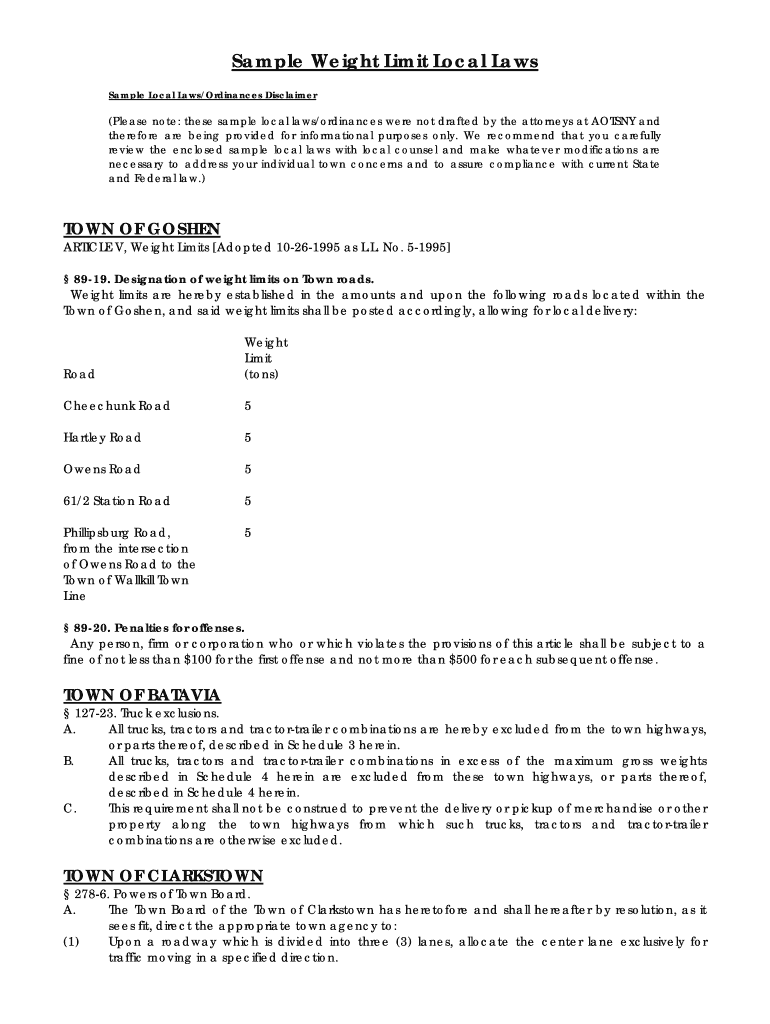







Definition and Meaning of Sample Weight Limit Local Laws
Sample Weight Limit Local Laws serve as a blueprint for regulating vehicle weight restrictions on local roads, typically within municipalities such as Goshen, Batavia, Clarkstown, and Orangetown. These laws are crucial for maintaining road safety and infrastructure integrity by specifying the maximum allowable vehicle weight on certain roads. Different municipalities may set varying weight limits based on the capacity and condition of their roadways. Understanding these laws ensures compliance and helps in preventing potential damage to local infrastructure.
- Purpose: Intended to limit road wear and tear and enhance safety for road users.
- Application: Often applied to commercial vehicles or large transport trucks, impacting logistics and transport businesses.
- Example: A town might limit vehicle weight to 10 tons on certain streets to preserve road conditions.
Steps to Complete the Sample Weight Limit Local Laws
Achieving compliance with the Sample Weight Limit Local Laws involves a meticulous process to understand and implement these regulations effectively. Below are the typical steps involved:
- Research Local Requirements: Identify the specific weight limits applicable to the roads within your locality.
- Consult Documentation: Review the full text of the local laws for detailed guidelines.
- Engage with Local Authorities: Contact municipal offices for clarification on complex legal terms or for further guidance.
- Compliance Verification: Use official tools or services to verify compliance with vehicle weights.
- Legal Documentation: Secure and prepare all necessary permits or documentation demonstrating compliance, especially if vehicles are constantly on the move.
- Periodic Review: Regularly review updates to local laws or any changes in weight constraints.
Legal Use of the Sample Weight Limit Local Laws
Legal application of these laws requires adherence to established statutory frameworks set by local municipalities. Enforcement ensures roads remain safe and well-maintained.
- Authority: Local government agencies or municipal bodies typically enforce these regulations.
- Enforcement Mechanisms: Involves inspections and monitoring by local police or transport officers.
- Compliance Requirements: Insists on necessary permits and adherence to weight restrictions to avoid fines.
Penalties for Non-Compliance
Violating weight limit regulations can lead to significant legal and financial consequences. Non-compliance may attract:
- Fines: Monetary penalties based on the degree of violation, potentially escalating with repeated offenses.
- Legal Action: Possible litigation or additional charges for major breaches.
- Operational Restrictions: Temporary bans on certain routes or increased scrutiny of violating vehicles.
Key Elements of the Sample Weight Limit Local Laws
Understanding the core components of these laws is vital for compliance. Key elements typically include:
- Specified Weight Limits: Clearly defined maximum weights for various types of vehicles.
- Road-Specific Regulations: Different roads or regions may have bespoke rules based on infrastructure strength.
- Exemptions and Special Permits: Certain vehicles may receive exemptions or permits under unique circumstances.
Important Terms Related to Sample Weight Limit Local Laws
Several critical terms are indispensable when discussing vehicle weight limit regulations:
- Gross Vehicle Weight Rating (GVWR): The maximum permissible weight of a vehicle, inclusive of cargo and passengers.
- Overweight Permit: A special permit allowing certain vehicles to exceed standard weight limits under specified conditions.
- Axle Load Limit: Restrictions on the weight that can be distributed across a single axle of the vehicle.
State-Specific Rules for the Sample Weight Limit Local Laws
States often have distinct guidelines supplementing or differing from federal standards, necessitating a localized approach to compliance:
- Variations: States may impose stricter limits or additional regulations based on local infrastructure needs.
- Consultation with Local Counsel: Essential to ensure that the statutes applied meet both state and federal requirements.
- Adaptable Regulations: Periodic updates may introduce new standards or change existing rules, prompting businesses to regularly update compliance strategies.
Examples of Using the Sample Weight Limit Local Laws
Different scenarios highlight the practical application of these laws:
- Transportation Companies: Adhering to weight restrictions during route planning to avoid fines and sanctions.
- Municipal Maintenance: Using road weight limits to schedule and prioritize infrastructure repairs and enhancements.
- Seasonal Adjustments: Some municipalities adjust weight limits seasonally to prevent road damage during adverse weather conditions.
Each of these blocks provides value in understanding, applying, and adhering to Sample Weight Limit Local Laws effectively in a U.S.-centric context. These laws play a critical role in ensuring road safety and infrastructure longevity.




