
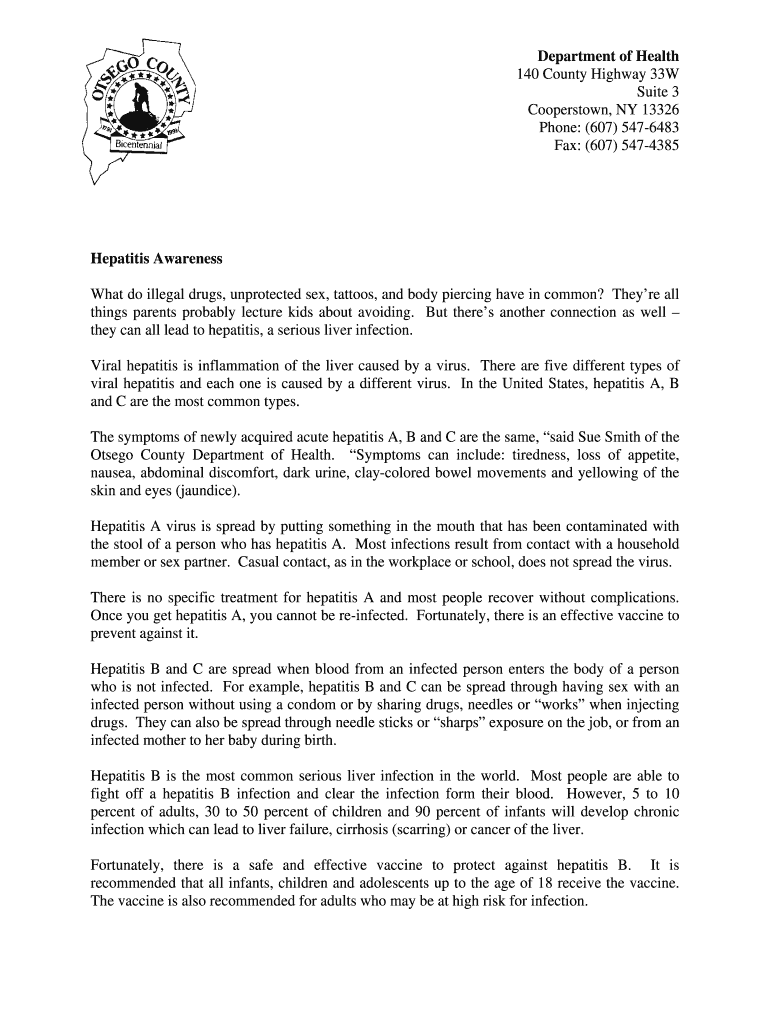







Definition and Meaning of Hepatitis Awareness
Hepatitis awareness refers to the efforts to educate and inform the public about hepatitis viruses, their transmission, symptoms, prevention strategies, and treatment options. This awareness aims to reduce the spread of hepatitis by enhancing understanding and promoting preventive measures. Hepatitis viruses, notably A, B, and C, vary in their mode of transmission and impact on health. Hepatitis awareness campaigns often focus on risk factors like illegal drug use, unprotected sex, and practices such as tattooing and body piercing. Increased awareness can lead to timely testing, vaccinations, and treatment, thereby limiting the spread and impact of the disease.
How to Use Hepatitis Awareness Initiatives
Hepatitis awareness initiatives are designed to educate both the general public and at-risk populations about preventive measures, vaccination availability, and the importance of regular testing. These initiatives typically include:
- Educational materials: Brochures, posters, and online resources explaining hepatitis transmission and prevention.
- Workshops and seminars: Sessions that provide interactive learning opportunities for individuals to ask questions and receive guidance.
- Community programs: Events like health fairs and free vaccination clinics to increase accessibility to preventive care.
Individuals can utilize these resources to learn about hepatitis, identify personal risk factors, and take proactive steps to protect their health and the health of others through vaccination and regular medical check-ups.
Steps to Complete a Hepatitis Awareness Program
Completing a hepatitis awareness program involves a series of steps designed to enhance understanding and promote health-protective behaviors:
- Identify target audience: Determine who needs to be educated, whether it's healthcare workers, at-risk groups, or the general public.
- Design informative content: Develop comprehensive educational materials, including videos, pamphlets, and web pages explaining various aspects of hepatitis.
- Collaborate with healthcare entities: Partner with local health departments, hospitals, and clinics to provide expert-led seminars and workshops.
- Implement outreach strategies: Utilize media campaigns, social media platforms, and community events to spread information.
- Monitor and evaluate: Assess the effectiveness of the program through feedback and data collection, adjusting tactics for better outcomes.
Key Elements of Hepatitis Awareness Campaigns
Effective hepatitis awareness campaigns incorporate several key elements to ensure widespread understanding and engagement:
- Clear messaging: Using straightforward, accessible language to explain what hepatitis is and why prevention matters.
- Cultural competency: Tailoring messages to resonate with various demographic groups, respecting diverse cultural and linguistic backgrounds.
- Regular updates: Keeping information current with the latest research findings, vaccination protocols, and treatment options.
- Community involvement: Engaging local community leaders to participate in and endorse awareness activities.
These elements help ensure that awareness efforts effectively reach and educate the intended audience, promoting healthier populations.
Important Terms Related to Hepatitis Awareness
Understanding hepatitis awareness includes familiarizing oneself with specific terms:
- Viral Hepatitis: Refers to infections caused by the hepatitis viruses, primarily types A, B, and C.
- Transmission: The ways in which hepatitis viruses spread, including blood-to-blood contact, sexual contact, and from mother to child during birth.
- Symptoms: Commonly include jaundice, fatigue, abdominal pain, and dark urine.
- Vaccination: Preventive measures available for hepatitis A and B, critical for effective hepatitis control.
- Chronic Infection: Long-lasting hepatitis infections, primarily associated with hepatitis B and C, which can lead to severe liver complications.
A thorough understanding of these terms supports greater awareness and informed decision-making concerning health practices.
Why Should You Participate in Hepatitis Awareness
Participating in hepatitis awareness initiatives offers numerous benefits:
- Prevention: Awareness campaigns emphasize the importance of vaccinations and safe practices, reducing infection risk.
- Early Detection: Regular testing leads to early diagnosis, significantly improving treatment success rates and health outcomes.
- Reduced Stigma: Public education combats misconceptions and stigma associated with hepatitis, encouraging more individuals to seek help.
- Public Health Benefits: A well-informed populace contributes to overall community health, reducing the impact of hepatitis through collective effort.
These efforts support personal well-being and contribute to broader public health goals.
Examples of Using Hepatitis Awareness Effectively
Effective hepatitis awareness campaigns can be seen in various real-world settings:
- School Programs: Health classes that incorporate hepatitis education, ensuring young individuals understand risks and prevention strategies from an early age.
- Workplace Initiatives: Corporate wellness programs that include hepatitis screening and vaccination drives to protect employees.
- Public Health Campaigns: Statewide or national efforts such as those by the Department of Health, focusing on mass education through advertising and public service announcements.
These examples highlight the diverse ways hepatitis awareness can be implemented to achieve optimal health outcomes.
Hepatitis Awareness in Different U.S. States
State-specific rules and outreach efforts can greatly influence hepatitis awareness across the U.S.:
- Vaccination Policies: Some states mandate hepatitis B vaccinations for children before school enrollment, boosting early prevention.
- Public Health Funding: Variations in state funding levels impact the scope and reach of awareness initiatives and resources available.
- Reporting and Tracking: States vary in their requirements for reporting hepatitis cases, influencing how data guides awareness campaigns and resource allocation.
Understanding these state-specific nuances is crucial for maximizing the effectiveness of hepatitis awareness strategies across the U.S.




