






Definition & Purpose of the Sewer Board Meeting Documentation
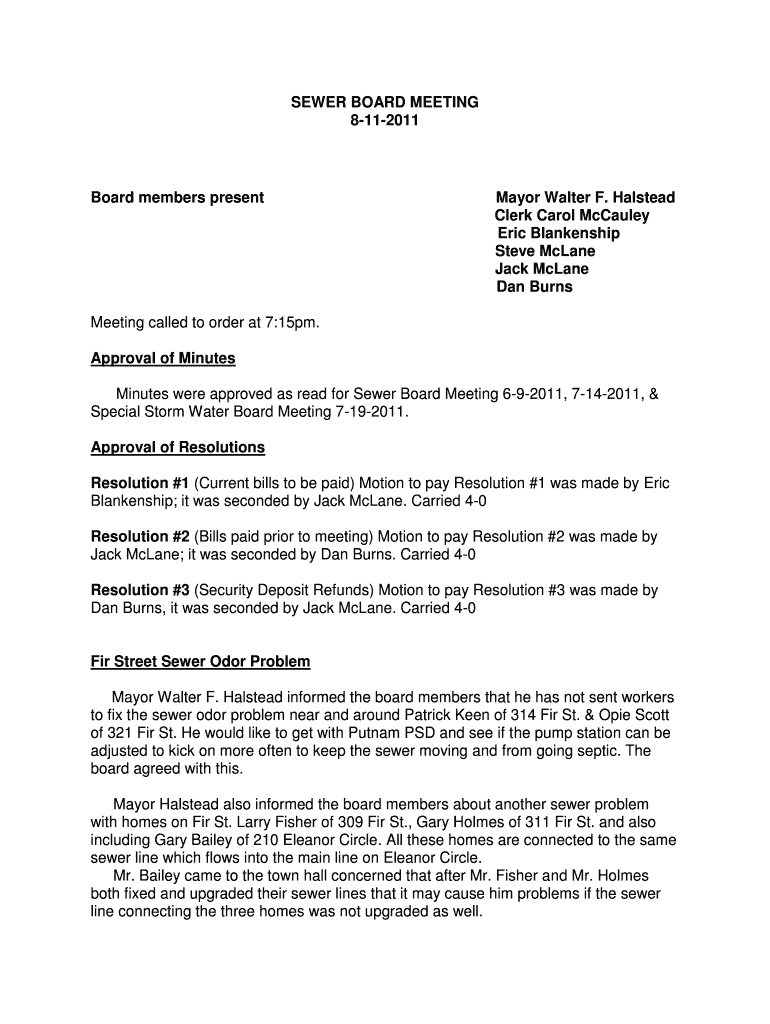
The "Sewer Board Meeting 8-11-2011 Board - Town of Eleanor" document serves as a formal record of meetings conducted by the Sewer Board in the Town of Eleanor. It details the discussions, decisions, and actions taken regarding the local sewer system management. The primary goal is to ensure transparency and accountability in public utilities operations and provide a reference point for future consultations. This documentation typically includes meeting minutes, resolutions, and relevant communications between board members.
How to Access the Sewer Board Meeting Document
To obtain the document, you may contact the Town Hall of Eleanor or check their official website if such records are digitized. Public records usually comply with local transparency laws, making them accessible to taxpayers and residents. You may be required to fill out a request form to access the document in cases where records are not readily available online. It's critical to check for any updates or additional requirements specific to the Town of Eleanor.
Steps to Analyze the Sewer Board Meeting Documentation
- Review Meeting Minutes: Start by reading the minutes to get an overview of the topics discussed and decisions made.
- Identify Key Issues: Pay special attention to recurring issues such as sewer system improvements or financial approvals.
- Evaluation of Resolutions: Look at the resolutions passed to understand any changes or new implementations within the town’s sewer systems.
- Understand Financial Implications: Analyze discussions related to budget allocations or funds approved for sewer-related projects.
Importance of the Sewer Board Meeting Document
This document is essential for residents and officials to understand ongoing and future infrastructural plans. It provides insight into local governance and helps residents gauge how effectively the town addresses utility issues such as sewer management. Keeping informed about these meetings can also empower residents to be proactive in community planning decisions.
Key Participants in the Meeting
The typical participants in these meetings include board members, the town mayor, utility representatives, and sometimes members from the public or press. Each participant usually plays a distinct role in decision-making or policy implementation related to sewer management.
Legal Framework and Compliance
The documentation adheres to local laws governing public meetings. This ensures that actions taken during meetings comply with legal standards and that any new policies are enforceable under the local jurisdiction. Citizens have the right to access these records to ensure that community interests are represented and protected.
Main Components of the Sewer Board Meeting Document
- Meeting Agenda: Clearly outlines the topics to be discussed.
- Minutes of the Meeting: Detailed notes on each discussion point.
- Financial Approvals: Breakdown of budgets and allocations for projects.
- Community Concerns: Records of public complaints or queries presented during the meeting.
- Official Reports: Submitted by officials on the status or outcomes of previous decisions.
Important Considerations for Stakeholders
For residents and town officials, understanding the sewer board meeting documentation is crucial for several reasons. It offers insights into community-focused decision-making and resource allocation. This knowledge can guide public input in future meetings and influence community planning and development related to sewage infrastructure. Engaging with these documents ensures a well-informed community actively participating in local governance.