




Here's how it works
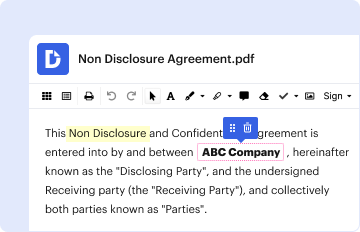
01. Edit your habits of mind rubric online
Type text, add images, blackout confidential details, add comments, highlights and more.
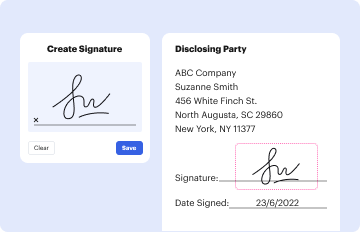
02. Sign it in a few clicks
Draw your signature, type it, upload its image, or use your mobile device as a signature pad.

03. Share your form with others
Send habits of mind via email, link, or fax. You can also download it, export it or print it out.
How to use or fill out habits of mind rubric with our platform

- Click 'Get Form' to open the habits of mind rubric in the editor.
- Begin by entering your name and the date at the top of the form. This personalizes your assessment.
- Review each category listed in the rubric, which includes areas such as Persisting, Managing Impulsivity, and Thinking Flexibly.
- For each habit, select a rating from 1 to 4 that best reflects your self-assessment based on the descriptions provided.
- In the reflection section, answer questions about your strengths and areas for improvement. Use our platform's text fields to type your responses.
- Once completed, save your document. You can also share it directly through our platform for feedback or further discussion.
Start using our platform today to enhance your learning experience with ease!
Fill out habits of mind rubric online
It's free
It's free
Got questions?
We have answers to the most popular questions from our customers. If you can't find an answer to your question, please contact us.
Contact us
How many Habits of Mind are there in total?
The Habits of Mind are a set of 16 dispositions and behaviours identified by Art Costa and Bena Kallick that help pupils successfully approach problems and challenges in the classroom and in everyday life.
What are the five creative Habits of Mind?
The model of creativity and creative thinking that underpins Leading for Creative Thinking focuses on five key Creative Habits (of Mind) - collaborative, disciplined, imaginative, inquisitive and persistent.
What are the mathematical Habits of Mind?
Habits of Mind is knowing how to behave intelligently when you DONT know the answer. It means having a disposition toward behaving intelligently when confronted with problems, the answers to which are not immediately known.
What are the Habits of Mind theory?
The sixteen Habits of Mind, according to Costa and Kallick, are as follows: persisting; managing impulsivity; listening with understanding and empathy; thinking flexibly; thinking about thinking; striving for accuracy; questioning and posing problems; applying past knowledge to new situations; thinking and
What is a scientific habit of mind?
Scientific habits of mind start with critical reasoning and include healthy skepticism, the ability to distinguish answerable questions from unanswerable ones, being comfortable examining both quantitative and qualitative information, and the capacity to place things into larger contexts and perceive connections.
Security and compliance
At DocHub, your data security is our priority. We follow HIPAA, SOC2, GDPR, and other standards, so you can work on your documents with confidence.
Learn more


People also ask
What are the Habits of Mind according to Marzano?
Productive Habits of Mind, or Thinking about Ones Thinking was the fifth of his 5 Dimensions of Learning. Furthermore, Marzano broke these habits down into three categories: Self-Regulated Thinking, Critical Thinking, and Creative Thinking.