







Definition & Meaning
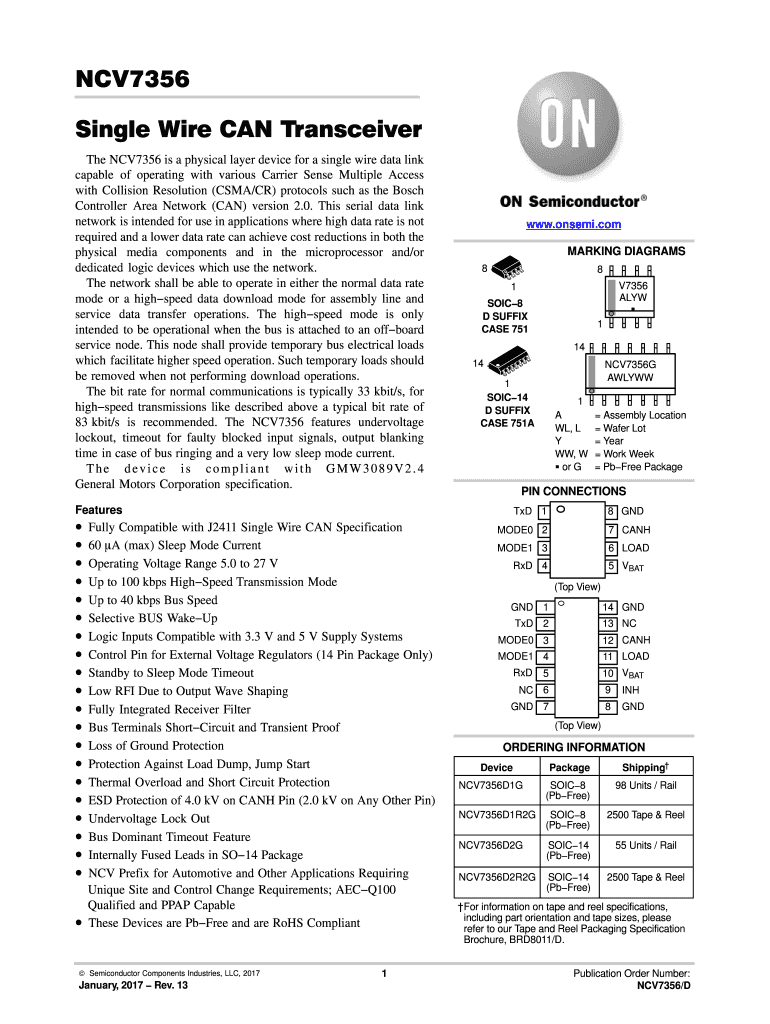
A single-wire CAN transceiver is a device designed to support the transmission of data over a single wire using the Controller Area Network (CAN) protocol. Typically used for low data rate applications, this type of transceiver is particularly beneficial in automotive applications where simple, cost-effective solutions are required for data exchange between various vehicle systems. The single-wire approach minimizes wiring complexity and costs, making it an ideal choice for automotive networks and other applications requiring streamlined communication architectures.
How to Use the Single Wire CAN Transceiver
The usage of a single-wire CAN transceiver involves connecting it to a compatible microcontroller or processor to facilitate communication over a single wire. After installation, users can enable specific modes—such as normal or high-speed—depending on the required data rate and application needs. The transceiver will then convert signals from the microcontroller into CAN bus signals and vice versa, enabling efficient data exchange. It's critical to ensure that the transceiver is correctly interfaced with both the microcontroller and the system’s power supply to avoid malfunctions.
Key Elements of the Single Wire CAN Transceiver
Key features of a single-wire CAN transceiver include support for normal and high-speed data transmission modes and a typical operational voltage range of 5.0 to 27 V. Advanced models also provide protections like undervoltage lockout and short-circuit protection, which safeguard the device and connected systems from electrical issues. Moreover, functionalities such as selective bus wake-up and low sleep mode current further enhance energy efficiency and operational versatility, particularly in automotive contexts.
Important Terms Related to Single Wire CAN Transceiver
When dealing with single-wire CAN transceivers, it's essential to understand a few key terms:
- CAN Protocol: A widely used vehicle bus standard designed to permit microcontrollers and devices to communicate with each other in applications without a host computer.
- Undervoltage Lockout: A feature that ensures the transceiver turns off power when the voltage falls below a certain threshold, preventing potential damage.
- Selective Bus Wake-up: A mechanism that allows certain nodes on the network to wake up in response to specific network messages, reducing power consumption when full operation is not required.
Examples of Using the Single Wire CAN Transceiver
A practical example of a single-wire CAN transceiver in use is within a vehicle's diagnostic system, where it facilitates data transmission between various electronic control units (ECUs). Further applications include monitoring systems, where sensors equipped with transceivers send real-time data to a central processor for analysis. These scenarios underscore the transceiver's ability to streamline communications processes across a range of industrial and automotive applications, thereby contributing to system optimization and enhanced performance.
Why You Should Use Single Wire CAN Transceiver
Opting for a single-wire CAN transceiver is advantageous due to its simplicity and cost-effectiveness in communication design. It reduces the amount of wiring needed, which is important in automotive manufacturing and maintenance. Furthermore, the robust nature of CAN communications, with built-in error checking and correction features, makes this transceiver ideal for environments that require reliable and stable data exchange, meeting both everyday and high-demand operational needs effectively.
Software Compatibility
When integrating a single-wire CAN transceiver with software systems, compatibility with microcontroller or processor development environments is crucial. Embedded software platforms, such as those for programming Arduino or Raspberry Pi units, often provide libraries and support files that simplify the development process. Additionally, specialized automotive diagnostic software can effectively interface with these transceivers, providing advanced capabilities for troubleshooting and system analysis.
Digital vs. Paper Version
While the single-wire CAN transceiver itself is a physical device, the configuration, and management of the transceiver often involve digital platforms. Software tools accompany these transceivers to manage settings, firmware updates, and diagnostic checks. This digital interface augments the hardware, enabling easier management and deployment of the transceivers in various environments, thus facilitating integration with modern IT systems and enhancing the overall utility of the device.
Business Types That Benefit Most From Single Wire CAN Transceivers
Businesses that produce or maintain automotive vehicles stand to benefit significantly from single-wire CAN transceivers. Automotive manufacturers can reduce costs by incorporating these transceivers into their vehicles' systems to simplify wiring needs. Additionally, companies specializing in vehicle diagnostics and repair can use these transceivers to enhance their service offerings, providing better, faster, and more efficient diagnostic solutions. Beyond automotive, industries that require streamlined data communication technologies, such as industrial automation or robotics, can also leverage the advantages offered by single-wire CAN transceivers.




