Key Elements of the Massage Medical History Form
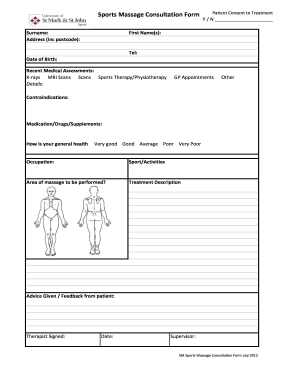
A massage medical history form collects essential information to ensure a safe and effective massage therapy session. This form includes several critical sections that practitioners use to tailor treatments according to each client's specific needs and conditions. Key elements generally encompass personal details, medical history, and informed consent.
-
Personal Information: This section requires clients to provide their full name, contact details, and emergency contact information. Accurate personal information ensures that therapists can reach out to clients if necessary and understand their background.
-
Medical History: Clients must disclose past and present medical conditions, allergies, surgeries, and any ongoing treatments or medications. This information helps therapists adjust techniques to accommodate any health issues and prevent adverse reactions.
-
Current Health Concerns: This part of the form seeks details about specific symptoms or areas of discomfort. Clients are encouraged to mention any pain or tension areas, enabling therapists to focus on addressing these during sessions.
-
Lifestyle and Stress Levels: Understanding the client’s lifestyle, including stress levels and physical activity, allows the therapist to provide personalized massages that cater to both physical and mental relaxation needs.
-
Informed Consent and Confidentiality Agreement: Clients must acknowledge their understanding of the massage therapy process, its limitations, and their rights to confidentiality. This section ensures clients are informed about the therapy's nature and confirm that they consent to treatment.
How to Use the Massage Medical History Form
Using the massage medical history form efficiently requires a systematic approach. Here's how practitioners and clients can handle the form to ensure a smooth process.
-
Preparation by Clients: Before visiting the therapy center, clients should gather necessary medical information, including details of any current medications, medical conditions, and past treatments. Organizing this data helps fill out the form accurately.
-
Filling the Form: Clients should take their time to fill out each section of the form comprehensively. Clear instructions guide through sections like personal data, medical history, and areas of discomfort. Accuracy is crucial to avoid any misinterpretation.
-
Review and Submission: Once completed, clients should review the form for any omissions or errors. Discussing the form with the therapist during the session will clear up any confusion and ensure mutual understanding.
-
Updates for Ongoing Clients: Regular therapy attendees need to update their forms whenever there are changes in medical conditions or medications. Maintaining current records ensures that treatments remain appropriate and safe.
Steps to Complete the Massage Medical History Form
Completing a massage medical history form involves several detailed steps, each designed to extract vital information ensuring safe therapy sessions.
-
Read Instructions Carefully: Each section includes specific instructions, highlighting what information is required. Reading these thoroughly helps clients provide the correct information.
-
Enter Personal Information: Clients should fill out basics like name, contact details, and emergency contact information precisely, ensuring all data is up-to-date.
-
Detail Medical History: This section demands a thorough account of past and present medical issues. Be comprehensive and candid, mentioning conditions like heart trouble, arthritis, or recent surgeries.
-
Specify Current Medications: List all prescribed and over-the-counter medications, along with supplements. This detail informs therapists of potential interactions or precautions necessary during treatment.
-
Describe Current Health Concerns: Highlight any specific pain or stress points. Details about frequency, duration, and severity of symptoms help therapists tailor their techniques.
-
Sign the Consent Section: The last step involves reviewing the informed consent and confidentiality agreement, ensuring comprehension before signing. This confirms understanding and acceptance of therapy conditions and privacy rights.
Legal Use of the Massage Medical History Form
While massage therapy promotes relaxation and wellness, the legal use of the massage medical history form ensures these treatments are provided responsibly and ethically.
-
Informed Consent: Legally, every client must be informed about the therapy procedure and potential risks before treatment. The form captures this acknowledgment, protecting both the client and therapist.
-
Confidentiality Obligations: Client data collected through the form must adhere to confidentiality laws like HIPAA. Therapists and spas are legally obliged to protect this personal and medical information from unauthorized access.
-
Accurate Record-keeping: Legally maintaining up-to-date records is crucial. Should a legal issue arise regarding treatment outcomes, well-documented history forms offer essential insights and protection.
-
Qualifications for Treatment: The form assists therapists in determining eligibility for specific massage techniques. Legally, therapists should not conduct treatments contraindicated by the client’s medical history.
Important Terms Related to Massage Medical History Form
Understanding the specific terminology used in a massage medical history form aids clients and therapists in communicating effectively and ensuring the collection of precise information.
-
Contraindications: Refers to specific medical conditions or symptoms that make certain massage techniques inadvisable, such as high fever or infectious skin diseases.
-
Confidentiality Agreement: A legal commitment from the therapist or spa to protect the client's personal and medical information, maintaining privacy.
-
Informed Consent: The process of getting the client's approval to proceed with the therapy after explaining the procedure, risks, and benefits.
-
Therapeutic Benefit: The intended health advantages a client seeks from massage therapy, which should align with their personal history and health needs.
-
Modality: Types of massage or bodywork techniques selected based on the form's health disclosures, such as Swedish massage or deep tissue therapy.
Who Typically Uses the Massage Medical History Form
The massage medical history form is a pivotal tool used by diverse stakeholders in the wellness industry to ensure safe practice.
-
Registered Massage Therapists: RMTs use the form to tailor their sessions according to a client’s personal and medical information, enhancing treatment efficacy.
-
Spas and Wellness Centers: These entities require clients to fill out the form before receiving services to prevent any health-related complications during sessions.
-
Chiropractic Offices: Chiropractors incorporate massage therapy into broader treatment plans, necessitating a detailed understanding of the patient's health history.
-
Physical Therapy Clinics: Physical therapists use these forms to integrate massage techniques into injury recovery and rehabilitation regimens safely.
-
Clients Seeking Massage Therapy: Individuals use the form to communicate their health needs and therapy goals clearly, ensuring they receive the most suitable treatments.


Examples of Using the Massage Medical History Form
The use of a massage medical history form can be illustrated with real-world scenarios, emphasizing its significance in therapy sessions.
-
Chronic Pain Management: A client with a history of chronic back pain uses the form to disclose their condition, leading the therapist to focus on pain relief techniques and avoid areas that might exacerbate pain.
-
Post-Surgery Recovery: Following knee surgery, a patient highlights this on their form. The therapist then opts for gentle modalities that promote circulation without stressing the area.
-
Sports Injury Treatment: An athlete reports a recent sprain on the form. The therapist tailors sessions to avoid the injured area while aiding overall muscular recovery.
-
Pregnancy: A pregnant client indicates her status on the form, prompting the therapist to utilize prenatal-specific techniques to ensure safety and comfort.
State-Specific Rules for the Massage Medical History Form
Although massage therapy is widely practiced across states, specific rules and regulations govern the use and components of medical history forms.
-
State Licensure Requirements: Each state may have different requirements for therapist training and documentation, impacting what must be included in history forms.
-
Record Retention Laws: States dictate how long client records, including medical history forms, need to be retained, varying typically from seven to ten years.
-
Mandatory Disclosure Elements: Some states may require the inclusion of specific information or disclaimers within forms to align with regional health regulations.
-
Insurance and Liability Regulations: The form may need specific sections to comply with insurance policies and liability laws, protecting both the practitioner and client.
Carefully understanding and complying with state-specific mandates not only assures adherence to legal standards but also enhances trust and compliance in therapeutic practices.