






Definition and Meaning
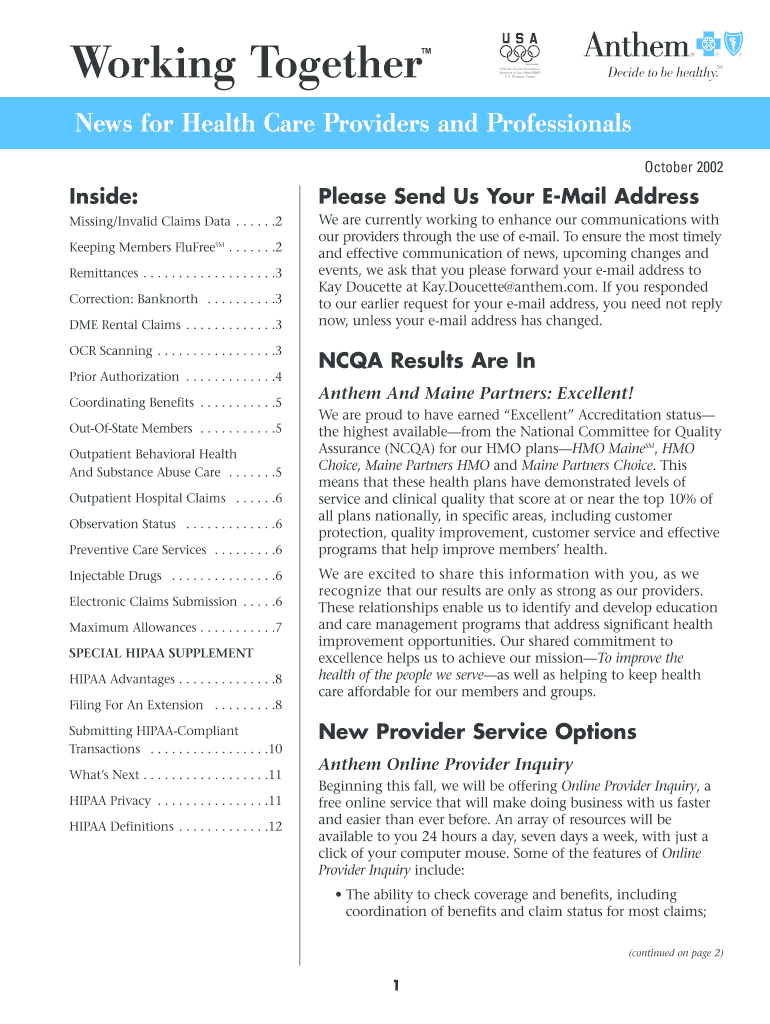
The "Working Together" document, initially published by Anthem Blue Cross and Blue Shield, serves to enhance communication and collaboration among healthcare providers and professionals. By providing updates on claims processing, vaccination initiatives, and new online services, it aims to streamline processes in the healthcare sector. Moreover, it emphasizes compliance with the Health Insurance Portability and Accountability Act (HIPAA), ensuring that providers understand the legal requirements and benefits associated with the regulations.
How to Use the Working Together Document
For healthcare providers, utilizing the "Working Together" document involves leveraging the information presented to improve various operational aspects. Providers can benefit from the detailed updates on claims processing, which could significantly enhance efficiency and reduce errors. Additionally, the document's insights into vaccination initiatives allow providers to align their preventive care strategies with best practices. To maximize its utility, providers should frequently review the document's updates about Anthem's online services to fully integrate these tools into their daily operations.
Steps to Complete the Working Together Process
- Review Policy Updates: Start by thoroughly examining the document's updates on new policies and regulations.
- Integrate New Services: Implement any newly introduced online services that align with your current operations.
- Modify Claims Process: Adjust your claims submission process according to the updated guidelines to ensure compliance and efficiency.
- Enhance Communication: Use the communication strategies suggested within the document to foster better collaborative practices.
- Monitor Compliance: Continually assess your adherence to HIPAA regulations as outlined, ensuring all aspects of your operation meet required standards.
- Document and Track Changes: Maintain records of how these updates have been integrated into your practice for future reference or audits.
Key Elements of the Working Together Document
The core components of the "Working Together" document include updates on the claims processing procedures, information on flu and pneumonia vaccination initiatives, and the integration of new online provider services. The document also details HIPAA compliance requirements and deadlines, which are critical for maintaining legal adherence. Another key highlight is the acknowledgment of Anthem's accreditation from the National Committee for Quality Assurance (NCQA), which underscores the quality and reliability standards expected.
Legal Use of the Working Together Document
Healthcare providers must leverage the "Working Together" document to ensure legal compliance, especially concerning HIPAA regulations. It provides insight into deadlines and the interpretation of new rules, enabling providers to align their operations with federal mandates. Understanding these legal elements is crucial for avoiding penalties and maintaining the trust of patients and stakeholders.
Who Typically Uses the Working Together Document
Primarily targeted at healthcare providers and professionals, the "Working Together" document is utilized by medical practitioners, hospital administrators, and insurance claims processors. These individuals use the document to stay informed of industry updates, compliance requirements, and best practices. Additionally, it serves as a resource for those responsible for implementing new services and enhancing patient care strategies.


Important Terms Related to the Working Together Document
- HIPAA: Health Insurance Portability and Accountability Act, a key regulation emphasizing the protection of patient information.
- Claims Processing: The procedure for submitting and managing insurance claims, crucial for reimbursement.
- Vaccination Initiatives: Programs aimed at promoting flu and pneumonia vaccinations to prevent outbreaks.
- NCQA Accreditation: A recognition of quality standards within healthcare, highlighting excellence in service delivery.
State-Specific Rules for Working Together
While the federal components such as HIPAA compliance are consistent nationwide, certain state-specific rules may influence how providers implement the guidelines in the "Working Together" document. For instance, state regulations might affect claims processing times or the specific requirements for vaccination reporting. Healthcare providers should consult state health departments or legal advisors to align national guidance with state-specific requirements.
Compliance with IRS Guidelines
Although the "Working Together" document primarily focuses on healthcare, compliance with IRS guidelines can be inferred through its emphasis on maintaining accurate records and documentation. Proper adherence to federal regulations typically includes tax compliance, thus ensuring that financial operations linked to healthcare practices are well-documented and reported.