01. Edit your form online
Type text, add images, blackout confidential details, add comments, highlights and more.

Type text, add images, blackout confidential details, add comments, highlights and more.

Draw your signature, type it, upload its image, or use your mobile device as a signature pad.

Send it via email, link, or fax. You can also download it, export it or print it out.
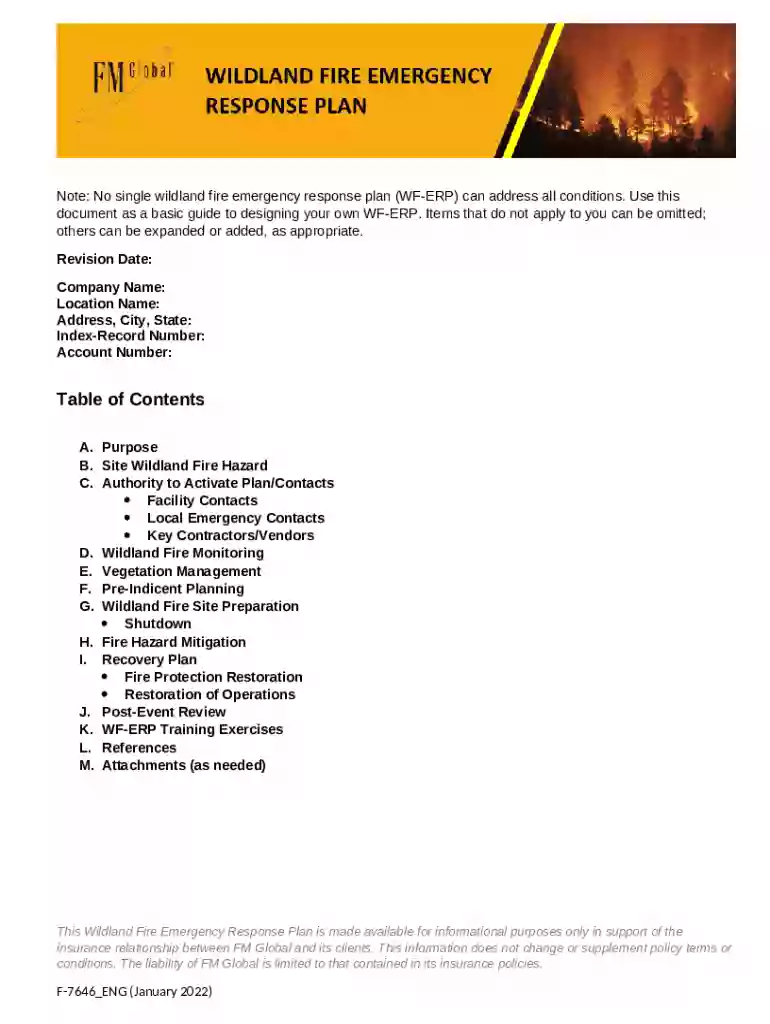
The F7646 Wildland Fire Emergency Response Plan Template serves as a structured framework for outlining actions to be taken before, during, and after a wildland fire incident. This document is designed to guide organizations and emergency response teams in developing a comprehensive plan that addresses site-specific needs and mitigates potential risks associated with wildfires. The template ensures that essential components such as risk assessment, emergency contacts, and recovery procedures are included in the planning process. It is crucial for minimizing property damage and business interruptions caused by wildfires.
Using the F7646 Wildland Fire Emergency Response Plan Template involves several steps to ensure an effective response to wildland fires. Users should begin by conducting a thorough site-specific risk assessment. This involves evaluating the landscape, identifying potential fire hazards, and understanding the vulnerability of the structures and facilities. Once hazards are identified, users should outline actions for fire prevention and preparedness, including vegetation management and emergency communications strategies. Additionally, users must define clear roles and responsibilities for personnel involved in executing the plan. Regular training and drills should be carried out to familiarize all stakeholders with their roles and refine response efforts.
Completing the F7646 Wildland Fire Emergency Response Plan Template requires a systematic approach:
Site Assessment
Plan Development
Resource Allocation
Coordination with Authorities
Documentation and Review
The F7646 template encompasses critical elements that ensure effective emergency management:
The F7646 Wildland Fire Emergency Response Plan Template is primarily used by:


The legal use of the F7646 template involves compliance with federal and state guidelines for fire safety planning. Organizations must ensure that their emergency response plans align with the regulations set by agencies such as the National Fire Protection Association (NFPA) and local fire departments. The template acts as a tool to facilitate adherence to legal requirements and provides a documentable plan that can be presented during inspections or audits.
Different U.S. states may have specific regulations that influence how the F7646 template is used:
Organizations must be aware of state-specific requirements and adjust the template accordingly to ensure compliance and maximize its effectiveness.
Real-world application scenarios of the F7646 template include:
These examples illustrate the template's flexibility and real-world utility in enhancing preparedness and resilience against wildland fires.
At DocHub, your data security is our priority. We follow HIPAA, SOC2, GDPR, and other standards, so you can work on your documents with confidence.