






Definition and Meaning
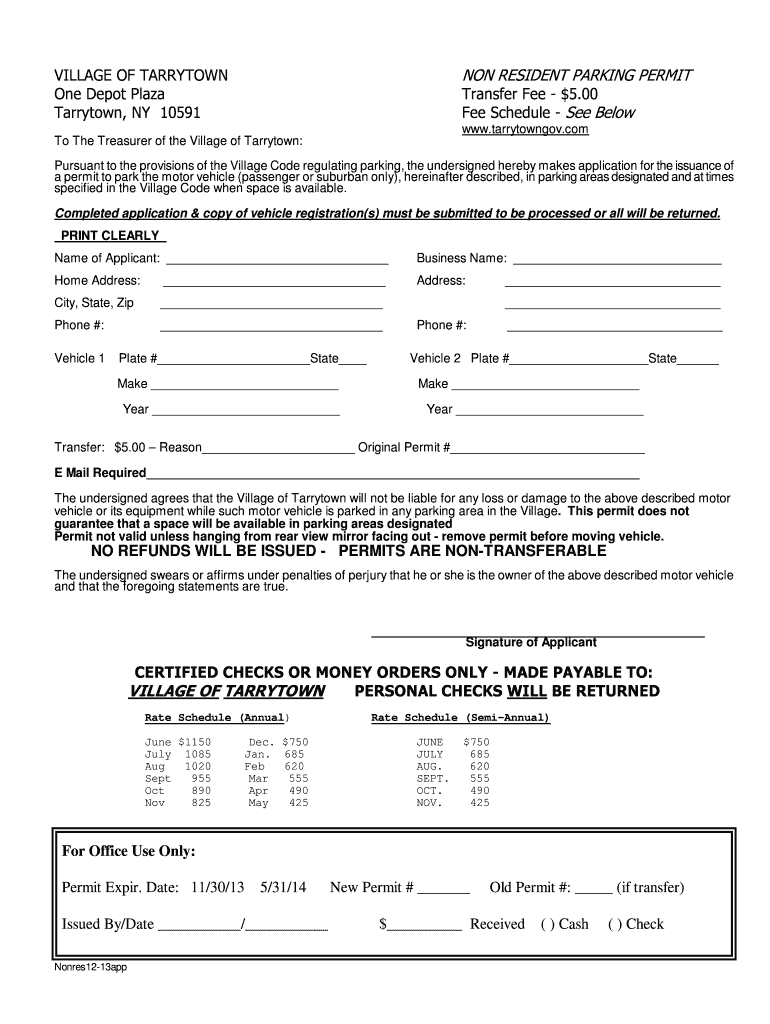
A Non-Resident Parking Permit is a form that allows individuals who do not reside within a specific jurisdiction to legally park their vehicles in designated areas. This permit is commonly used in areas that have restricted parking to manage traffic and ensure that spaces are available for locals and visitors who meet specific criteria. Issued by municipal or local government bodies, these permits typically outline terms of use, eligibility, and associated fees.
How to Use the Non-Resident Parking Permit
Using a Non-Resident Parking Permit is straightforward. Once acquired, the permit must be visibly displayed on the vehicle’s dashboard or rearview mirror, depending on local regulations. This ensures enforcement officers can readily identify the vehicle as authorized to park in the designated zones. Permit holders should familiarize themselves with the boundaries of the parking zones, as parking outside these areas may result in fines or penalties. The permit often includes a time frame during which it is valid, requiring renewal before expiry to maintain parking privileges.
How to Obtain the Non-Resident Parking Permit
To obtain a Non-Resident Parking Permit, applicants typically need to complete an application form provided by the local governing body managing the parking area. Required documentation might include proof of vehicle ownership, identification, and possibly residency status in a different location. Applications can often be submitted in person, via mail, or through an online system depending on the issuing authority. Some jurisdictions may require an application fee as part of the process, with options for annual or semi-annual permit issuance.
Steps to Complete the Non-Resident Parking Permit Form
-
Gather Required Documents: Ensure you have all necessary documentation, such as your vehicle registration, proof of identity, and proof of non-residency.
-
Access the Application: Obtain the application form from the relevant municipal office or website.
-
Fill Out the Form: Provide accurate details, including personal information, vehicle specifics, and the desired permit duration.
-
Submit the Application: Submit your completed application along with any required fees. Check for available submission methods like online portals, in-person drop-offs, or mail-in options.
-
Receive Confirmation: Upon approval, receive your permit either digitally or as a physical document. Ensure it is displayed according to the stated requirements.
Why Obtain a Non-Resident Parking Permit
Obtaining a Non-Resident Parking Permit is beneficial for individuals who frequently visit or work in a specific jurisdiction with limited parking. It offers convenience by allowing legal access to parking spaces that may otherwise be restricted. Additionally, holding a permit can prevent fines and penalties associated with unauthorized parking and contributes to efficient urban traffic management by regulating parking space use.
Who Typically Uses the Non-Resident Parking Permit
Non-Resident Parking Permits are predominantly used by commuters, business professionals, students, and frequent visitors who travel to areas with controlled parking. These individuals benefit from the convenience of secured parking without the need for disruptive daily arrangements. In some cases, businesses may also obtain such permits for company vehicles used for deliveries or client visits in areas where parking is limited.


Key Elements of the Non-Resident Parking Permit
-
Eligibility Criteria: Specifies who qualifies for the permit based on residence status, reason for frequent visits, and vehicle type.
-
Validity Period: Defines the duration for which the permit is valid, requiring renewal upon expiration.
-
Fees and Payments: Details any costs associated with obtaining the permit and acceptable methods for payment.
-
Terms of Use: Outlines rules regarding where and when the permit can be used, including restricted zones and times.
-
Liability Clauses: Provides disclaimers on the permit holder’s responsibility for monitoring adherence to regulations.
Legal Use of the Non-Resident Parking Permit
The legal use of Non-Resident Parking Permits is governed by municipal parking ordinances. Permit holders must comply with all stipulated terms, such as specific zones where parking is permitted, time restrictions, and display requirements. Unauthorized or fraudulent use of permits can result in revocation, fines, or other legal actions. In case of changes, such as vehicle replacement, permit holders should contact issuing bodies to update details and ensure compliance with current regulations.
State-Specific Rules for the Non-Resident Parking Permit
Each state or locality may have unique regulations regarding Non-Resident Parking Permits. For example, some areas might offer discounts for environmentally friendly vehicles, while others enforce stricter controls during holidays or events. Certain municipalities could also have requirements for disabilities or commercial vehicle permits. It is crucial for permit seekers to check with their local authorities for any specific rules or exceptions pertinent to their area of interest.