






Definition and Meaning
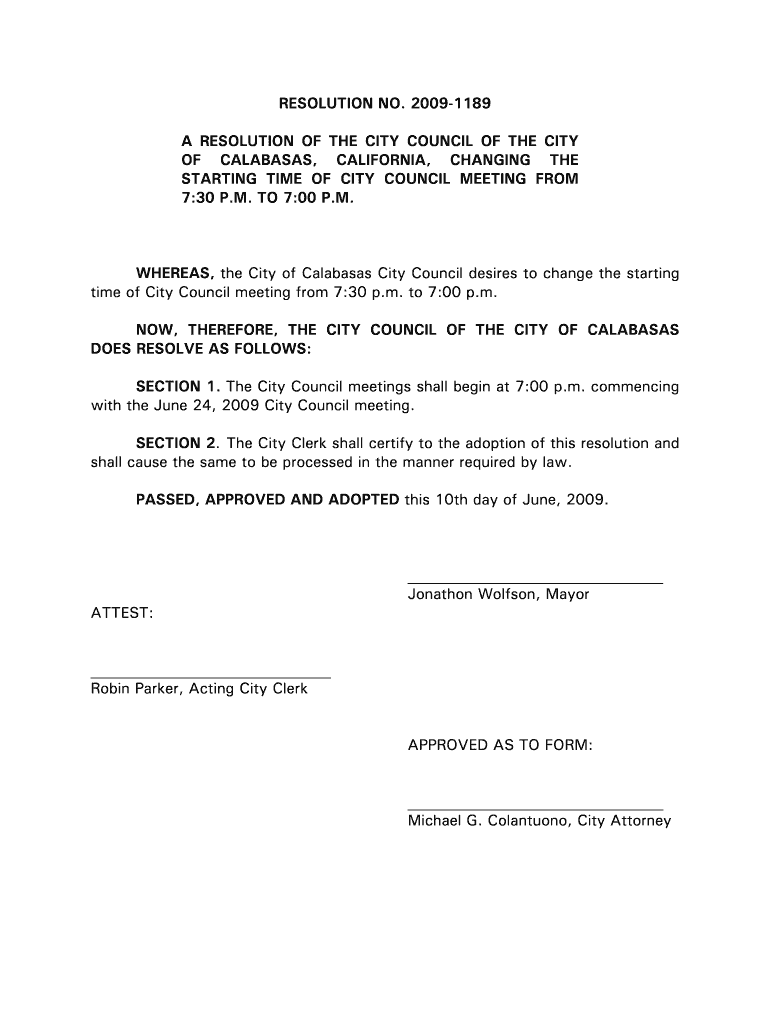
The phrase "NOW, THEREFORE, THE CITY COUNCIL OF THE CITY OF CALABASAS DOES RESOLVE AS FOLLOWS: SECTION 1" is often found at the beginning of formal resolutions adopted by the City Council of Calabasas. In legal and legislative contexts, a resolution is a formal expression of the opinion or will of a legislative body. The structure begins with a proclamation ("NOW, THEREFORE"), indicating a formal decision or action agreed upon by the City Council. "SECTION 1" typically introduces the initial provision or statement of the resolution. Understanding this structure is critical for interpreting municipal legislative documents.
- Example Usage: In a resolution to alter city regulations, this phrase might precede a detailed list of changes adopted by the City Council.
- Comprehensive Scope: This format is standard in legal documents, providing clear instructions and resolutions passed by elected officials.
How to Use the Resolution
Using the resolution in practical scenarios involves understanding its implications, how it affects stakeholders, and the legal weight it carries. When the City Council passes such a resolution, it often entails policy implementation, regulatory changes, or official stances on particular issues.
- Practical Application: Evaluate how the resolution impacts your personal or corporate responsibilities if you reside or operate a business within Calabasas.
- Stakeholder Impact: Identify who the resolution affects, such as residents, business owners, or municipal employees.
Steps to Complete and Implement the Resolution
Completing the processes initiated by a resolution involves several administrative and procedural steps. It requires coordination among various municipal departments and, sometimes, public input or compliance.
- Drafting Phase: Initial document drafting typically includes legal counsel and drafting committees.
- Public Consultation: Some resolutions require public hearings or feedback before final approval.
- Formal Adoption: The City Council votes on the resolution, requiring a quorum and majority approval.
- Implementation Strategy: Upon adoption, relevant departments execute the resolution's mandates, which may involve policy changes, infrastructure projects, or regulatory updates.
Why the Resolution Matters
City resolutions like the one indicated have significant implications for local governance and community standards. Legal resolutions guide city planning, budget allocation, and regulatory frameworks, thereby impacting civic life and development.
- Policy Implications: Resolutions typically align with broader city goals, such as sustainability or economic development.
- Legal Authority: Once passed, these resolutions carry the legal authority of the city, enforceable by local government agencies.
Key Elements of the Resolution
The typical structure of a city council resolution includes several essential elements that ensure clarity and legality. These elements form the basis for enacting change and guiding municipal operations.
- Title and Preamble: Clearly states the subject and purpose of the resolution.
- Resolutions and Clauses: Specific provisions detailing actions, responsibilities, and expectations.
- Signatures: Authorized personnel signatures validate the document's authenticity and enforceability.
State-Specific Rules
While resolutions are specific to municipal governance, they often must align with broader state laws to ensure legality. Understanding these requirements helps ensure compliance and prevents conflicts with state legislation.
- Compliance: Review how the resolution complies with California’s state laws regarding municipal governance.
- Preemptions: Identify any state-level legislations that might preempt the resolution.
Legal Use and Importance
The legal importance of such a resolution lies in its formal acceptance by the City Council as an instrument for local government action. It provides a legal framework within which the city operates, reflecting the council’s intent to address local issues.
- Judicial Enforcement: Courts may refer to resolutions in cases where municipal actions or policies are contested.
- Documentation: Resolutions serve as official records of city council decisions and are often archived for public access and transparency.
Versions or Alternatives
Municipal resolutions, while standardized, may vary in format or language based on specific requirements or historical precedents.
- Standard vs. Custom Formats: Some resolutions follow a standardized template, while others might be tailored to suit unique circumstances or reflect historical conventions.
- Comparative Analysis: Evaluating older versions or similar resolutions from neighboring municipalities to understand the evolution or differences in policy approaches.
Through a careful examination of these aspects, stakeholders can effectively engage with and implement city council resolutions such as "NOW, THEREFORE, THE CITY COUNCIL OF THE CITY OF CALABASAS DOES RESOLVE AS FOLLOWS: SECTION 1" within the legal and administrative framework of Calabasas.