







Definition & Meaning
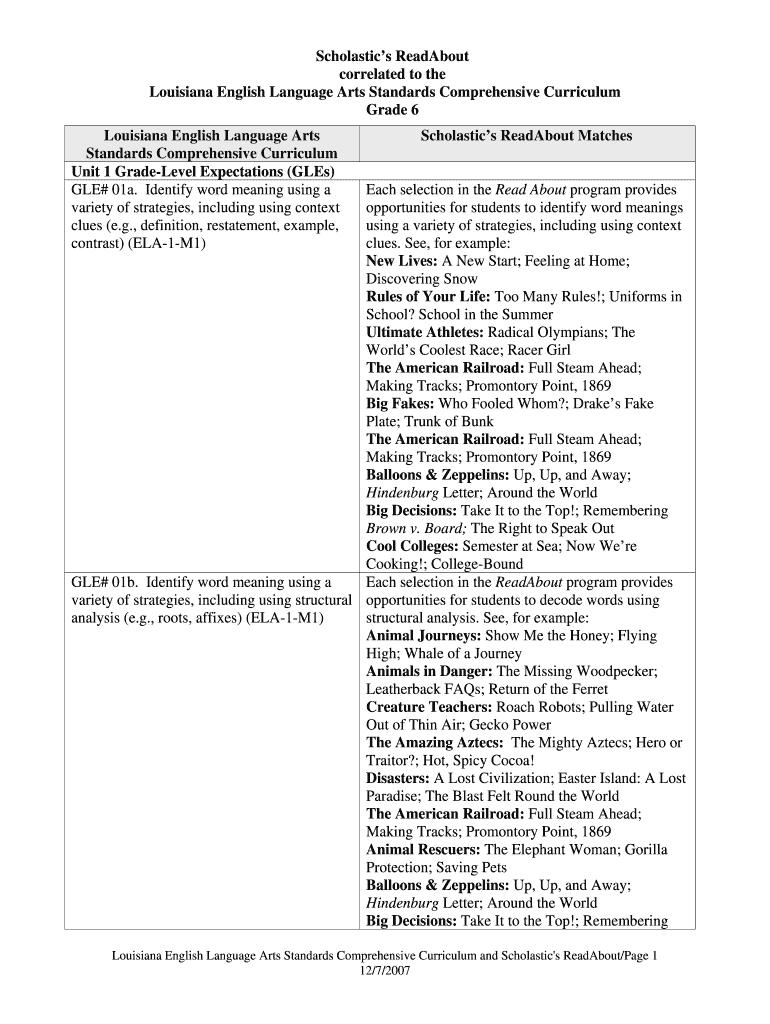
The "LARAG6CompCur doc" is a curriculum alignment document that maps the educational content of the ReadAbout program by Scholastic to the Louisiana Grade 6 English Language Arts Standards. It serves as a tool for educators to ensure that their instructional practices are consistent with state guidelines and objectives. The document encompasses core educational components such as vocabulary development, reading comprehension strategies, and writing skills, offering a detailed breakdown of how the ReadAbout program can be effectively integrated into teaching practices to meet educational standards.
How to Use the LARAG6CompCur doc
Teachers and curriculum planners can use the LARAG6CompCur doc to align classroom activities with state standards. Begin by identifying the grade-level expectations (GLEs) your students need to meet. Use the document to find corresponding activities and lessons within the ReadAbout program that fulfill these requirements. The alignment guide provides specific examples where various selections from ReadAbout meet particular GLEs, which assists in planning lessons and assessments. Educators can select activities that best match the learning needs and current levels of their students, ensuring that they are meeting educational goals both efficiently and effectively.
Steps to Complete the LARAG6CompCur doc
-
Review the Document: Start by thoroughly reading the document to understand how the ReadAbout program aligns with Grade 6 English Language Arts Standards.
-
Identify Learning Objectives: Clearly define the learning objectives you wish to achieve in your curriculum. Reference the specific GLEs related to vocabulary, comprehension, and writing skills.
-
Select Appropriate Activities: Use the alignment examples within the doc to choose activities from the ReadAbout program that align with your teaching goals.
-
Plan Lessons: Develop lesson plans that incorporate these activities, ensuring that they are age-appropriate and meet the students' learning needs.
-
Assessment: Plan assessments to evaluate whether students are meeting the outlined standards through the selected activities.
-
Iterate Based on Feedback: Continuously update and refine your lesson plans based on student performance and feedback to maximize educational outcomes.
Who Typically Uses the LARAG6CompCur doc
This document is primarily used by educators and curriculum planners within the Louisiana school system who are involved in teaching English Language Arts to Grade 6 students. It is also useful for district administrators seeking to standardize curriculum delivery across different schools and teachers seeking to upgrade or align their current lesson plans with state standards. Educational consultants and those involved in educational program evaluations may also find this document valuable.

Key Elements of the LARAG6CompCur doc
-
Grade-Level Expectations (GLEs): Clearly defined expectations outlining the specific skills and knowledge students should acquire.
-
Alignment Examples: Concrete instances of ReadAbout activities that meet particular GLEs, offering educators clear pathways for curriculum integration.
-
Focus Areas: Includes vocabulary development, reading comprehension strategies, and writing skills as main components of the curriculum alignment.
-
Resource Recommendations: Suggestions for additional materials or activities that can support meeting the Grade 6 standards.
Important Terms Related to the LARAG6CompCur doc
-
ReadAbout Program: An instructional platform developed by Scholastic that provides reading materials tailored to enhance students' literacy skills.
-
GLEs (Grade-Level Expectations): The specific benchmarks for student learning at each grade level, as defined by the state educational standards.
-
Vocabulary Development: The process of teaching students the meanings of words and how to use them effectively in communication.
-
Comprehension Strategies: Techniques and methods used to understand, interpret, and analyze text.
-
Writing Skills: Abilities related to composing text, including grammar, structure, and style.
State-Specific Rules for the LARAG6CompCur doc
The LARAG6CompCur doc is tailored specifically to the Louisiana state educational standards for Grade 6 English Language Arts. Educators using this document must adhere to state curriculum guidelines, which include specific requirements for the depth and breadth of coverage of language skills. It is essential for educators to be aware of any updates or changes to these guidelines, as state standards can evolve over time due to educational reform or policy updates.
Examples of Using the LARAG6CompCur doc
-
Vocabulary Lessons: Use the ReadAbout selection "Exploring Space" to teach students how to use context clues and structural analysis to determine the meanings of new words, aligning with specific GLEs.
-
Comprehension Exercises: Implement text-based question sessions that require students to infer main ideas and details from the ReadAbout selection "Animals and Their Environment." This aligns with comprehension strategy goals indicated in the document.
-
Writing Assignments: Guide students to develop compositions based on prompts related to themes in ReadAbout, such as "The Human Body," ensuring they practice critical writing skills outlined in Grade 6 standards.
Legal Use of the LARAG6CompCur doc
The LARAG6CompCur doc must be used in accordance with educational policies and standards set forth by the State of Louisiana Department of Education. Teachers and institutions using this document must ensure compliance with copyright regulations related to the usage of the ReadAbout program materials. Furthermore, all educational practices should align with ethical standards in teaching, ensuring that the curriculum is delivered fairly and inclusively.




