01. Edit your form online
Type text, add images, blackout confidential details, add comments, highlights and more.

Type text, add images, blackout confidential details, add comments, highlights and more.

Draw your signature, type it, upload its image, or use your mobile device as a signature pad.

Send it via email, link, or fax. You can also download it, export it or print it out.
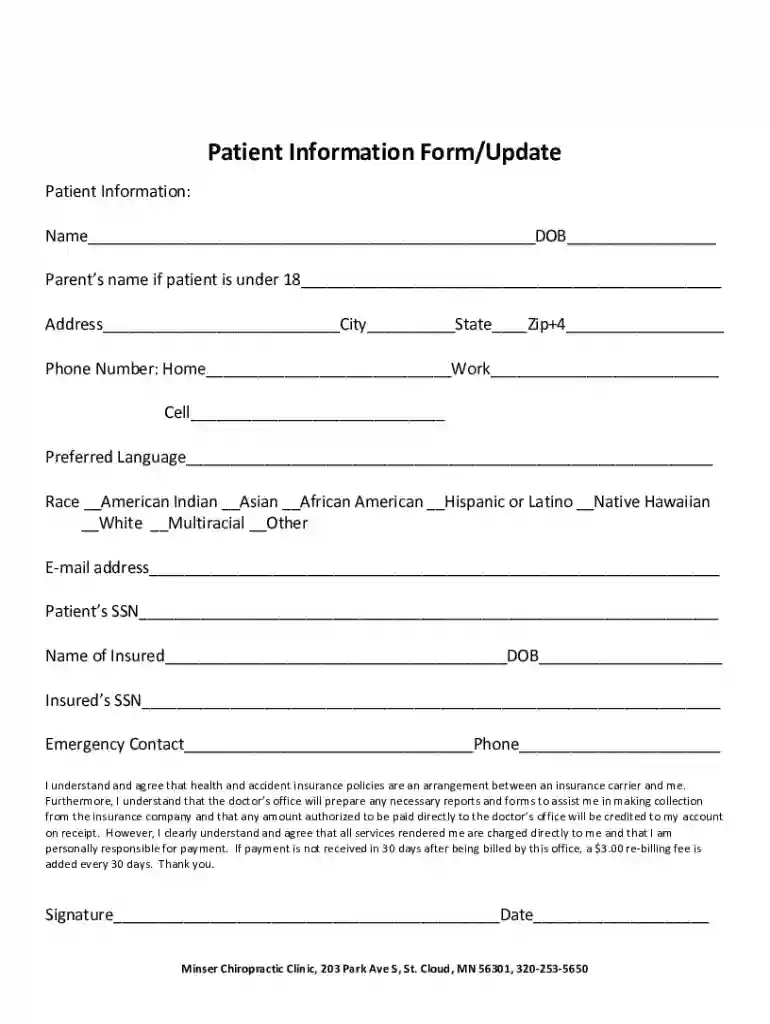
The Patient Information Form Update is a comprehensive document used by healthcare providers, such as Minser Chiropractic Clinic, to collect essential personal and medical information from patients. This form is crucial in assessing a patient's health needs and treatment options. It typically includes sections for personal details, medical history, and current health conditions, ensuring that the healthcare provider has a thorough understanding of the patient's overall health status.
The significance of this form lies in its role as a foundational document in patient care. By updating personal details and medical history regularly, healthcare providers can tailor treatment plans to be specific and relevant to the patient's changing health circumstances. Additionally, the form often includes a Notice of Privacy Practices to inform patients how their health information will be protected in compliance with HIPAA regulations.
Using the Patient Information Form Update involves several key steps to ensure all necessary information is provided accurately. Often, these forms are completed during a patient's first visit or during routine updates to their health records.
Review the Instructions: Begin by reading any instructions provided with the form to understand what information is required.
Personal Information: Fill in your full name, date of birth, contact information, and any insurance details. Accurate personal details are crucial for proper record-keeping and communication.
Medical History: Provide comprehensive details about your past medical conditions, surgeries, allergies, and family health history. This section helps healthcare providers identify potential risks or necessary precautions.
Current Medications and Conditions: List all current medications, dosages, and any ongoing health issues. This information is vital for avoiding potential drug interactions and tailoring treatment plans.
Additional Information: Some forms may ask about lifestyle habits such as diet, exercise, or smoking, which can impact your health and treatment options.
Sign and Date: Once all sections are complete, sign and date the form to confirm the accuracy of the information provided.
Completing the Patient Information Form Update is a systematic process designed to capture all relevant patient data. Below is a structured approach to filling out this form accurately:
Gather Required Information: Before filling out the form, compile all necessary documents such as previous medical records, insurance information, and a list of medications.
Fill Out Personal Details: Provide your full legal name, address, phone number, and email. Ensure these details are current to facilitate effective communication with your healthcare provider.
Detail Medical History: Include information about past illnesses, treatments, surgeries, and any known family medical history. This section is vital for providing context to your healthcare provider.
List Current Health Conditions: Provide up-to-date information about ongoing medical conditions or health challenges. This will help in managing your health effectively.
Document Medications: Ensure you list all medications, including dosage and frequency. Include over-the-counter drugs and supplements as they may impact your treatment.
Complete Lifestyle and Social History: Some forms may ask about your lifestyle choices that could affect your health, such as smoking or alcohol consumption. Answer honestly to give your provider a complete picture.
Signaturing and Submission: After filling out all sections, review the form to correct any errors before signing. Submit the form as instructed, either online or through physical submission.
Regular updates to your Patient Information Form are essential for several reasons:
Accuracy in Treatment: Keeping information current allows healthcare providers to offer more precise diagnoses and tailored treatment plans, improving patient outcomes.
Compliance and Legal Requirements: Regular updates ensure compliance with privacy laws and healthcare regulations, such as HIPAA, which protect patient data.
Efficient Communication: Accurate contact details help avoid missed appointments and ensure timely communication regarding health concerns or appointment reminders.
Identification of Emerging Health Trends: Updated information can help identify new health patterns or risks that require medical attention, such as hereditary diseases.
Insurance Processing: Current insurance information is critical for ensuring that healthcare services can be billed efficiently and without complications.
The Patient Information Form Update is composed of several critical elements designed to provide a comprehensive overview of a patient's health status:
Personal Identification Information: Includes name, contact details, and demographic data required for patient identification.
Medical History Section: Encompasses past illnesses, surgeries, and chronic conditions that may influence current health care.
Current Health Profile: Details active health issues, symptoms, medications, and any changes since the last form update.
Insurance Information: Ensures that healthcare providers can efficiently connect with insurers to verify coverage and process claims.
Authorization and Consent: Includes the patient's consent for treatment and the sharing of their health information according to privacy laws.
Emergency Contact Information: Provides healthcare providers with details of someone to contact in case of a medical emergency.
This form is primarily used by:
Healthcare Providers: Physicians, specialists, and clinics use the form to gather essential patient data for informed decision-making.
Patients: Individuals update their details to ensure comprehensive records exist for effective healthcare provision.
Administrative Staff: They use the form to verify patients' insurance details and ensure smooth operational workflows in health services.
Insurance Companies: Often require updated patient information to process claims accurately and efficiently.


The legal aspects of using the Patient Information Form Update are significant, particularly concerning privacy and data protection laws:
HIPAA Compliance: The form must adhere to the HIPAA regulations that stipulate how personal health information must be safeguarded against unauthorized access.
Patient Consent: Legal consent is required from patients, giving healthcare providers permission to access and use their information for treatment purposes.
Data Safeguarding Measures: Healthcare providers must implement robust security measures to protect the data provided on the form.
Confidentiality Agreements: Patients and providers often enter into confidentiality agreements to ensure privacy and trust in the healthcare relationship.
The choice between digital and paper versions of the Patient Information Form Update depends on various factors:
Convenience: Digital forms allow for instant access, easy updates, and submission from anywhere, which is advantageous for tech-savvy patients and providers.
Security: Digital forms can offer higher security through encryption and secure access controls, protecting sensitive information.
Accessibility: Paper forms may be more accessible to patients without reliable internet access or digital devices.
Efficiency: Digital submissions can streamline administrative processes by automatically feeding data into electronic health records, reducing the need for manual entry and potential errors.
Environmental Impact: Opting for a digital form reduces paper usage, contributing to environmental conservation efforts.
In conclusion, the Patient Information Form Update plays a crucial role in maintaining accurate and comprehensive patient records, facilitating effective healthcare delivery, and ensuring compliance with legal standards.
At DocHub, your data security is our priority. We follow HIPAA, SOC2, GDPR, and other standards, so you can work on your documents with confidence.