







Definition and Meaning
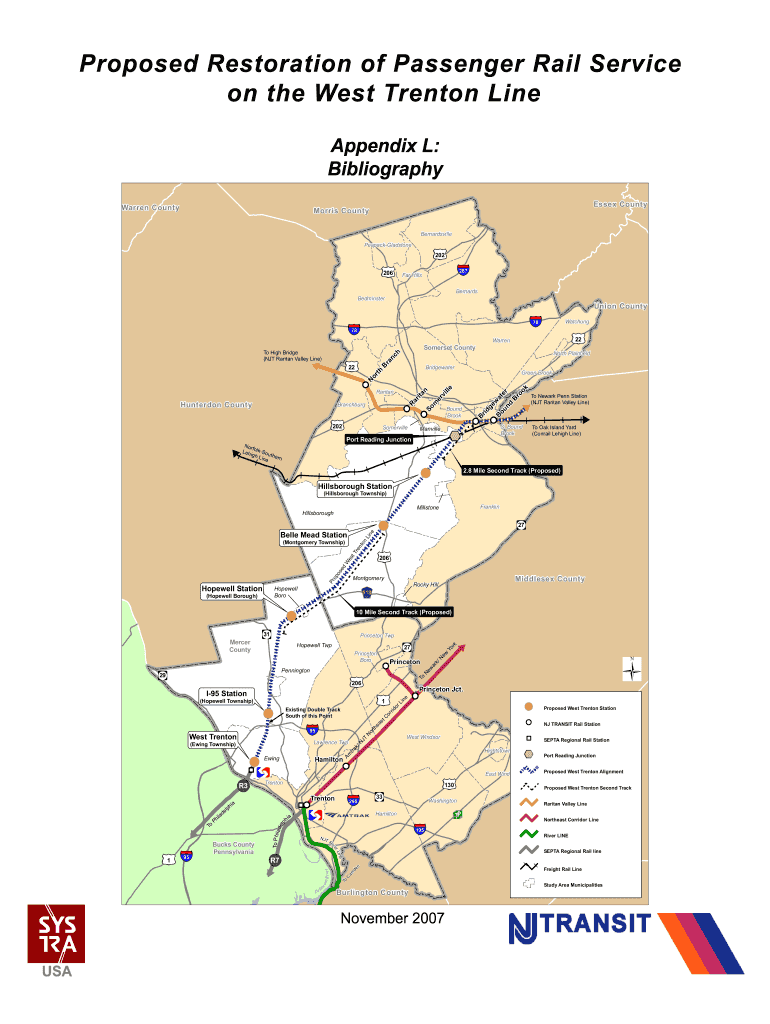
The "Bibliography - New Jersey Transit" serves as a comprehensive collection of references focused on the historical, architectural, and environmental studies in New Jersey, with emphasis on Somerset and Mercer Counties. This bibliography encompasses a variety of documents including historical surveys, planning documents, and archaeological studies. It provides an essential resource for understanding land use and transportation regulations in the region, specifically related to New Jersey Transit operations.
Key Elements of the Bibliography
The bibliography is comprised of several critical components that contribute to its depth and utility:
- Historical Surveys: These offer insights into the development and transformations within New Jersey's transit systems over decades, highlighting major milestones and infrastructural changes.
- Architectural Studies: These focus on the design and construction of transit-related infrastructure, offering details on architectural styles and influences that have shaped the transit facilities.
- Environmental Assessments: Documents that evaluate the environmental impact of the transit systems, addressing compliance with federal and state regulations.
Each entry in the bibliography is carefully selected to provide comprehensive information on its respective topic.
How to Use the Bibliography - New Jersey Transit
To effectively utilize the "Bibliography - New Jersey Transit," users should:
- Identify the specific area of interest, whether it be historical development, architectural details, or environmental impacts.
- Use the table of contents or index to locate relevant sections quickly.
- Review referenced documents for a deeper understanding or for academic research purposes.
- Cross-reference entries for comprehensive insights into broader topics.
This resource is invaluable for scholars, planners, and policymakers seeking detailed information on New Jersey’s transit systems.
How to Obtain the Bibliography
Acquiring the "Bibliography - New Jersey Transit" involves several steps:
- Search Online Databases: Use academic databases and public records to locate available copies.
- Contact Relevant Libraries: Local universities and public libraries in New Jersey may have copies or access to relevant documents.
- Reach Out to State Archives: The New Jersey State Archives is a potential source for obtaining historical and governmental documents included in the bibliography.
Availability may vary, and some documents may require special permission for access.
Steps to Complete a Bibliography Entry
To accurately complete an entry in the bibliography:
- Collect Necessary Data: Gather all relevant details, including the author's name, publication date, title, and source.
- Organize Information: Follow a consistent citation style to ensure uniformity and clarity.
- Cross-Verify Details: Check against official records or additional sources to confirm accuracy.
- Include Annotations: Provide context or a brief summary for each entry to enhance understanding.
Adhering to these steps ensures each entry is precise and useful.
Important Terms Related to Bibliography
Understanding specific terminology is crucial for effectively using the bibliography:
- Land Use Regulations: Legal guidelines governing the use of land in relation to transit systems.
- Architectural Heritage: The legacy of architectural designs and innovations in transit structures.
- Environmental Impact Statements: Documents assessing the potential environmental effects of transit projects.
These terms are frequently encountered within the bibliography, each playing a vital role in its content.
Legal Use of the Bibliography
The bibliography serves as an authoritative source for various legal and professional pursuits:
- Policy Development: Assisting in the creation and adaptation of transit policies and regulations.
- Research and Education: Providing a foundation for academic work, informing students and researchers alike.
- Environmental Compliance: Supporting legal environmental reviews and assessments related to transit projects.
Users must adhere to copyright laws and usage terms when utilizing the bibliography for legal matters.
State-Specific Rules for New Jersey Transit
The bibliography often addresses state-specific rules impacting New Jersey Transit:
- Regulatory Framework: Outlining state transportation laws and standards specific to New Jersey.
- County-Specific Plans: Reference to markedly different county regulations, especially in Somerset and Mercer Counties.
- State Historical Preservation Laws: Legal requirements for preserving historically significant transit infrastructure.
Understanding these state-specific nuances is crucial for anyone engaging with New Jersey’s transit systems.




