






Understanding the Application for Site Plan
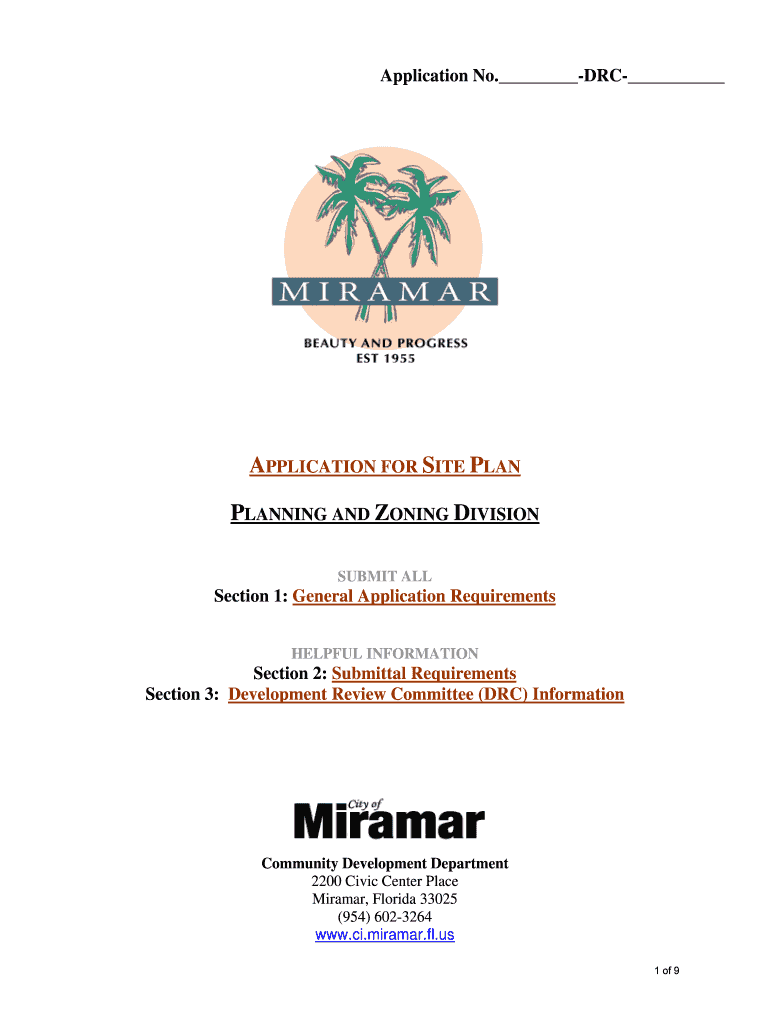
The Application for Site Plan is a crucial document utilized primarily in urban planning and development processes. It serves as a formal request submitted to municipal authorities, such as the Planning and Zoning Division of the Community Development Department in cities like Miramar, Florida. This application helps ensure compliance with zoning laws and regulations by detailing intended construction projects and site modifications.
Purpose of the Application
- Land Use and Zoning Compliance: Ensures that proposed projects align with municipal zoning laws and land use regulations to prevent legal issues.
- Project Approval: Acts as the preliminary step in obtaining approval from relevant authorities for development projects.
- Public Record: Maintains transparency by documenting proposed developments for public accessibility and government records.
Steps to Complete the Application for Site Plan
Completing the Application for Site Plan involves several stages. Successfully navigating this process is essential for securing project approval.
-
Pre-Application Meeting: It is advised to attend a pre-application meeting with the Planning and Zoning Division staff to discuss project feasibility and gather initial feedback to streamline the application process.
-
Prepare Required Documents: Assemble all necessary documents, including detailed project plans, proof of ownership, and any previously requested documentation by the authorities.
-
Filling Out the Form: Input detailed project information, ensuring accurate and complete data. This includes site dimensions, intended land use, and construction specifics.
-
Notarization: Certain sections of the application may require notarization to validate the authenticity of submitted information.
-
Submit and Pay Fees: Once complete, submit the application to the relevant office and pay any associated filing fees.
-
Development Review Committee Process: Attend DRC meetings to address any concerns from various departments about the proposal and make necessary revisions.
Submission Methods
- Online: Many municipalities offer electronic submission through their websites.
- Mail: Physical mailing of completed applications is an option, often preferred by smaller jurisdictions.
- In-Person: Direct submission at the municipal office might be necessary for complex or large-scale projects.
Key Elements of the Application for Site Plan
The form encompasses several critical elements that must be carefully addressed to avoid delays or rejections.
- Project Details: Clear description of the project's scope, including size, usage, and potential impact on the surrounding community.
- Compliance Documentation: Evidence of conformity with current zoning statutes and any required variances or special permissions.
- Environmental Impact: Assessment of the project's environmental footprint and proposed mitigation strategies if applicable.
Important Sections to Highlight
- Contact Information: Accurate lessee, owner, and developer contacts ensure smooth communication.
- Property Details: Includes land parcel numbers and existing property conditions.
- Regulatory Adherence: Sections devoted to confirming adherence to planning and environmental regulations.
Legal Use of the Application for Site Plan
This application plays a legal role in urban planning by substantiating the legal intentions of property development.
- Contractual Obligations: Engages developers with enforceable obligations towards municipal laws.
- Dispute Resolution: Acts as a legal document in case of disagreements about land use or development compliance.
Penalties for Non-Compliance
Applications submitted without adhering to municipal requirements can lead to several penalties.
- Project Halts: Unauthorized construction may face stoppages or mandatory alterations.
- Legal Penalties: Fines or legal action for significant breaches of zoning laws.
- Reapplication Fees: Incorrect applications may require resubmission and extra payment.
Who Typically Uses the Application for Site Plan
The application is utilized by a diverse group of individuals and entities participating in property development.
- Real Estate Developers: Ensures new projects align with local development goals.
- Architects and Engineers: Collaborate closely to design projects that fit municipal standards.
- Property Owners: Modify or expand existing properties within legal guidelines.


Business Types Benefiting
- Construction Firms: Benefit from streamlined approvals for new projects.
- Retail Chains: Often require site plans for store expansions or new locations.
- Manufacturing Facilities: Need to comply with industrial zoning requirements.
Examples of Using the Application for Site Plan
- Residential Developments: New housing projects often require detailed site plans to proceed.
- Commercial Construction: Retail and office parks need approval for site alterations or expansions.
- Public Works Projects: Infrastructure improvements submit site plans for review by city councils and stakeholders.