







Definition & Meaning
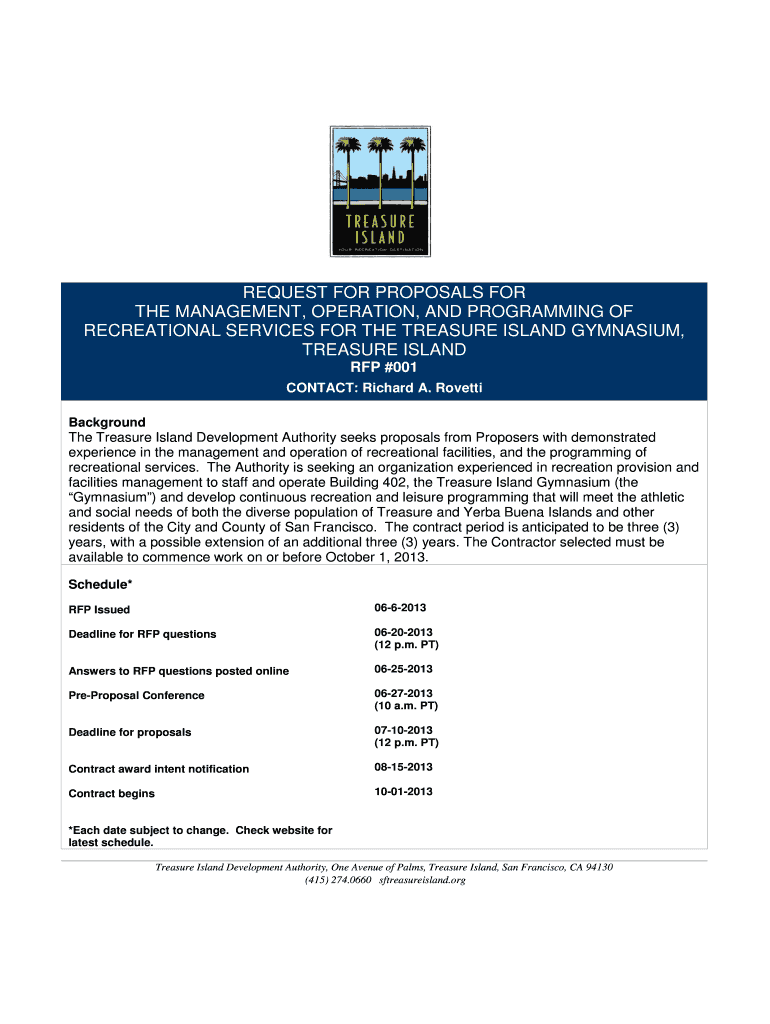
A Request for Proposals (RFP) for the management, operation, and programming of recreational services for the Treasure Island Gymnasium is a formal document inviting experienced organizations to submit proposals. This RFP aims to find organizations capable of operating the gymnasium and providing a range of recreational activities for the community, including residents of Treasure and Yerba Buena Islands. The goal is to enhance community engagement and provide diverse programming that meets local needs.
How to Use the Request for Proposals
When responding to the RFP, organizations must carefully review all sections to understand the requirements and expectations. The document typically outlines the scope of services, submission procedures, evaluation criteria, and compliance requirements. Respondents should prepare a detailed proposal that highlights their experience, operational strategy, proposed programming, and how they plan to meet the objectives and requirements set forth in the RFP.
Steps to Complete the Request for Proposals
- Review the RFP Document: Thoroughly read the entire RFP to understand the requirements and expectations.
- Develop a Proposal Strategy: Outline how your organization plans to manage and program the recreational services.
- Draft the Proposal: Include all necessary information, such as organizational experience, project team qualifications, proposed programming, and budget details.
- Ensure Compliance: Make sure the proposal meets all compliance and submission requirements outlined in the RFP.
- Submit the Proposal: Submit the completed proposal by the specified deadline, adhering to the prescribed format and method of delivery.
Key Elements of the Request for Proposals
The RFP consists of several key elements that each respondent must address:
- Project Scope: Describes the specific services and outcomes expected from the selected organization.
- Evaluation Criteria: Outlines how proposals will be assessed, emphasizing factors like experience, technical ability, and cost-effectiveness.
- Submission Guidelines: Provides instructions on how to format and submit proposals, including deadlines and delivery methods.
- Compliance Requirements: Details any legal, financial, or operational standards that must be met by respondents.
- Contract Terms: Lists the potential duration of the contract and any extension possibilities.
Important Terms Related to the Request for Proposals
Respondents must familiarize themselves with several critical terms within the RFP:
- Recreational Programming: Refers to planned activities designed to fulfill recreational needs in the community.
- Management and Operation: Relates to overall oversight, resource allocation, and daily operations of the gymnasium.
- Community Engagement: Involves strategies for involving local residents in programming and decision-making processes.
Legal Use of the Request for Proposals
Organizations responding to the RFP must adhere to legal and regulatory guidelines set forth by the issuing authority. This includes compliance with workforce hiring plans, such as employing individuals from low-income or formerly homeless backgrounds. Non-compliance can lead to disqualification or penalties.
Proposal Submission Methods
The RFP document will specify accepted methods for submission, which may include:
- Online Submission: Completing a form digitally through an official portal or email.
- Mail Submission: Sending a hard copy of the proposal to a specified address by a certain deadline.
- In-Person Submission: Hand-delivering the proposal to a designated office or representative.
Who Issues the Form
The Treasure Island Development Authority typically issues the RFP document. This governmental body is tasked with overseeing the development and management of community resources on Treasure and Yerba Buena Islands, ensuring that services align with local needs and strategic goals.
Evaluation Criteria
Proposals will be evaluated based on the criteria established in the RFP. This often includes:
- Technical Ability: The organization's capacity to deliver the required services.
- Experience: Previous similar projects and their success.
- Cost Effectiveness: How the proposal balances quality and budget considerations.
- Community Impact: The potential to successfully engage and benefit the local population.
Organizations should focus on demonstrating their strengths in these areas to increase their chances of selection.




