







Definition and Meaning
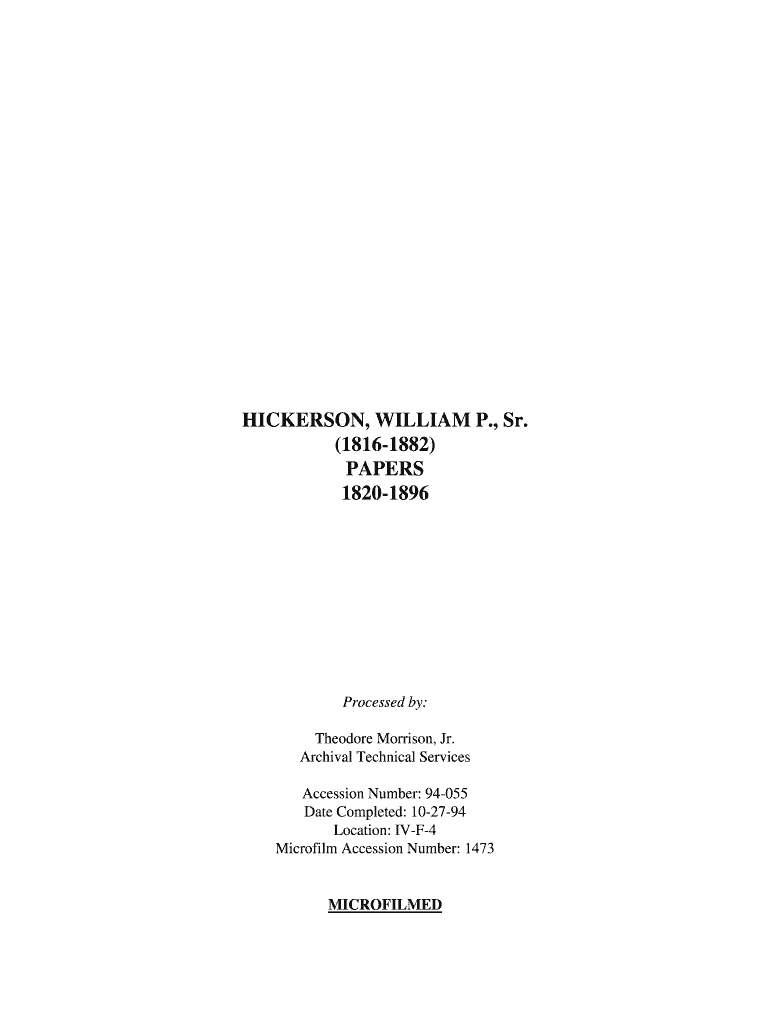
The William P Hickerson, Sr, Papers from represent a comprehensive collection of historical documents related to William P. Hickerson, Sr.'s legal career and business activities in Tennessee. These papers provide invaluable insights into early Tennessee legal practices, land records, court documents, financial accounts, and correspondence primarily associated with the railroad and real estate industries. The collection not only highlights William P. Hickerson, Sr.'s contributions but also includes materials from his son, William P. Hickerson, Jr., offering a broader perspective on the family's historical and economic influence.
Key Elements of the Collection
The papers include several critical components that shed light on the historical context of Tennessee during that era:
- Land Records: Vital for understanding property ownership and transactions.
- Court Documents: Illustrate legal proceedings and judicial practice.
- Financial Accounts: Provide a glimpse into the economic conditions and business ventures.
- Correspondence: Offers personal insights and connects historical events with personal narratives.
These elements collectively provide a valuable resource for historians, researchers, and anyone interested in the development of industries and legal systems in Tennessee.
How to Use the Collection
Utilizing the William P Hickerson, Sr, Papers involves comprehensive analysis and interpretation of the documents contained within. Here are some methods to make the most out of this collection:
- Historical Research: Academics can delve into the materials for scholarly articles and studies.
- Genealogical Studies: Family historians may find connections to ancestors or gain insights into regional history.
- Legal Analysis: Lawyers and historians can examine the legal documents for educational purposes or historical legal precedent.
- Economic Analysis: Economists or business historians can explore financial records to understand past economic conditions and business strategies.
Steps to Access the Collection
Accessing the William P Hickerson, Sr, Papers requires certain procedures to ensure the collection's preservation and proper use:
- Visit Archive or Library Site: Typically, these papers would be housed in a state archive, library, or university.
- Request Access: Contact the institution overseeing the papers to inquire about access requirements.
- Review Guidelines: Understand any rules about handling historical documents, such as restrictions on photocopying.
- Plan Research: Organize your time and resources for maximum efficiency when reviewing the documents.
Who Typically Uses the Collection
Different groups find various uses for the William P Hickerson, Sr, Papers:
- Historians: Researching Tennessee's legal and business history.
- Educators: Teaching students about 19th-century Tennessee and related historical contexts.
- Genealogists: Tracing family histories tied to Hickerson or related families.
- Legal Scholars: Exploring historical case studies and legal practices.


Important Terms Related to the Collection
Understanding key terms will enhance the comprehension and studying of these papers:
- Real Estate: Refers to property-related documents detailing transactions and ownership.
- Railroads: Documents related to early transportation developments in Tennessee.
- Jurisprudence: Legal documents showcasing court cases and legal arguments of the time.
- Stone Fort Paper Company: Records from this business owned by William P. Hickerson, Jr.
Legal Use of the Documents
The papers must be used according to legal and ethical guidelines:
- Cite Properly: When referencing the papers in any publication or presentation.
- Respect Access Rules: Follow rules set by the institution holding the papers.
- Intended Use Only: Use the documents for their intended historical and educational purposes.
Examples of Using the Papers
Various scenarios depict how these papers could be employed:
- Academic Papers: Utilizing the correspondence to illustrate social attitudes and economic conditions.
- Documentaries: Incorporating court documents to narrate a visual history of Tennessee law.
- Exhibitions: Displaying land records to highlight changes in property laws and ownership patterns.
These examples exemplify the diverse applications of the collection, underscoring its broad historical significance.




