
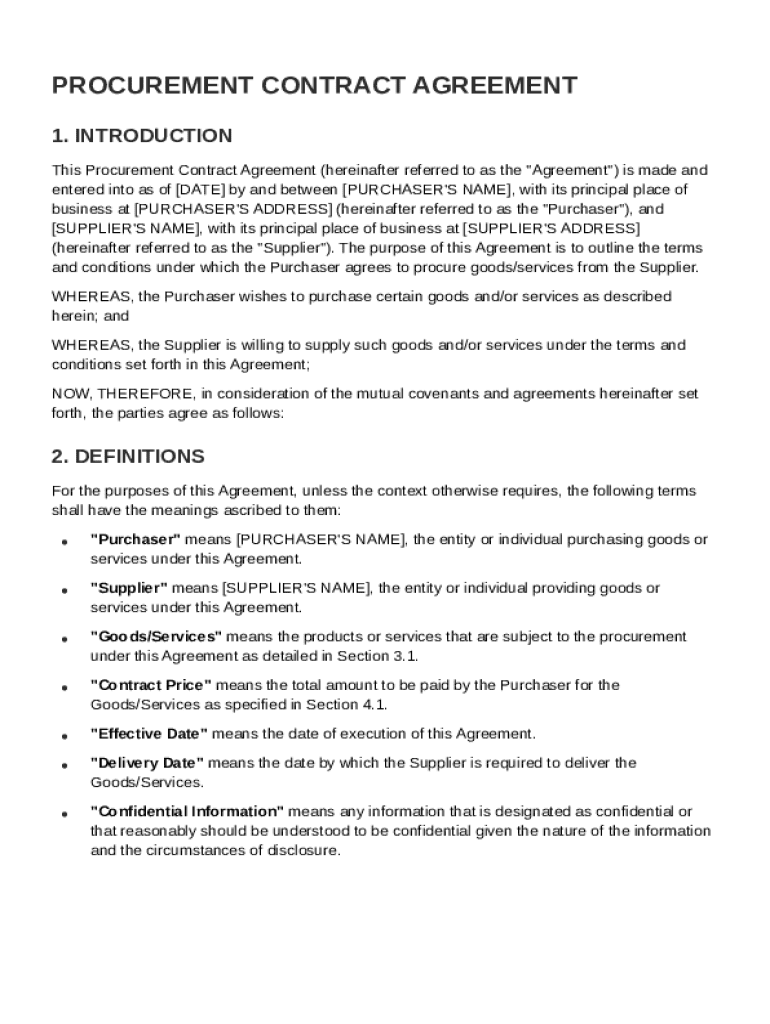







Definition & Meaning
A Procurement Contract Template serves as a standardized document used to outline the terms and conditions agreed upon by the Purchaser and the Supplier for the delivery of goods and services. It includes crucial elements such as the scope of work, payment terms, performance standards, and responsibilities of each party. This template ensures clarity and mutual understanding, reducing the risk of disputes. Each section of the contract aims to protect both parties and create a structured framework for transactions.
Key Elements of the Procurement Contract Template
The template encompasses various elements crucial to formalizing a business agreement. These elements include:
- Definitions: Provide clear meanings of specific terms used throughout the contract.
- Scope of Work: Details the responsibilities of both parties, including the services or goods to be provided.
- Payment Terms: Specifies the payment schedule, methods, and terms, including any penalties for late payment.
- Performance Standards: Establishes the quality criteria the Supplier must meet.
- Confidentiality Obligations: Protects sensitive information from disclosure.
- Termination Conditions: Outlines circumstances under which the contract can be terminated.
Thorough understanding and agreement on these points are essential for a successful transaction.
Steps to Complete the Procurement Contract Template
Completing this template involves several specific steps:
- Identify the Parties: Clearly state the full names and details of both the Purchaser and the Supplier.
- Define the Scope: Provide a detailed explanation of the services or goods provided.
- Set Payment Terms: Agree on payment schedules and any applicable penalties for delays.
- Outline Performance Criteria: Define the standards for the quality of services or goods.
- Confidentiality Clauses: Include clauses to ensure both parties keep shared information confidential.
- Establish Dispute Resolution Mechanisms: Specify procedures for resolving any disagreements that may arise.
Following these steps can help ensure the template is filled out correctly and comprehensively.
Legal Use of the Procurement Contract Template
In the United States, procurement contracts must comply with various legal frameworks. The template must adhere to the Uniform Commercial Code (UCC), which governs commercial transactions. Additionally, compliance with federal and state-specific laws is critical, focusing on statutory obligations and ethical standards in procurement practices. Queries and ambiguities should be resolved through consultation with legal professionals familiar with procurement law.
Who Typically Uses the Procurement Contract Template
This template is most commonly utilized by businesses and organizations engaging in regular transactions with suppliers. It is widely used by:
- Corporations: For large-scale procurement of goods and services to ensure business continuity.
- Small Businesses: To formalize agreements and secure resources cost-effectively.
- Government Agencies: To standardize procurement processes and ensure transparency.
Organizations can use this template to establish trust and reliability in business relationships.


Business Types That Benefit Most from the Procurement Contract Template
Various business entities find significant value in employing this template, such as:
- Manufacturing Companies: For sourcing raw materials and components.
- Retailers: To negotiate and maintain stock supply lines.
- Service Providers: For outsourcing tasks or securing operational resources.
Different business entities will tailor sections of the template according to their specific needs and compliance requirements.
Important Terms Related to Procurement Contract Template
Understanding key terms ensures smoother execution and management of procurement contracts. These terms include:
- Supplier Evaluation: Assessing a supplier’s capabilities and reliability.
- RFQ (Request for Quotation): Formal request to a supplier for a quote on specific goods or services.
- Delivery Schedule: Agreed timeline for the delivery of goods or completion of services.
These terminologies help clarify expectations and responsibilities.
Software Compatibility
DocHub’s platform provides seamless integration with various document management software, enhancing the template's utility. Compatibility with tools such as Google Workspace ensures efficient document handling, allowing users to import, edit, and manage procurement contracts effectively. Also, integration with applications like QuickBooks allows for streamlined financial tracking related to procurement activities.
State-Specific Rules for the Procurement Contract Template
State laws may impose additional requirements that procurement contracts must meet. Each state has its regulations in terms of contract formation and execution. For example, California and New York have specific conditions related to labor laws and environmental compliance. Businesses must remain informed about these variations to ensure their contracts are legally compliant within each jurisdiction.
Understanding these disparities ensures the template adheres to local legal standards, reducing the potential risk of non-compliance.




