






Definition & Meaning
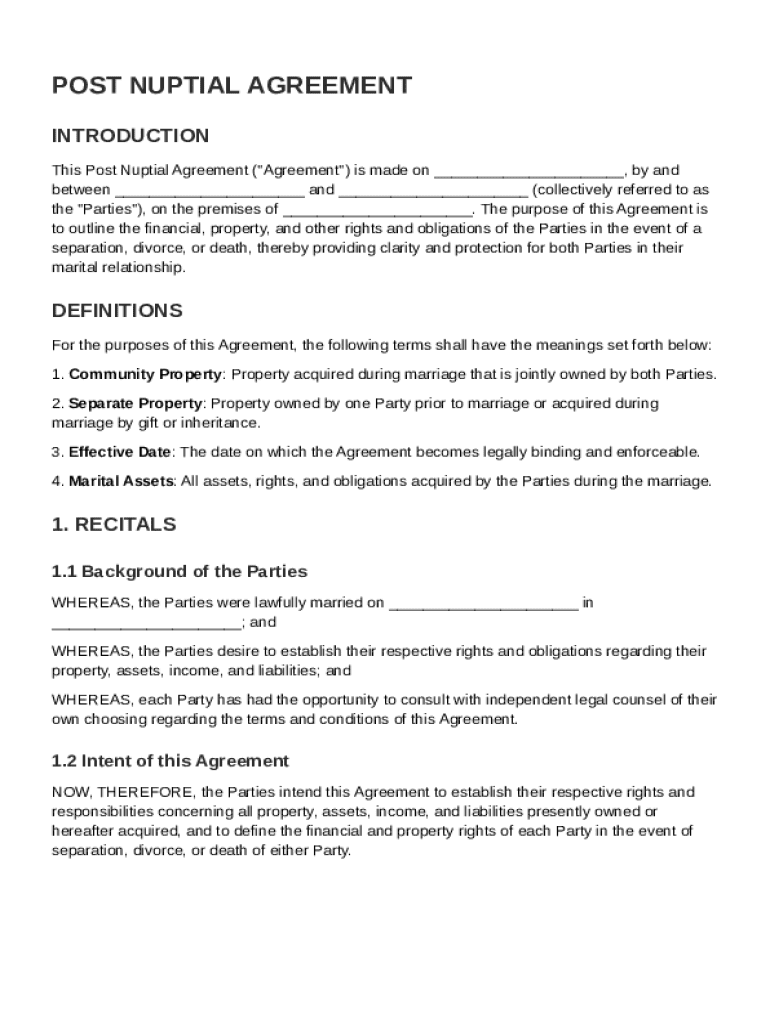
The Post Nuptial Contract Template is a legal document designed to outline the rights and obligations of married partners regarding financial and property arrangements. Typically, this contract addresses asset distribution in the event of separation, divorce, or death. It serves as a safeguard, ensuring that both parties have clear expectations concerning financial responsibilities and asset division. This agreement can also include terms for spousal support, debt responsibilities, and dispute resolution methods, providing a degree of certainty and stability in marital arrangements.
Community and Separate Property
A central component of the postnuptial agreement involves distinguishing between community and separate property. Community property refers to assets acquired during the marriage, which are generally shared equally between spouses. In contrast, separate property includes assets owned individually before the marriage or received as gifts or inheritance. The agreement often specifies how these assets will be divided, protecting individual property and clarifying shared assets.
Key Elements of the Post Nuptial Contract Template
A robust Post Nuptial Contract Template includes several critical elements to ensure comprehensive coverage and enforceability.
-
Asset and Liability Disclosures: Both parties must fully disclose their financial circumstances, including assets, liabilities, income, and expenses. This transparency is crucial to avoid claims of fraud or coercion.
-
Division of Property: Clearly define how property and assets will be divided. This section should cover both community and separate property to prevent future disputes.
-
Spousal Support Arrangements: Outline whether spousal support will be provided upon divorce and the terms governing such support, like duration and amount.
-
Debt Responsibilities: Specify which partner is responsible for which debts, ensuring clarity and fairness in handling financial obligations post-separation.
Dispute Resolution Methods
Include agreed-upon mechanisms for resolving disputes, such as mediation or arbitration. This can reduce legal costs and facilitate amicable settlements.
Steps to Complete the Post Nuptial Contract Template
Filling out the Post Nuptial Contract Template involves a detailed process to ensure accuracy and legal compliance.
-
Consultation with Legal Professionals: Before drafting the contract, both spouses should consult with independent legal advisors to understand their rights and obligations under the agreement.
-
Financial Disclosure: Each party must provide a detailed account of their financial status, including assets, liabilities, and income sources.
-
Drafting the Agreement: Use the template to outline terms, ensuring all essential elements are included. Tailor the document to reflect personal circumstances while adhering to legal norms.
-
Review and Amendments: Both parties should review the draft and make necessary amendments. It’s crucial to ensure the document reflects mutual understanding and agreement.
-
Execution and Notarization: Once finalized, both spouses must sign the document in the presence of a notary public to authenticate the agreement.
Important Terms Related to Post Nuptial Contract Template
Understanding specific legal terms is vital when drafting or reviewing a postnuptial contract.
-
Amendments: Changes made to the agreement after execution, which must also be documented and signed.
-
Governing Law: The legal jurisdiction whose laws will interpret and enforce the agreement's terms.
-
Marital Assets: Properties or financial resources accumulated during the marriage.
Written Amendments
Any subsequent changes to the contract after signing should be outlined in written amendments, which require mutual consent and additional notarization to ensure validity.
Legal Use of the Post Nuptial Contract Template
Postnuptial agreements hold legal standing when executed correctly, providing a reliable framework for asset protection.
-
Enforceability: For the contract to be legally binding, it must meet state legal requirements, including full disclosure, fairness, and proper execution.
-
Legal Jurisdiction: Understand which state laws apply, as regulations can vary considerably, impacting the enforceability of certain terms.
State-specific Compliance
Review state-specific rules governing postnuptial agreements, as some states have unique requirements or limitations affecting the contract's terms and enforceability.
Examples of Using the Post Nuptial Contract Template
Real-world scenarios demonstrate the practicality and importance of having a postnuptial agreement.
-
Business Ownership: A spouse owning a business may use the agreement to secure their business interests, preventing claims from the other party.
-
Inheritance and Dividends: If one spouse expects significant inheritance or investment returns, the agreement can specify how these assets are treated in marital property.
Case Studies
Consider instances where couples avoided contentious divorce proceedings through a pre-established postnuptial agreement – highlighting the effectiveness in preserving financial and emotional well-being.
Who Typically Uses the Post Nuptial Contract Template
Postnuptial agreements are not limited to a specific demographic; various individuals and couples can benefit.
-
Couples Seeking Certainty: Married partners wanting to clarify financial responsibilities and asset ownership often use this template.
-
Those Experiencing Financial Growth: Individuals experiencing significant changes in financial status might seek protection and clarity through a postnup.


Different Scenarios
The template is beneficial for newlyweds during property transitions, older couples revisiting their financial arrangements, or those in unique personal or financial situations needing tailored agreements.
Who Issues the Form
While no specific governmental body issues a standardized Post Nuptial Contract Template, legal firms and online legal resources provide customizable templates. These organizations design templates to conform to state legal standards and individual preferences, ensuring the agreement remains lawful and effective.