
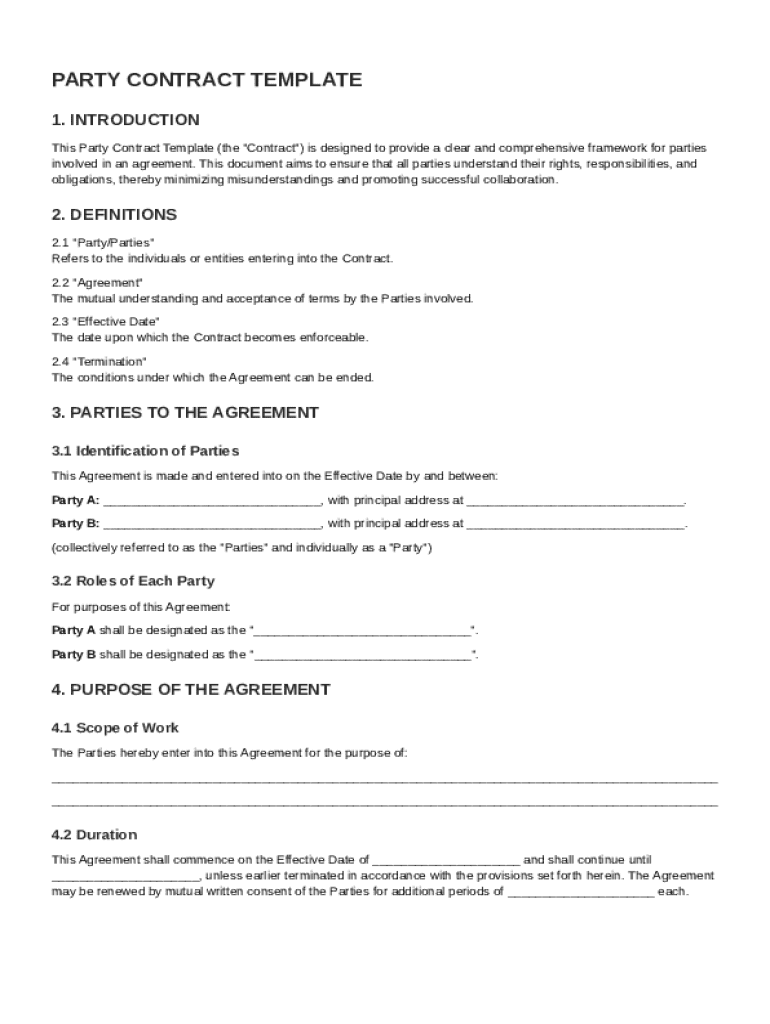







Definition & Meaning
A Party Contract Template is a pre-drafted document designed to formalize agreements between two or more parties intending to collaborate, such as businesses, event organizers, or individuals. This template serves as a foundational framework that details the rights, responsibilities, and obligations of all involved parties. By using a standard format, it reduces the risk of misunderstandings and legal disputes, ensuring that all participants are on the same page. The template typically includes sections like definitions, identification of parties, and confidentiality clauses, providing a comprehensive guide to structuring a legally sound agreement.
Key Elements of the Party Contract Template
The Party Contract Template is composed of several critical components that ensure the agreement is thorough and legally binding. Key elements include:
- Definitions: Clearly outlines specific terms used throughout the contract to prevent ambiguity.
- Identification of Parties: Establishes the main participants involved in the contract.
- Purpose of Agreement: Describes the reason the parties are entering into the agreement.
- Obligations and Responsibilities: Specifies duties each party must fulfill.
- Confidentiality Clause: Protects sensitive information shared between parties.
- Dispute Resolution: Provides methods for resolving conflicts that may arise.
- Amendments and Termination: Explains how the contract can be modified or ended.
- Indemnification and Liability: Outlines protections against legal claims.
How to Use the Party Contract Template
Utilizing a Party Contract Template involves the following steps to ensure completeness and legal compliance:
- Review the Template: Carefully examine the template to understand its structure.
- Input Specific Details: Fill in the blanks with specific names, dates, and terms relevant to the agreement.
- Customize Sections: Modify sections to address any unique circumstances or additional provisions needed.
- Consult a Legal Expert: Engage with an attorney to review the contract for completeness and legality.
- Obtain Signatures: Ensure all parties read and sign the document to make it legally binding.
Practical Example
An event planner organizing a large conference would use the Party Contract Template to establish agreements with vendors, speakers, and sponsors. By explicitly detailing each party's obligations, such as setup times and payment schedules, the planner minimizes potential misunderstandings and ensures a smooth event execution.
Steps to Complete the Party Contract Template
Completing the Party Contract Template involves a meticulous process to ensure all requirements are met:
- Gather Relevant Information: Collect names, addresses, and roles of all parties.
- Detail Agreement Purpose: Clearly define the objective of the contract.
- Document Responsibilities: List all duties and timelines specific to each party.
- Incorporate Legal Clauses: Add necessary legal protections, such as confidentiality and indemnification.
- Review and Revise: Conduct a thorough review and make adjustments as needed.
- Final Approval: Obtain agreement and signatures from all involved parties.
Edge Case Considerations
For contracts that span different jurisdictions, adjustments may be required to account for variations in state laws. Ensuring legal compliance across multiple regions may involve additional clauses or an appendix for state-specific regulations.
Legal Use of the Party Contract Template
The Party Contract Template is designed to align with U.S. legal standards, ensuring that agreements formed are enforceable:
- Compliance with U.S. Laws: The template conforms to federal and state regulations ensuring legality.
- Binding Terms: When properly executed, the contract stands as a legally binding document enforceable in court.
- Customizable for Various Jurisdictions: While standardized, the template can be tailored to comply with different state laws and requirements.
Case Study
A tech startup collaborating with a freelance developer might use the Party Contract Template to clearly delineate deliverables, timelines, and payment terms, ensuring that both parties understand and agree to the terms laid out.
Who Typically Uses the Party Contract Template
The Party Contract Template is widely used across different sectors:
- Event Planners and Organizers: For agreements with vendors and service providers.
- Small Businesses: To formalize partnerships or client agreements.
- Freelancers and Contractors: To ensure clarity in project terms and conditions.
- Non-Profit Organizations: When working with sponsors and donors.

Real-World Scenario
A wedding planner enters into contracts with catering companies, photographers, and rental services, using the template to detail services and expectations, thereby minimizing potential disputes on the big day.
Important Terms Related to Party Contract Template
Understanding specific legal terms is crucial when dealing with a Party Contract Template:
- Force Majeure: Legal clause that frees parties from obligations due to extraordinary events.
- Non-Disclosure Agreement (NDA): Protects sensitive information from being disclosed.
- Arbitration: A method for resolving disputes outside of court.
Examples
Incorporating an NDA within the Party Contract Template might be crucial for a corporation outsourcing confidential project components to third-party contractors.
State-Specific Rules for the Party Contract Template
Different states may have unique requirements affecting contract structure and enforceability:
- Varying Statutes of Limitations: Timeframes within which parties can enforce the contract differ by state.
- Specific Disclosure Requirements: Some states necessitate additional disclosures, such as those involving financial commitments.
- Notarization and Witness Requirements: Certain jurisdictions may require contracts to be notarized or witnessed to be valid.
Variations
For example, a contract executed in California may need additional disclosures compared to one executed in New York. Adjusting the template for these differences ensures compliance and enforceability.
Versions or Alternatives to the Party Contract Template
Alternative templates may be used depending on the nature and complexity of the agreement:
- Vendor Agreements: Tailored templates focusing on services and product deliveries.
- Employment Contracts: Detailed versions for hiring processes.
- Lease Agreements: For rental and property management arrangements.
Detailed Context
A vendor requiring ongoing services might prefer a specific Vendor Agreement Template that includes clauses particularly relevant to supply timelines and payment processes, offering a more tailored approach than a generalized Party Contract Template.
Examples of Using the Party Contract Template
The Party Contract Template is versatile and adaptable for various scenarios:
- Collaborative Projects: Two companies working together on product development.
- Event Hosting: Agreements for venue rental and service provisions.
- Joint Ventures: Structuring agreements for joint business initiatives.
Comprehensive Examples
- Non-Profit Event Coordination: Formalizing roles between hosting organizations and sponsors, ensuring seamless coordination and financial clarity.
- Corporate Sponsorship: Defining obligations and rights for a corporate entity sponsoring a major conference, including branding rights and speaker involvement.
Each example demonstrates the practicality and necessity of a well-structured contract to foster successful business relationships and ventures.




