
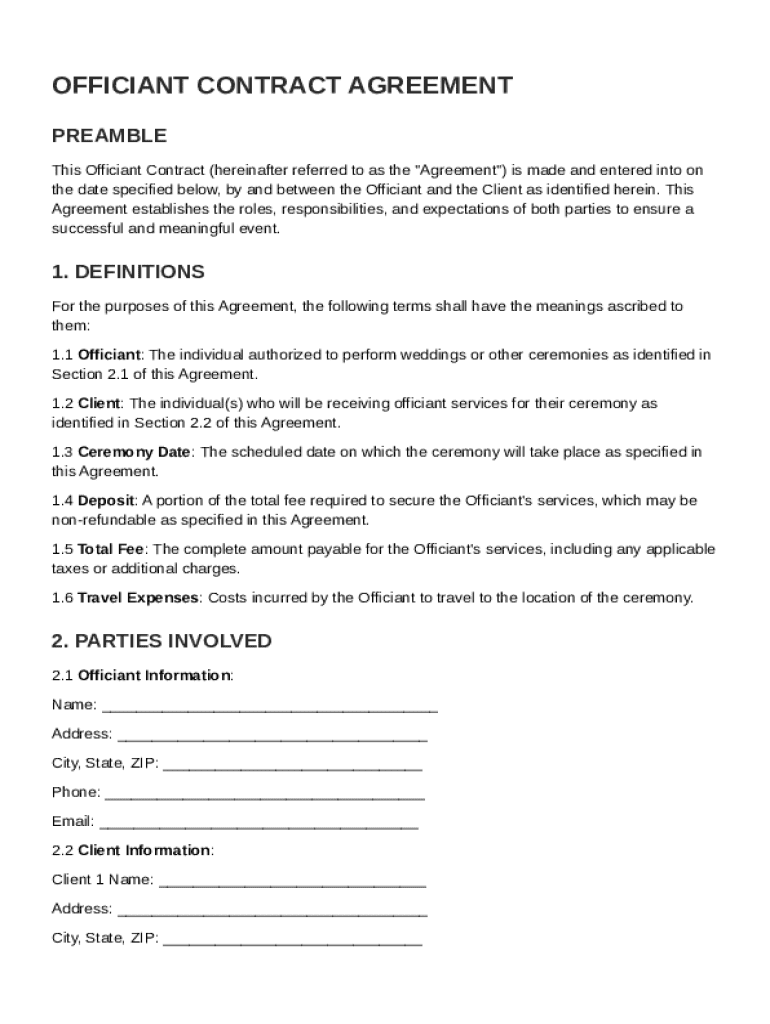







Definition and Meaning
The Officiant Contract Template is a formal agreement between an officiant and clients, typically relating to ceremonies such as weddings. This contract outlines specific terms and conditions to clarify roles and responsibilities, thereby ensuring smooth event facilitation. Key components include services provided, payment terms, cancellation policies, travel expenses, and any liability limitations. By clearly defining these elements, the template sets clear expectations for both parties, helping to prevent misunderstandings and ensuring that all parties are aligned on the terms of the service.
Key Elements of the Officiant Contract Template
The Officiant Contract Template includes several fundamental sections necessary for a comprehensive agreement. These sections typically consist of:
- Scope of Services: Details on what ceremonies will be performed, including the type and duration of each service.
- Payment Terms: Guidelines for fees, deposit requirements, and payment schedules.
- Cancellation Policies: Terms governing cancellations, including any refundable deposits and timeframes for notice.
- Travel and Additional Expenses: Specifications for travel-related costs, accommodations, or additional fees if the ceremony is held at a significant distance.
- Liability Limitations: Details on any disclaimers or responsibilities the officiant is not liable for, ensuring protection for both parties.
How to Use the Officiant Contract Template
Using the Officiant Contract Template involves several steps, ensuring that it is tailored to specific requirements and thoroughly understood by both parties:
- Customize the Template: Modify the template to reflect the specific details of the officiant's services and any personalized agreements with the client.
- Consult Both Parties: Ensure that both the officiant and clients have the opportunity to review and discuss each section of the contract.
- Final Review: Allow both parties to conduct a final review to confirm that all details are accurately captured.
- Signatures: Include sections for both the officiant and clients to sign, demonstrating agreement and commitment to the outlined terms.
Steps to Complete the Officiant Contract Template
The process of completing the Officiant Contract Template requires careful attention to detail:
- Gather Information: Collect all relevant information needed for the contract, including names, contact information, and details of the ceremony.
- Fill in Services Offered: Clearly describe the services the officiant will provide, including the nature of the ceremony and any rehearsals.
- Detail Payment Agreement: Specify the fee structure, including deposit and remaining balance, along with due dates.
- Include Cancellation Terms: Input the cancellation policy, outlining any penalties or refundable conditions.
- Review and Confirm: Have both parties review the completed template to confirm all requirements are met.
- Obtain Signatures: Ensure both the officiant and clients sign the agreement, formalizing the contract.
Legal Use of the Officiant Contract Template
The use of the Officiant Contract Template must comply with applicable U.S. laws and regulations to be deemed legally valid. Key legal requirements include:
- Identification of Parties: Clear identification of both parties involved, ensuring legal recognition of the contract.
- Offer and Acceptance: The contract must include an offer by one party and acceptance by the other to form a legally binding agreement.
- Consideration: There must be an exchange of value, such as payment for services, to validate the contract legally.
- Capacity: All parties must have the capacity to enter into legal agreements, being of sound mind and legal age.
State-Specific Rules for the Officiant Contract Template
U.S.-based officiant contracts may be subject to state-specific regulations or requirements. For example:
- Marriage Licensing Laws: Different states may have varying laws related to marriage licenses, which could impact the contract terms.
- Professional Licensing: Some states might require officiants to register or hold specific credentials.
- State Taxes: Contract terms may need to comply with state-specific tax laws regarding service fees and invoicing.
Who Typically Uses the Officiant Contract Template
The primary users of the Officiant Contract Template include:
- Wedding Officiants: Professionals who provide officiating services for weddings.
- Clients: Couples seeking a professional to perform their wedding ceremony.
- Event Planners: Coordinators who handle the contractual aspects of weddings and other ceremonies.
- Legal Advisors: Professionals who assist clients in ensuring that the contract complies with applicable laws.


Why Use the Officiant Contract Template
Using an Officiant Contract Template provides numerous benefits:
- Clarity: Ensures all parties are clear on the expectations and services to be provided.
- Protection: Legally protects both the officiant and the clients by clearly outlining roles and responsibilities.
- Professionalism: Demonstrates a level of professionalism and seriousness about the terms of service.
- Dispute Resolution: Provides a reference point if disagreements arise, facilitating peaceful resolutions.
Important Terms Related to the Officiant Contract Template
Understanding critical terms within the template is essential for effective use:
- Deposit: An initial payment required to secure the officiant's services.
- Rehearsal: A practice session, often included in the scope of services, to ensure all parties understand their roles.
- Revocation Clause: Terms under which one party can terminate the contract without penalty.
- Force Majeure: Circumstances under which the contract can be voided due to unforeseeable events such as natural disasters.




