
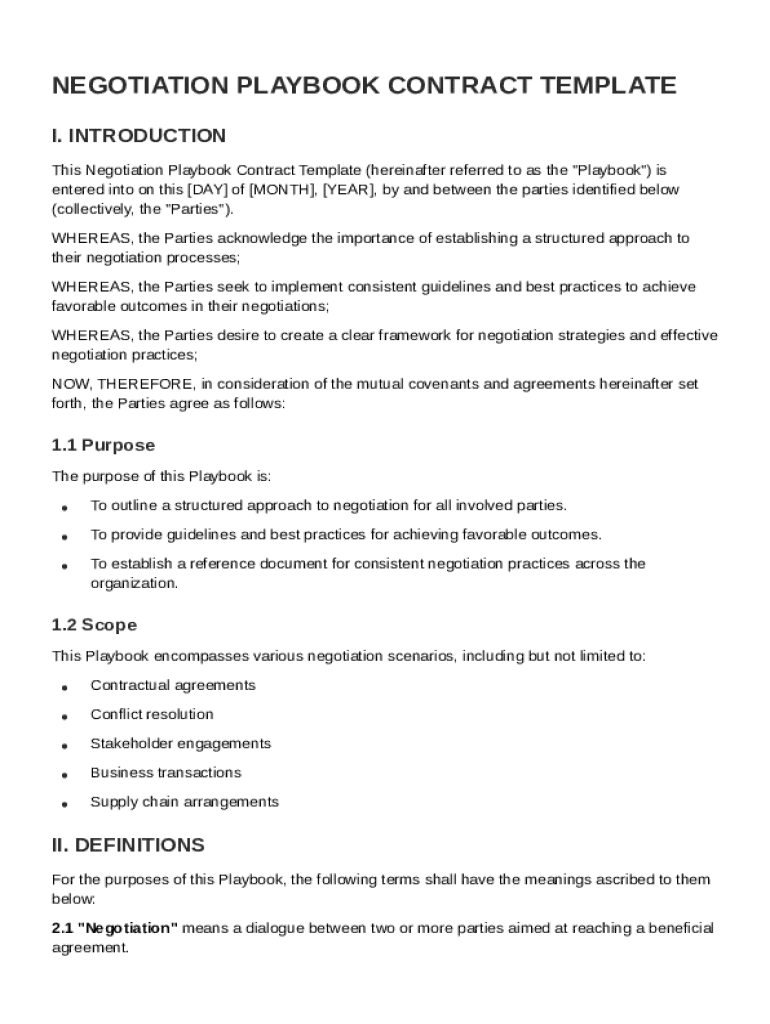







Definition & Meaning
The "Negotiation Playbook Contract Template" serves as a comprehensive framework guiding negotiating parties through the intricacies of their contractual discussions. This template provides clarity in defining the purpose, scope, and essential terms of negotiations. It ensures that each party is prepared and strategically aligned to achieve mutually beneficial outcomes. By establishing clear communication protocols and objectives, the template helps in delineating responsibilities, negotiating strategies, and potential amendments. This structured approach minimizes misunderstandings and facilitates smooth negotiation processes.
Key Elements of the Negotiation Playbook Contract Template
The template is composed of several critical components designed to address every aspect of a negotiation. Key sections include:
- Objectives: A clear statement of the goals each party aims to achieve.
- Stakeholder Identification: Outlines the key participants and decision-makers involved in the negotiation.
- Bargaining Techniques: Details strategies and tactics to be employed during negotiation rounds.
- Agreement Finalization: Outlines processes for reaching a consensus and documenting agreements.
- Amendments: Procedures for altering any part of the contract post-agreement.
- Confidentiality: Ensures that sensitive information exchanged remains protected.
- Governing Law and Dispute Resolution: Specifies applicable legal frameworks and mechanisms to resolve potential disputes.
Steps to Complete the Negotiation Playbook Contract Template
Completing the template involves several precise steps that require careful consideration and input from all negotiating parties. The process typically includes:
- Preparation: Reviewing objectives and gathering necessary data.
- Stakeholder Mapping: Identifying key participants who will provide input or make decisions.
- Drafting Initial Proposals: Creating a preliminary document that includes all essential elements and objectives.
- Engagement: Sharing the draft with all relevant parties for feedback.
- Revision and Finalization: Incorporating feedback and finalizing the document.
- Formal Agreement: Both parties formally agree and document the terms.
- Implementation: Executing the agreed terms in practice.
Who Typically Uses the Negotiation Playbook Contract Template
This template is versatile and valuable for a wide range of users, including:
- Corporate Entities: Businesses engaged in mergers, acquisitions, or strategic partnerships.
- Legal Professionals: Attorneys assisting clients in drafting or reviewing contracts.
- Small Business Owners: Entrepreneurs negotiating contracts with vendors or clients.
- Government Agencies: Departments involved in procurement or public-private partnerships.
- Non-Profit Organizations: Charities negotiating service agreements or donor partnerships.


Legal Use of the Negotiation Playbook Contract Template
Legal compliance and enforceability are critical when using the Negotiation Playbook Contract Template. The template adheres to the U.S. legal framework, ensuring that all provisions align with federal and state laws. It includes clauses that provide legal protection for negotiation participants, such as confidentiality agreements, liability limitations, and dispute resolution processes. Users must ensure that any alterations comply with relevant legal standards to maintain the contract's enforceability.
Important Terms Related to the Negotiation Playbook Contract Template
Understanding key terminology is crucial when working with this template. Some essential terms include:
- BATNA (Best Alternative to a Negotiated Agreement): The fallback plan if negotiations fail.
- ZOPA (Zone of Possible Agreement): The range within which a deal can be made.
- WIN-WIN: A negotiation outcome where all parties succeed in achieving their objectives.
- Terms and Conditions: The specific obligations and rights of the parties.
- Consideration: The benefit each party receives from the agreement.
Examples of Using the Negotiation Playbook Contract Template
Real-world scenarios can illustrate how the template is used effectively:
- Corporate Merger: Two companies use the template to negotiate terms for a merger, ensuring all strategic goals and statutory requirements are addressed.
- Service Agreement: A tech company and a service provider negotiate the scope, timelines, and fees using the playbook to ensure mutual understanding and expectations.
- International Trade Deal: Two international businesses use the template to outline import-export terms, tariff arrangements, and conflict resolution procedures.
Software Compatibility
The Negotiation Playbook Contract Template is designed for flexibility and can be used with various document editing and management platforms. Due to its comprehensive nature, it integrates seamlessly when used with:
- DocHub: For editing, sharing, and e-signing the document in the cloud.
- Google Workspace: For collaborative editing and seamless sharing through Drive and Gmail.
- Microsoft Office Suite: For traditional offline editing with Word and Excel.
- PDF Editors: For creating secure, unalterable versions of the finalized document.
- Contract Management Software: For larger organizations requiring systematic record-keeping and analysis.
Digital vs. Paper Versions
This template provides the convenience of both digital and paper formats:
- Digital: Facilitates easy editing, sharing, and storage. E-signatures add a layer of convenience and immediacy.
- Paper: Offers a physical document that can be filed or distributed as hard copies. Often used when parties are uncomfortable or unable to use digital tools.
Digital formats are preferred in most professional settings due to their efficiency, accessibility, and reduced environmental impact. However, paper versions may be necessary in specific legal contexts or where electronic agreements are not yet recognized.




