
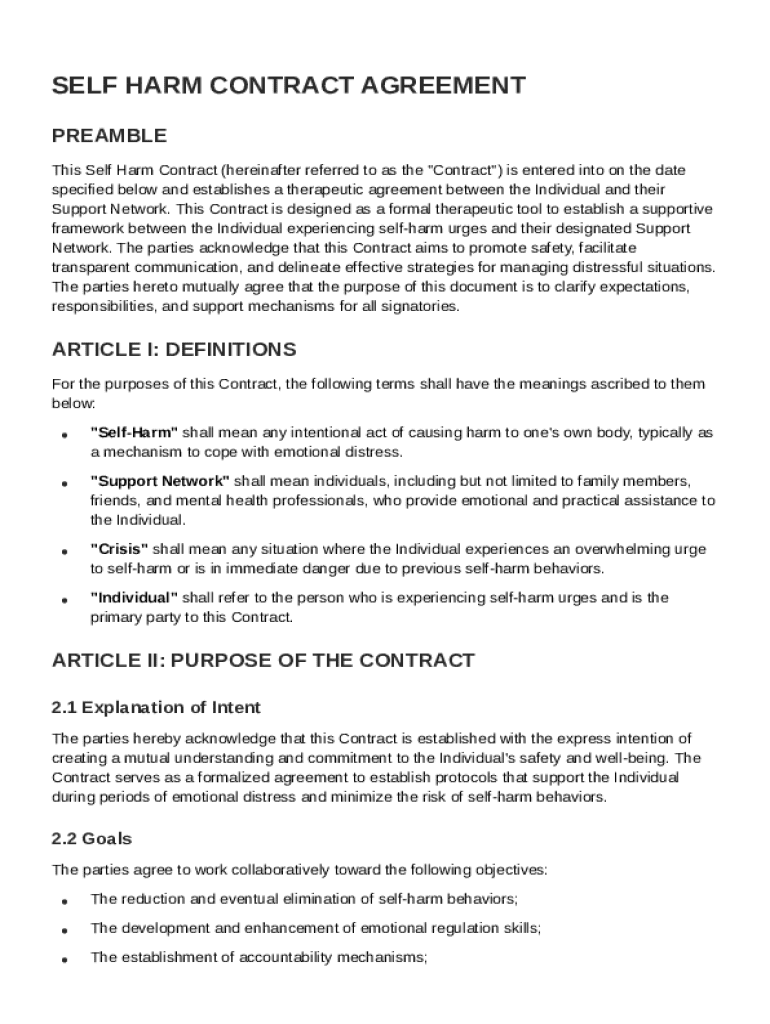







Definition & Purpose of Self Harm Contract Template
The Self Harm Contract Template is a structured therapeutic document designed for individuals experiencing self-harm urges. It serves as a formal agreement between the individual and their support network, which often includes therapists, family members, or trusted friends. This contract aims to create a supportive framework that promotes safety and enhances emotional regulation skills. By establishing clear definitions, purposes, and goals, the contract facilitates open communication and effective distress management.
Key components often addressed in the template include the identification of triggers, coping strategies, and emergency contact information. The template is a tool for setting mutual expectations and responsibilities, helping individuals articulate their needs and align the support network towards common objectives.
How to Use the Self Harm Contract Template
Implementing this template effectively requires collaboration between the individual and their support network. Here’s a step-by-step approach:
-
Initial Discussion: Start with a meeting to discuss the purpose of the contract and agree on its necessity.
-
Customizing the Template: Personalize the template’s sections to cater to the individual’s unique circumstances, including specific triggers and preferred coping strategies.
-
Define Roles and Responsibilities: Clearly outline the roles of each participant in the support network to ensure all parties understand their contributions.
-
Agree on Communication Protocols: Establish how and when communication should occur, especially during distressing situations.
-
Finalize and Sign: All parties should carefully review the contract for clarity and completeness before signing.
By following these steps, the template can be a valuable resource in promoting a safer and more supportive environment for the individual.
Steps to Complete the Self Harm Contract Template
Completing the Self Harm Contract Template involves multiple participants and considerations:
-
Preparation: Collect relevant personal information, such as mental health history and preferred coping techniques.
-
Document Outline: Draft sections on identifying triggers, defining goals, and determining responsibilities.
-
Input from Support Network: Collaborate with the support network to ensure comprehensive coverage of all necessary areas.
-
Review and Adjust: Assess the draft for clarity, coherence, and completeness.
-
Final Agreement: Conduct a meeting to confirm agreement on roles and responsibilities before each party signs the contract.
Each step is integral to ensuring the document addresses the individual's needs and creates an understanding among all parties involved.
Key Elements of the Self Harm Contract Template
The template generally includes several critical elements essential for its efficacy:
-
Goals and Objectives: Define what the individual aims to achieve with the contract in place.
-
Trigger Identification: Detail known triggers that could lead to self-harm behavior.
-
Coping Strategies: Outline effective coping mechanisms that can be employed when urges arise.
-
Roles and Responsibilities: Identify the responsibilities of the individual and each member of the support network.
-
Emergency Contacts: List contacts for immediate help when necessary.
These elements provide a comprehensive structure to guide the individual's behavior and the support network's response.
Who Typically Uses the Self Harm Contract Template
This template is commonly used by individuals who struggle with self-harm tendencies and are actively engaging in therapy or counseling. It is also utilized by clinical psychologists, psychiatrists, and mental health counselors as part of a broader therapeutic strategy.
Family members and close friends who form part of the support network are also essential participants, providing practical and emotional support for the individual. These parties collaborate to ensure the contract remains relevant and effective in managing the individual's challenges.


Legal Use of the Self Harm Contract Template
Though primarily therapeutic, this template carries a degree of legal significance as it represents a formal agreement among involved parties. While it is not legally binding like a contract enforced by law, it holds the potential to be referenced in therapeutic settings to denote agreed-upon terms and responsibilities.
Its design aims to uphold ethical commitments between therapists and clients, ensuring that respect and confidentiality are maintained throughout the support process.
State-Specific Rules for Self Harm Contract Template
United States practitioners must consider state-specific guidelines regarding mental health documentation and treatment. Regulations pertaining to the confidentiality of information, mandatory reporting laws for cases of imminent harm, and therapy practices may vary.
Consulting respective state regulations when finalizing the template ensures compliance with legal requirements and best practices. It also addresses the need for therapeutic contracts to respect potential variations in legal considerations across different jurisdictions.
Software Compatibility for Self Harm Contract Template
DocHub offers seamless functionality for using the Self Harm Contract Template across various digital platforms. The platform integrates deeply with Google Workspace, allowing users to import files directly from Google Drive and make real-time edits. The template can be edited, signed, and stored using DocHub’s editor with zero compatibility issues across DOC, PDF, XLS, and other formats.
This digital flexibility supports the creation, distribution, and maintenance of the Self Harm Contract Template in the current fast-paced, digital-first environment, ensuring support processes remain uninterrupted.
Examples of Using the Self Harm Contract Template
Consider a scenario where a high school student is working with a counselor to manage self-harm impulses. The counselor could introduce the Self Harm Contract Template as a tool to facilitate regular check-ins and establish coping strategies.
Alternatively, for someone undergoing intense university studies with stress-induced self-harm tendencies, a mental health professional can engage the student’s family to collaboratively develop the contract, making sure it reflects the student’s current needs while pooling resources effectively from the supportive network.
These examples underscore how the template adapts to diverse environments and needs, tailoring to specific circumstances and contributing positively to a therapeutic outcome.




