







Definition & Meaning
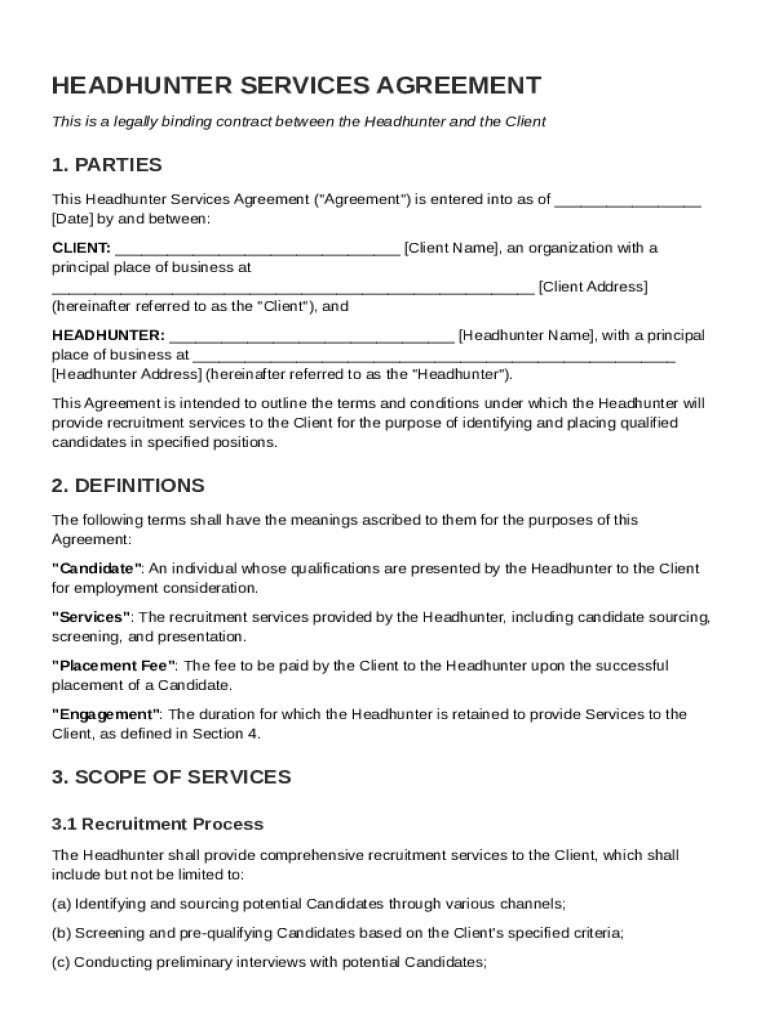
The Headhunter Contract Template is a legally binding document that outlines the terms of engagement between a recruitment service provider, known as the headhunter, and a client. This template serves as a comprehensive framework detailing various aspects of employment search services, including candidate sourcing, screening, and presentation processes. The contract establishes expectations, responsibilities, and protections for both parties to ensure clarity and prevent disputes. This template is essential in setting a solid foundation for a professional relationship, ensuring transparency in the recruitment process.
Key Elements of the Headhunter Contract Template
A well-crafted Headhunter Contract Template encompasses several key elements to ensure thoroughness and functionality.
- Service Scope: Definitions outlining what recruitment services will be provided, including candidate searching and screening procedures.
- Payment Structure: Clear articulation of fees, including placement fees, and any other charges. Payment timelines and methods should also be specified.
- Confidentiality: Provisions to protect sensitive information related to the client and candidates during and after the engagement period.
- Candidate Guarantees: Sections that detail guarantees provided by the headhunter, such as replacement candidates or service refunds if a hired candidate does not meet expectations.
- Duration & Termination: Terms outlining the contract duration and conditions under which either party may terminate the agreement.
- Dispute Resolution: Processes and protocols for handling any disagreements or breaches of contract to minimize potential conflicts.
Who Typically Uses the Headhunter Contract Template
The Headhunter Contract Template is predominantly utilized by recruitment agencies or independent recruiters offering professional services in talent acquisition. Clients, which may include businesses looking to fill executive positions or specialized roles, leverage this contract to formally engage headhunters. These clients can range from small start-ups lacking an HR department to large corporations in need of specific industry expertise for senior positions. Utilizing a headhunter contract ensures that all parties involved fully understand the terms, expectations, and scope of the recruitment process.


Steps to Complete the Headhunter Contract Template
Completing a Headhunter Contract Template involves multiple detailed steps to ensure that it adequately covers all necessary aspects of the recruitment engagement.
- Identify Both Parties: Clearly list the legal names and contact information of the client and the headhunter.
- Define Scope of Services: Detail the specific recruitment activities that will be performed.
- Outline Payment Terms: Specify the fee structure, payment timeline, and methods.
- Include Confidentiality Clauses: Add sections to address the protection of sensitive information.
- Set Engagement Duration: Indicate the start date, anticipated duration, and termination conditions.
- Detail Candidate Guarantees: Include clauses about candidate replacement or refund conditions.
- Provide Dispute Resolution Procedures: Outline how disputes will be handled legally if they arise.
- Final Review: Both parties should review the template to ensure it meets their needs before signing.
How to Use the Headhunter Contract Template
Utilizing the Headhunter Contract Template involves several strategic actions to ensure its effectiveness:
- Customize for Specific Needs: Tailor the contract to suit the unique aspects of the recruitment engagement. Modify clauses to address specific client requirements or industry standards.
- Engage Legal Counsel: Consulting with a legal professional can help ensure that the contract complies with relevant laws and regulations.
- Ensure Mutual Understanding: Before finalizing and signing, both parties should discuss each contract term for mutual understanding and agreement.
- Maintain Documentation: Keep signed copies of the contract for record-keeping and future reference. This is essential if disputes arise or contract terms need referencing.
Legal Use of the Headhunter Contract Template
The Headhunter Contract Template ensures compliance with legal standards for service agreements in the recruitment industry. It formalizes the business relationship and helps protect both parties by making their rights and obligations explicit.
- Enforceability: Clearly documented agreements facilitate legal enforceability, making it easier to resolve disputes.
- Legally Binding: Contracts are structured to be legally binding, ensuring commitments are upheld by both parties.
- Risk Mitigation: Incorporating confidentiality and candidate guarantee clauses minimizes the risk of exploiting sensitive information or unmet candidate commitments.
Important Terms Related to Headhunter Contract Template
Familiarity with important terms enhances the understanding and implementation of the Headhunter Contract Template:
- Candidate Placement: The process and success of a candidate being employed or contracted by the client.
- Contingency Fee: A payment model where the recruiter is paid only when a candidate is successfully placed.
- Retained Search: A model where a recruiter is paid upfront or on a retainer basis to conduct searches for executive positions.
- Non-disclosure Agreement (NDA): Legal contract preventing the sharing of confidential information.
- Signatory Authority: The power or permission granted to formally sign a legal document on behalf of an entity.
Examples of Using the Headhunter Contract Template
Real-world applications of the Headhunter Contract Template often include scenarios such as:
- Executive Search: When a corporation seeks to fill a high-level position, such as CEO or CFO, a headhunter contract clarifies the search process and candidate expectations.
- Technological Recruitment: In tech industries, companies commonly employ recruiters to find specialized talents, using templates to streamline engagement and compensation terms.
- Consultation Projects: Large-scale consulting projects demand rapid talent acquisition for niche skills; headhunter contracts provide formal scopes and payment agreements.
These examples highlight the template's flexibility and utility across various professional contexts.




