





Definition and Meaning
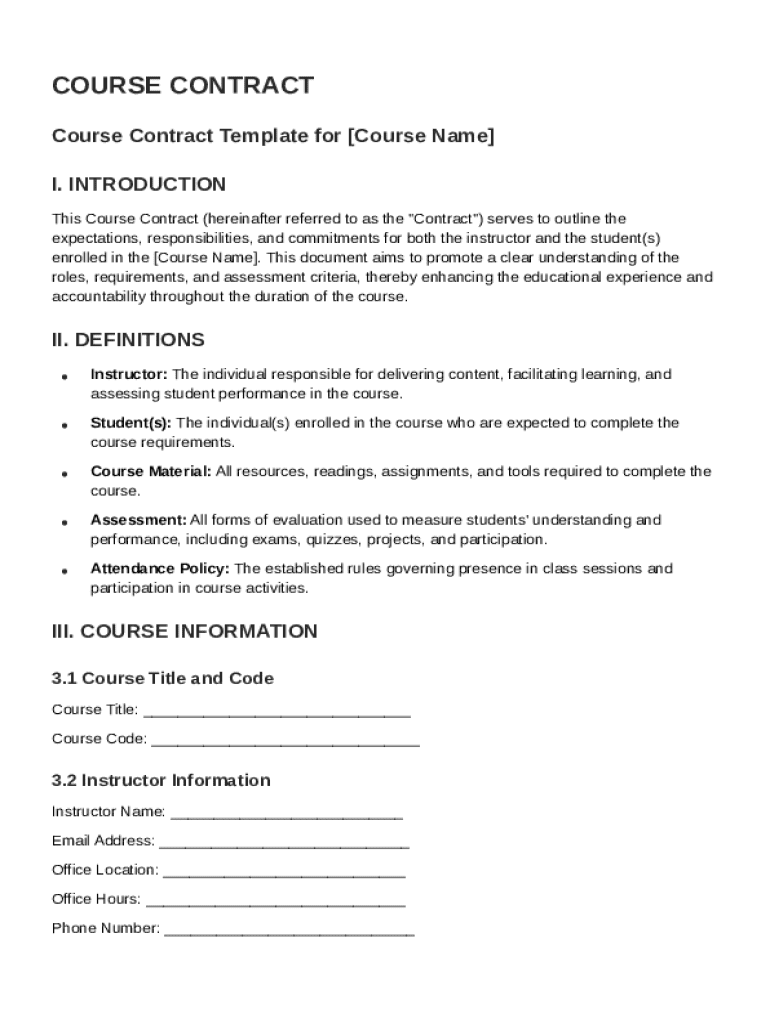
A Course Contract Template serves as a formal agreement between instructors and students, clearly outlining their roles, responsibilities, and expectations throughout a course. It acts as a roadmap for the educational journey, detailing crucial components such as learning objectives, assessment criteria, and academic policies. This ensures that both parties are aligned in their understanding and approach, facilitating a more structured and efficient learning environment.
Key Components
- Instructor Information: Includes the instructor's contact details and office hours, providing students with the means to communicate effectively.
- Course Details: Covers the course title, schedule, and location to ensure all participants have a clear understanding of when and where activities occur.
- Learning Objectives: Specifies the goals students are expected to achieve by the end of the course, guiding their study efforts.
- Assessment Criteria: Details the grading scale and assessment methods used to evaluate student performance.
Steps to Complete the Course Contract Template
Completing a Course Contract Template involves a systematic approach to ensure all relevant information is captured accurately.
Step-by-Step Process
- Gather Information: Collect details about the course, instructor, and any specific policies or requirements.
- Fill in Basic Details: Start by entering the course title, instructor information, and key dates.
- Define Objectives and Policies: Clearly outline the learning objectives and any unique policies, such as attendance or participation requirements.
- Specify Assessment Criteria: Provide detailed descriptions of grading methods and any additional evaluation components.
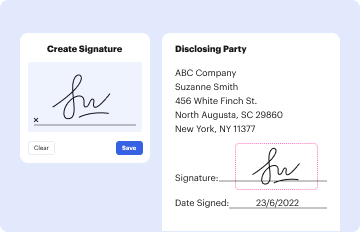
- Signatures and Agreement: Allow space for both instructor and student signatures to formalize the agreement.
Examples and Scenarios
- Hybrid Courses: Additional agreement on attendance for in-person versus online sessions.
- Collaborative Projects: Include expectations for group work and peer evaluations.
Important Terms Related to Course Contract Template
Understanding the terminology in a Course Contract Template is crucial for accurate completion and comprehension.
Common Terms
- Syllabus: A document outlining the course structure, schedule, and required materials.
- Prerequisites: Conditions or courses that must be completed before enrolling.
- Credit Hours: A measure representing how much time a student spends on classroom lessons.
Clarifications
- Academic Integrity Policy: Guidelines to prevent and address cheating or plagiarism.
- ADA Accommodations: Special considerations for students with disabilities.
Legal Use of the Course Contract Template
The Course Contract Template carries legal weight by outlining enforceable expectations and commitments for both parties involved.
Legal Considerations
- Compliance with Institutional Policies: Templates should align with the legal guidelines set by educational institutions.
- Protection Against Disputes: Clearly defined terms reduce ambiguity and potential conflicts.
Examples
- Special Accommodations: Ensure adherence to ADA requirements.
- Intellectual Property Rights: Outline rights related to course materials and student work.
Key Elements of the Course Contract Template
A well-constructed Course Contract Template includes several key elements essential for ensuring clarity and comprehensive coverage.
Fundamental Components
- Course Schedule: Detailed calendar outlining significant dates and deadlines.
- Required Materials: List of textbooks, software, or resources necessary for course participation.
- Signature Section: Space for signatures to formalize understanding and agreement from both parties.
Additional Considerations
- Contact Policy: Guidelines on expected response times and preferred communication channels.
- Feedback Mechanisms: Methods for students to provide course-related feedback.
Examples of Using the Course Contract Template
Practical illustrations of how a Course Contract Template is utilized can provide valuable insights into its application.
Real-World Applications
- Undergraduate Programs: Establish a clear framework for courses with large student groups.
- Professional Development Workshops: Outline expectations for interactive and immersive learning experiences.
Case Studies
- Remote Learning: Use in virtual classrooms to set expectations for digital conduct and participation.
- Accelerated Courses: Define shortened timelines and intensified scheduling.
State-Specific Rules for the Course Contract Template
Adapting a Course Contract Template to comply with state-specific educational regulations is important for legal adherence.
Considerations by State
- State Board Guidelines: Some states may have specific requirements for course contracts in publicly funded institutions.
- Credit Transfer Policies: Different states have varied policies regarding credit acceptance between institutions.
Nuances and Variations
- Standardized Testing Requirements: Include or exclude standardized test prep based on state mandates.
Software Compatibility for Course Contract Template
Ensuring the Course Contract Template is compatible with various digital platforms streamlines the creation and management process.
Supported Software
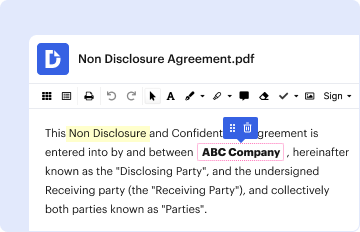
- DocHub: Allows editing, signing, and sharing of documents directly, enhancing collaborative capabilities.
- Google Workspace Integration: Facilitates seamless import and export of templates, maintaining workflow within users' familiar environments.
Benefits
- Cross-Platform Accessibility: Edit and manage documents from any device without additional software installations.
- Real-Time Collaboration: Supports synchronous editing, ensuring all parties are viewing the most current version.