
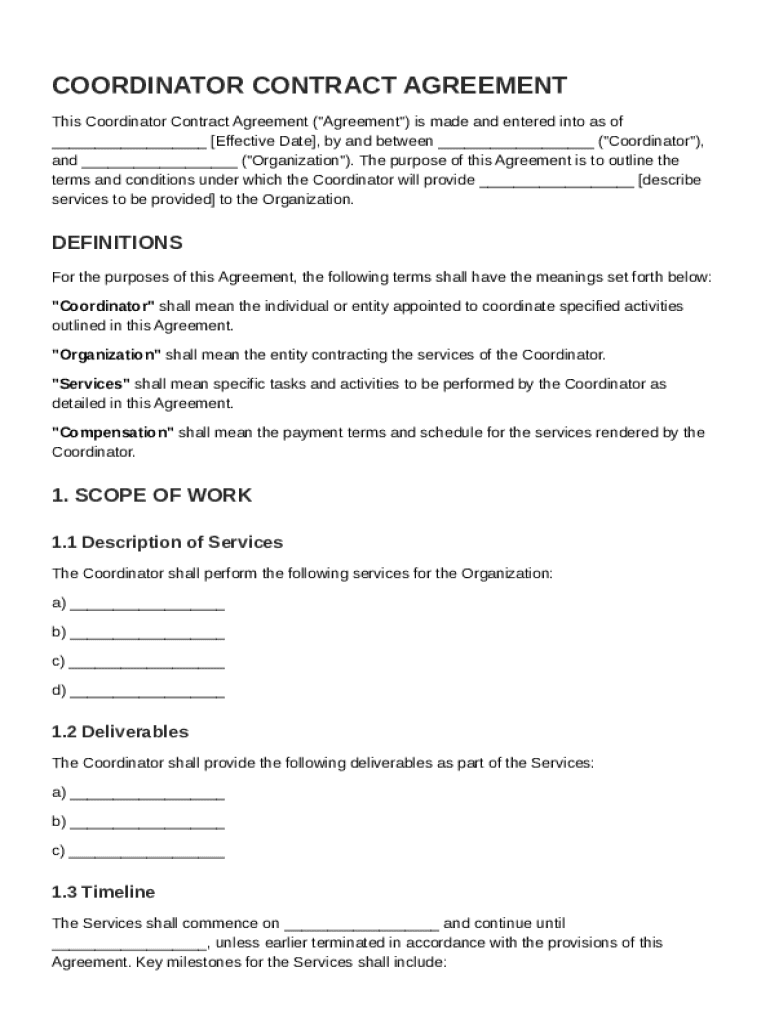







Definition and Meaning
The Coordinator Contract Template is a standardized legal document designed to formalize the relationship between an organization and an individual or entity acting as a coordinator. This agreement outlines the terms under which specific services are provided, ensuring clarity and mutual understanding between parties. The document includes key elements such as compensation, scope of services, and termination provisions, clearly defining the responsibilities and expectations for both parties involved.
Clarifying the Independent Contractor Status
A critical aspect of the Coordinator Contract Template is its emphasis on the coordinator's status as an independent contractor rather than an employee. This distinction is significant, as it affects tax obligations, benefits eligibility, and legal liabilities. The contract ensures that the coordinator is responsible for their own taxes and does not receive employee benefits, which are typically reserved for regular employees. Organizations should ensure that this section is clearly articulated to prevent any potential disputes or misclassification issues.
Key Elements of the Coordinator Contract Template
The Coordinator Contract Template comprises several fundamental components that structure the agreement. These elements are designed to be comprehensive, covering all aspects necessary for a solid legal agreement. Here are the key components included:
-
Definitions: Clear terminologies are established to avoid ambiguities. This section outlines specific definitions for certain terms used throughout the contract, ensuring mutual understanding.
-
Scope of Work: This section details the exact nature of the services the coordinator will provide. Specifying the scope helps prevent any confusion or disputes about job expectations or deliverables.
-
Compensation Details: The contract specifies payment terms, rates, and schedules. It is crucial to include clear compensation arrangements to avoid misunderstandings regarding payments.
-
Obligations and Responsibilities: This outlines the duties and responsibilities of the coordinator, ensuring both parties have a clear understanding of what is expected.
-
Termination Terms: Conditions under which the contract may be terminated by either party are detailed here, including notice periods and acceptable reasons for termination.
Examples of Key Elements in Practice
For instance, if a coordinator’s primary role is to manage event logistics, the scope of work should specify each event management aspect, including budgeting, vendor coordination, and timeline management. Similarly, the compensation details should clearly articulate whether payment is based on an hourly rate, per project, or on a retainer basis.
How to Use the Coordinator Contract Template
Using the Coordinator Contract Template is a straightforward process that ensures both parties are protected and aware of their rights and responsibilities. Here’s a step-by-step guide on how to effectively complete and utilize the template:
-
Review the Template Thoroughly: Before filling out the template, carefully read through each section to familiarize yourself with its terms and clauses.
-
Customize the Template: Fill in the necessary details, such as the names and contact details of the involved parties, specific job roles, rates of pay, and project timelines. Tailor the document to fit the unique requirements of the job and parties involved.
-
Consult with Legal Counsel: For added assurance, consider having the contract reviewed by a legal professional to ensure compliance with applicable laws and that it meets specific organizational needs.
-
Sign and Distribute Copies: Ensure both parties sign the completed template. Distribute executed copies to all pertinent parties for their records.
Importance of the Coordinator Contract Template
The Coordinator Contract Template is crucial for several reasons. Firstly, it provides legal protection to both the organizer and the coordinator by clearly defining the working relationship. Secondly, it helps avoid potential disputes by setting out expectations and obligations explicitly. Thirdly, it ensures compliance with legal standards, helping organizations meet their legal requirements for independent contracting arrangements.
Why Proper Documentation Matters
Having a detailed contract in place reduces the risk of misunderstandings and potential litigations. For example, should a disagreement occur concerning the coordinator’s responsibilities, the contract can serve as a reference point to resolve the issue amicably.
Legal Use of the Coordinator Contract Template
The template is formulated based on standard legal practices and can be adapted to align with state and federal laws within the U.S. Ensuring legal accuracy and compliance is paramount, encompassing several aspects:
-
Adhering to ESIGN Act for Electronic Transactions: If utilizing digital signing technology, the template supports the ESIGN Act requirements, providing valid electronic agreements.
-
Compliance with State-Specific Regulations: All parties should verify the contract adheres to specific legal stipulations within their respective states, as local legislation can influence contract validity.
Examples of Using the Coordinator Contract Template
Consider an organization hiring an independent event coordinator for a series of workshops. The scope of work section might include tasks such as arranging venues, coordinating speakers, and managing participant registration. Compensation might be outlined as a fixed fee per workshop or an hourly rate for preliminary planning meetings.
Real-World Case Studies
-
Non-Profit Organization Event: A non-profit organization engaged a freelance coordinator to handle logistics for a fundraising gala. The contract specified roles and responsibilities, ensuring the event ran smoothly without contractual hiccups.
-
Corporate Project Management: A corporate entity could retain a coordinator to oversee a short-term product launch, clearly defining deliverables and timelines in the contract’s scope of work section, thus maintaining project momentum and accountability.
State-Specific Rules for the Coordinator Contract Template
State-specific rules can significantly impact the implementation and enforceability of the Coordinator Contract Template. Various states may have differing regulations regarding independent contracting, employment classification, and dispute resolution processes. Organizations should be aware of:
-
Misclassification Penalties: States may impose penalties for incorrectly classifying an employee as an independent contractor, emphasizing the importance of correctly using the template.
-
Varying Tax Obligations: Tax requirements for independent contractors can vary widely by state, affecting how organizations manage payments and tax withholdings.
Consult Local Expertise
To navigate these differences, it is beneficial for organizations to consult local legal experts familiar with state employment laws to ensure full compliance and adaptability of the Coordinator Contract Template to their specific jurisdiction.




