
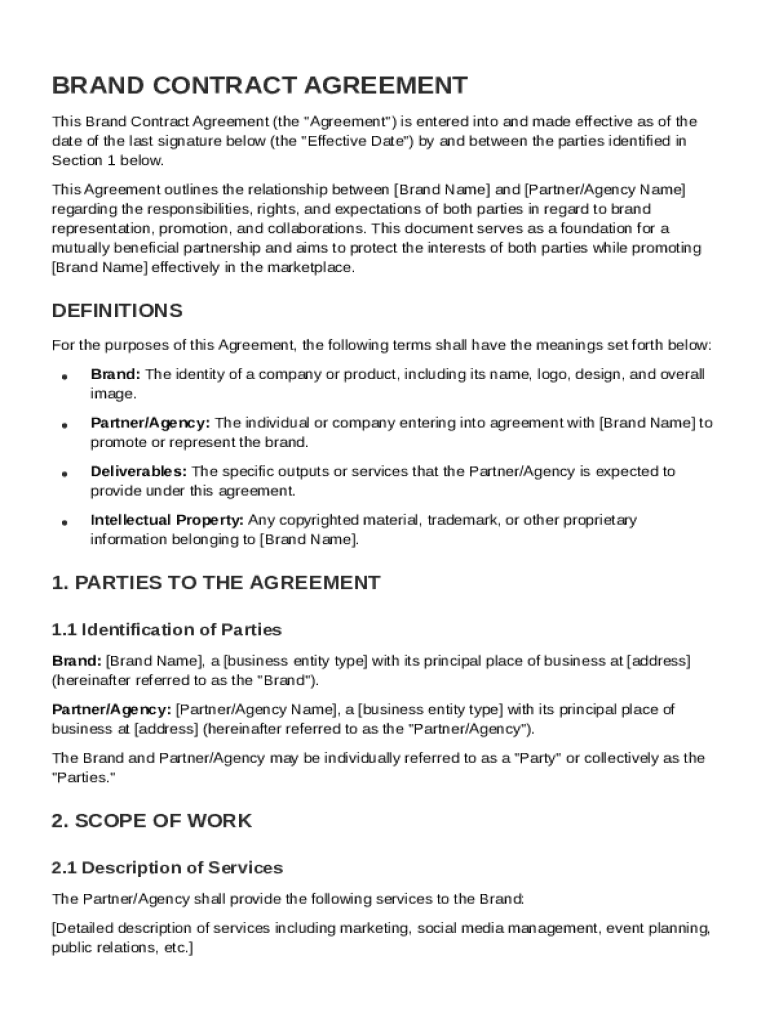







Definition & Meaning
A Brand Contract Template is a predefined document used to outline the terms and conditions between a brand and its partners or agencies. It serves as a formal agreement that specifies the roles, responsibilities, and expectations of each party involved in brand representation, promotion, and collaboration. This template acts as a foundational legal document to ensure transparency and protect the interests of both parties. By using a standardized template, businesses can streamline the contract creation process, ensuring that all relevant aspects such as deliverables, compensation, and confidentiality obligations are clearly defined.
Key Elements of the Brand Contract Template
The Brand Contract Template incorporates several critical components to ensure comprehensive coverage of the agreement. Key elements include:
- Responsibilities and Deliverables: Clearly defines the tasks, services, and products each party is expected to provide. This section outlines the scope of work and sets expectations for quality and deadlines.
- Compensation Structure: Details how payments will be structured, including any milestone payments, bonuses, or commission rates. This section should specify the currency, payment terms, and penalties for late payments.
- Confidentiality Obligations: Establishes the confidentiality expectations and restrictions regarding proprietary information shared during the collaboration. It may include non-disclosure agreements (NDAs) and specify the duration of confidentiality obligations post-contract.
- Dispute Resolution: Describes the processes and procedures for resolving disagreements that may arise, including arbitration or mediation options. It ensures that conflicts can be addressed efficiently without escalating to legal battles.
- Termination Conditions: Details the scenarios that can lead to the contract's early termination and any associated penalties or fees. Termination clauses protect parties from potential breaches and clarify the steps for a lawful contract end.
Steps to Complete the Brand Contract Template
To finalize a Brand Contract Template, follow these steps:
- Gather Information: Identify all parties involved and gather their contact information, roles, and responsibilities.
- Customize Template: Adjust the template to include specific details pertinent to the engagement, such as project timelines, milestones, and any unique stipulations.
- Define Terms: Clearly articulate the terms and conditions, ensuring both parties have a mutual understanding of their obligations and benefits.
- Include Legal Clauses: Incorporate necessary legal clauses, such as confidentiality, indemnity, and termination.
- Review and Revise: Seek input from legal counsel to review and ensure compliance with applicable laws and risk mitigation.
- Sign and Date: Once all parties agree on the terms, sign and date the contract. Use electronic signatures for convenience and to ensure legality.
Legal Use of the Brand Contract Template
The Brand Contract Template is a legally binding document when properly executed. Both parties should ensure compliance with applicable laws and seek legal advice when necessary. The contract should conform to standards set by the ESIGN Act for electronic signatures, making it valid and enforceable in the United States. By adhering to legal norms, the template not only provides clarity and protection but also establishes trust and accountability between parties.
Who Typically Uses the Brand Contract Template
Brand Contract Templates are commonly used by:
- Brands and Corporations: Seeking to formalize partnerships with marketing agencies, influencers, or promotional partners to ensure consistent brand representation.
- Advertising and Marketing Agencies: Creating clear guidelines and expectations when entering into agreements with clients or subcontractors.
- Freelancers and Independent Contractors: Establishing terms for project-based work, ensuring both parties understand deliverables and compensation.
- Startups and Small Businesses: Streamlining the contract process to save time and resources, while maintaining legal integrity.


Important Terms Related to Brand Contract Template
Understanding key terminology used within the Brand Contract Template is essential:
- License: The grant of rights by the brand to use specific trademarks, logos, or proprietary content.
- Exclusivity: A clause preventing the agency or partner from working with direct competitors for a certain period.
- Indemnity: A provision where one party agrees to compensate the other for any losses or damages incurred due to the agreement.
- Force Majeure: Relieves both parties from obligations due to extraordinary circumstances beyond their control, like natural disasters.
Software Compatibility
DocHub supports creating and modifying Brand Contract Templates with ease. It integrates seamlessly with various file types such as DOC, PDF, and XLS, ensuring compatibility across platforms. Users can import contracts from cloud storage services like Google Drive and Dropbox, allowing for smooth workflow integration. The platform’s support for legally binding electronic signatures further enhances its utility for managing contract processes efficiently.
Digital vs. Paper Version
Opting for a digital Brand Contract Template over a paper version offers several advantages:
- Efficiency: Digital templates can be edited, shared, and signed rapidly, reducing turnaround times and facilitating real-time collaboration.
- Cost-Effective: Eliminates printing, postage, and storage costs associated with traditional paper contracts.
- Environmentally Friendly: Reduces paper usage, aligning with sustainability goals.
- Accessibility: Digital contracts can be accessed and managed from anywhere, ensuring ongoing communication and updates in real-time.




