
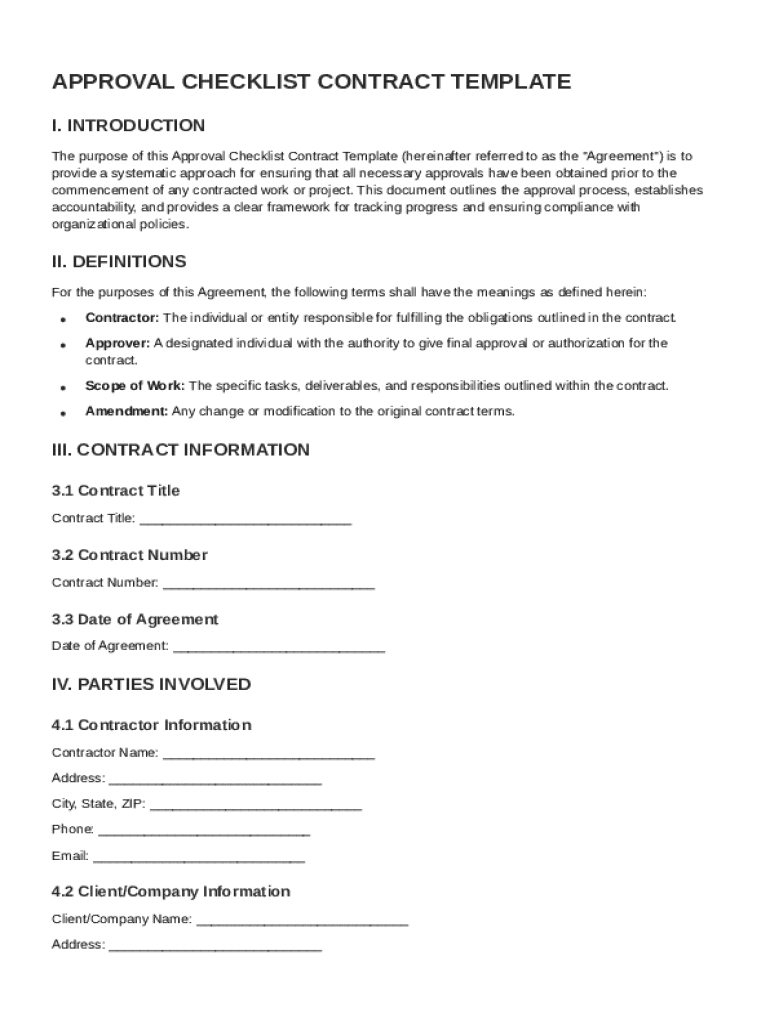







Definition & Meaning
The Approval Checklist Contract Template serves as a comprehensive framework for obtaining necessary approvals prior to the initiation of any contracted work. This template is designed to establish clear communication and accountability among all involved parties by outlining the key terms and conditions required for approval. It helps organize the approval process systematically, ensuring that all required information and documents are collected, and that compliance with organizational policies is maintained. This template is vital for ensuring that each party involved in the contract confirms their understanding and acceptance of the agreement terms.
How to Use the Approval Checklist Contract Template
Utilizing the Approval Checklist Contract Template involves several key steps to ensure effectiveness. The template should be filled out by the contract initiator, listing all necessary parties who must review and approve the contract. Users should carefully enter relevant contract details such as the type of contract, scope of work, and project timelines. After inputting the necessary information, the template guides users to systematically outline the document requirements and approval stages. Each section should be reviewed for accuracy prior to sending the document for approval. The template can be adapted and reused for various contracts, making it a versatile tool for repeated applications.
Steps to Complete the Approval Checklist Contract Template
- Identify all necessary approvers and enter their details in the appropriate section.
- Provide a detailed description of the contractual agreement, including project terms and timelines.
- List required documents that must accompany the contract for approval.
- Outline the sequential approval process, specifying any conditional approvals.
- Review and confirm that all required information is present and correct before initiating the approval process.
- Send the completed checklist to all designated approvers for review and sign-off.
- Track the approval status and follow up with approvers as necessary to ensure timely completion.
Key Elements of the Approval Checklist Contract Template
The Approval Checklist Contract Template is structured into several key sections. These include:
- Contract Information: Basic details about the contract, such as the parties involved, scope of work, and timeline.
- Required Approvals: A section to list all individuals or departments whose approval is necessary.
- Document Checklist: A list of documents required for the approval process to ensure all necessary information accompanies the contract.
- Procedures for Amendments: Guidelines for how to make amendments to the contract and seek re-approval when changes occur.
- Confirmation and Acceptance: A section for all parties to confirm their understanding and acceptance of the contract terms.
Why Should You Use the Approval Checklist Contract Template
Utilizing this template standardizes the approval process, making it more efficient and minimizing potential disputes or misunderstandings. By clearly outlining required document submissions and approval stages, the template promotes compliance with company policies and procedures. It also helps ensure that all necessary parties have agreed to contract terms before work begins, protecting all parties involved and reducing the risk of project delays or contractual issues.
Who Typically Uses the Approval Checklist Contract Template
This template is commonly used by professionals involved in contract management, such as contract managers, project managers, and legal teams. It is especially helpful for businesses or organizations that require multiple layers of approval for new contracts. Additionally, it can be employed by departments across various industries, including construction, IT, legal services, and finance, where structured and transparent approval processes are crucial.


Important Terms Related to Approval Checklist Contract Template
When using this template, several important terms frequently arise:
- Contractual Obligation: The responsibilities each party agrees to fulfill under the contract.
- Approval Hierarchy: The order in which approvals must be obtained, often based on the organizational structure.
- Compliance: Adherence to laws, regulations, or internal policies governing the contract.
- Amendment: Formal changes to the contract terms, which must be re-approved as outlined in the template.
- Execution: The final step in which the contract is officially signed and becomes legally binding.
Legal Use of the Approval Checklist Contract Template
The Approval Checklist Contract Template is crafted to align with legal standards and ensure all contract terms are sufficiently detailed and clear. This enhances its utility in safeguarding legal interests and preventing potential legal disputes. It requires all parties’ acknowledgment and agreement, which solidifies the contractual terms and helps enforce the contract legally. The template also facilitates adherence to contractual laws and policies and makes it easier to provide legally sound documentation in case of audits or disputes.
State-Specific Rules for the Approval Checklist Contract Template
While the Approval Checklist Contract Template provides a generic framework applicable across many jurisdictions, users must still consider state-specific legal requirements. These may include variations in contract law, required approval processes, and additional documentation. Organizations may need to consult legal experts to tailor the template to comply with local regulations and ensure the contract’s validity under state law.
Examples of Using the Approval Checklist Contract Template
Various organizations benefit from utilizing this template to streamline their approval processes. For instance, a construction company might use it to gain approvals for a new building project, ensuring all safety regulations and zoning laws are addressed before beginning work. Similarly, an IT firm could employ it to obtain approval for a client software development contract, confirming all technical requirements and delivery timelines with the client and technical team.




