






Definition and Meaning
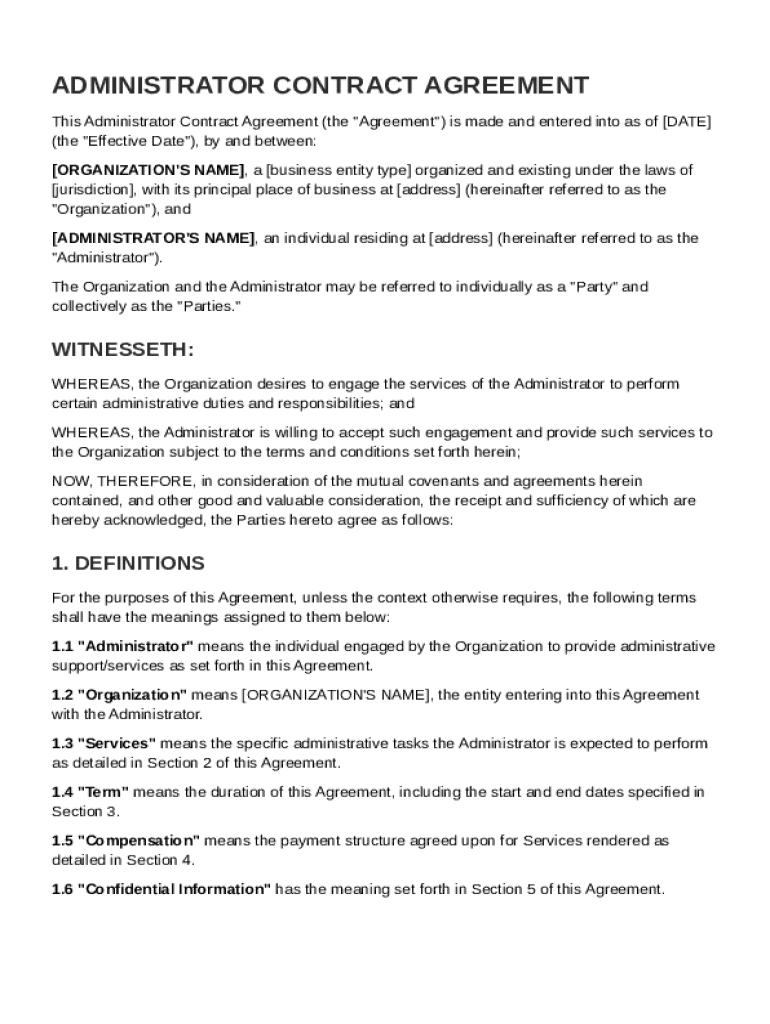
An Administrator Contract Template is a legally binding document used to outline the terms and conditions of an administrator's engagement with an organization. It serves to delineate the scope of administrative duties, clarify expectations between the parties involved, and solidify agreements concerning compensation, confidentiality, and termination. These templates are crucial for formalizing relationships in a professional context, ensuring that all operational, financial, and legal responsibilities are clearly understood. Using a well-structured template helps mitigate misunderstandings, reducing potential conflicts and legal disputes.
Key Elements of the Administrator Contract Template
A comprehensive Administrator Contract Template should include certain critical sections to ensure clarity and effectiveness. These elements include:
- Scope of Work: Outlines specific duties and responsibilities of the administrator, covering day-to-day tasks and broader strategic roles.
- Compensation Details: Specifies salary, bonuses, benefits, and any other forms of remuneration.
- Confidentiality Obligations: Establishes the requirements for protecting sensitive organizational information.
- Non-compete and Non-solicitation Clauses: Limits the administrator’s ability to work with direct competitors or solicit company employees post-termination.
- Termination Conditions: Defines the process and grounds for contract termination, offering clarity on notice periods and severance.
- Governing Law: Identifies which jurisdiction’s laws will govern the interpretation and enforcement of the contract.
Each section is essential to construct a balanced agreement that serves both parties’ interests equitably.
How to Use the Administrator Contract Template
Utilizing an Administrator Contract Template effectively involves several crucial steps to adapt the template to specific organizational needs and legal standards:
- Customizing Template Content: Ensure that all sections of the template are tailored to reflect the unique arrangements specific to the organization and role.
- Defining Specific Roles and Responsibilities: Clearly describe the administrator’s duties and align them with organizational objectives.
- Consulting Legal Counsel: Work with legal professionals to confirm compliance with applicable laws and integrate any jurisdiction-specific requirements.
- Incorporating Company Policies: Align the terms of the contract with internal policies and existing contractual obligations.
- Final Review and Approval: Conduct a thorough review to ensure all stakeholders agree on the contract terms before finalizing the document.
Following these steps ensures that the template serves as a precise, binding tool that captures all nuances and agreements appropriately.
Steps to Complete the Administrator Contract Template
When completing an Administrator Contract Template, attention to detail is critical:
- Input Organizational and Personal Details: Fill in all necessary personal and organizational details at the beginning of the template.
- Specify Terms and Conditions: Clearly state the detailed terms regarding compensation, job responsibilities, and other pertinent details.
- Check Legal Compliance: Verify that the terms conform to applicable employment laws and business regulations.
- Obtain Necessary Signatures: Ensure both parties provide signatures to make the agreement binding and official.
- Distribute Copies: Share copies with relevant departments and the administrator, ensuring all stakeholders have access to the contract.
Completing these steps effectively is critical to making the document legally binding and enforceable.
Legal Use of the Administrator Contract Template
The legal use of an Administrator Contract Template involves ensuring that the document meets regulatory standards and legal requirements:
- Compliance with Labor Laws: Ensure the terms align with federal and state employment laws, including fair wage standards and employee rights.
- Inclusion of Legal Provisions: Incorporate all necessary legal provisions, such as dispute resolution mechanisms and liability limits.
- Confidentiality and IP Clauses: Include protections for intellectual property and sensitive information pertinent to organizational operations.
- Review by Legal Experts: Have the contract reviewed by experienced legal professionals to mitigate risks of legal disputes.
Legal adherence ensures robust protection of organizational interests and the administrator's rights.
Who Typically Uses the Administrator Contract Template
Administrator Contract Templates are predominantly utilized by:
- Human Resources Departments: HR teams employ these templates during recruitment to formalize employment agreements.
- Legal Teams: Legal counsel can customize these templates to ensure regulatory adherence and legal robustness.
- Business Owners and Managers: Organizations of various scales use these contracts to standardize relationships with administrative staff.
This template provides a versatile solution for various groups to maintain consistent and reliable employment contracts.

Examples of Using the Administrator Contract Template
Each organization may adapt the Administrator Contract Template differently according to their unique needs:
- Startups: Use simplified versions of the template to establish roles and responsibilities in a growing firm.
- Nonprofit Organizations: Include specific clauses pertinent to nonprofit regulations and volunteer coordination.
- Large Corporations: Utilize comprehensive templates that cover complex employment terms and multilevel approvals.
These variations demonstrate flexibility in addressing diverse administrative contract scenarios across different organizational types.
Important Terms Related to Administrator Contract Template
Understanding key terms within an Administrator Contract Template is imperative for all involved parties:
- Indemnification: Protects the organization from legal claims that arise due to the administrator’s actions.
- Force Majeure: Accounts for unforeseeable circumstances preventing the fulfillment of the contract.
- Breach of Contract: Defines actions that constitute a contract breach and potential remedies.
- Severability: Ensures that if a provision is invalidated, the remainder of the contract remains enforceable.
Familiarity with these terms ensures better comprehension and execution of the contract.