






Definition & Purpose of the Meet Room Contract Template
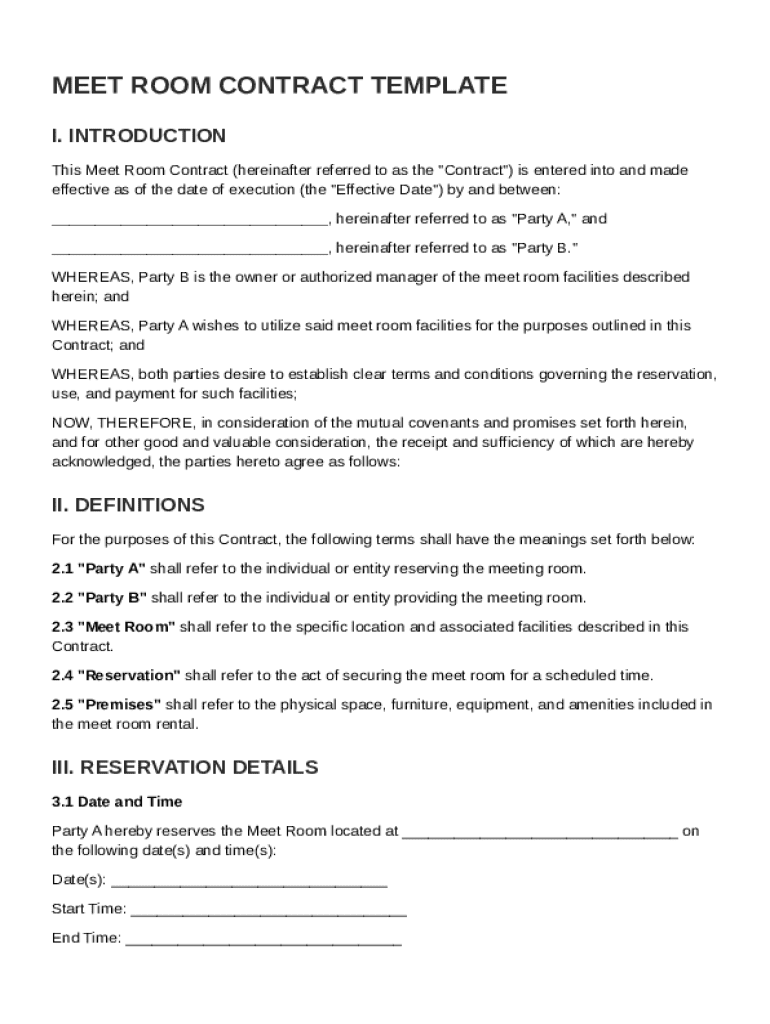
The Meet Room Contract Template is a structured document designed to formalize the agreement between two parties for the use of meeting room facilities. Party A is typically the user, an individual, or an organization seeking to reserve the space, whereas Party B is the provider, responsible for offering the facility for a specific period. This template serves several key functions that ensure both parties have a mutual understanding of their responsibilities and rights.
Within the template, each section meticulously addresses diverse areas of the contract to prevent misunderstandings. It outlines the specifications of the room, scheduling details, and the permitted usage. Furthermore, this template ensures clarity by including definitions of terms used throughout the document so that all conditions and expectations are clearly understood by both parties.
By detailing fees, payment conditions, and refund policies, the template assists in managing the financial aspects, making sure payment obligations are comprehensible and agreed upon. Through clauses on termination and miscellaneous provisions, it offers guidance on possible disputes or alterations, ensuring a smooth transition should changes arise.
Key Elements of the Meet Room Contract Template
Understanding the primary components of the Meet Room Contract Template is crucial to ensuring all relevant areas are covered. These elements are fundamental to a well-rounded, legally sound contract.
- Reservation Details: Specifies the room's availability, duration of usage, and booking processes.
- Fees and Payment Terms: Clearly outlines the cost of renting the space, payment schedules, and accepted payment methods.
- Usage Terms: Defines how the meeting room can be used, including restrictions on allowed activities.
- Responsibilities of Both Parties: Enumerates the duties each party agrees to, such as maintaining cleanliness or providing certain amenities.
- Liability Clauses: Details the extent of each party's liability in the event of damages or accidents within the facility.
- Termination Conditions: Specifies the conditions under which the contract may be terminated, including notice periods and cancellation fees.
- Governing Law & Jurisdiction: Sets out which legal system will govern the interpretation of the contract and the handling of any disputes.
Steps to Complete the Meet Room Contract Template
To complete the Meet Room Contract Template effectively, it is essential to follow a step-by-step process:
-
Review the Template: Start by thoroughly reading each section of the template to understand the terms and structure. This step will equip you with the necessary knowledge to fill in the required information accurately.
-
Fill in Details for Party A and Party B: Enter the names, addresses, and contact information for both parties in their respective sections. Properly identifying the parties involved helps ensure legal clarity.
-
Specify the Reservation Details: Input detailed information about the date, time, and duration of the meeting room use. Also, include any additional equipment or facilities requested.
-
Outline Payment Information: Include specific information about the fees, preferred payment methods, and deadlines for payments. This provides transparency and assists in managing expectations.
-
Detail Usage Terms and Responsibilities: Specify all relevant terms on how the meeting room will be used, along with any restrictions or guidelines both parties need to follow.
-
Incorporate Termination and Liability Terms: Clearly state any conditions or penalties for early termination and outline the liabilities each party agrees to assume.
-
Finalize and Review: Re-examine the completed contract to ensure all information is accurately captured. Both parties should then sign the document to make it legally binding.
Legal Use of the Meet Room Contract Template
The legal framework provided by the Meet Room Contract Template is designed to protect both user and provider during the reservation and usage process. This template establishes a legally binding contract that can be enforced in court if necessary. The specific components of the template ensure compliance with general contract laws applicable in the United States.
Legal validity is chiefly determined by having mutual consent, clear terms, and signatures from both parties. By clearly identifying obligations and allowing room for negotiations or amendments in some sections, this template contributes to both parties conducting their business within the boundaries of the law.
The inclusion of clauses on governing laws and jurisdictions ensures that any potential disputes are resolved under predefined legal systems, further solidifying its enforceability.
Who Typically Uses the Meet Room Contract Template
The Meet Room Contract Template is utilized by various parties across different industries. Typical users include:
-
Businesses: Corporations and small businesses frequently require meeting spaces for client interactions, strategic planning, or training sessions.
-
Freelancers: Independent contractors may seek professional settings to meet with clients or collaborators, enhancing their professional presentation.
-
Event Organizers: Companies or individuals organizing seminars, workshops, or conferences often need formal spaces to host their events.
-
Educational Institutions: Schools and universities might lease additional space for lectures, seminars, or administrative purposes.
-
Non-Profit Organizations: Often, non-profits arrange meetings or community events needing structured agreements to outline terms of use.

State-Specific Rules for the Meet Room Contract Template
Different states may impose varying legal requirements or standard practices relevant to meeting room rental agreements. While this template complies with federal contract laws, being informed about specific state mandates can be crucial.
- Rent Control and Zoning Laws: Some states may have restrictions influencing commercial property agreements, including meeting rooms.
- Tax Obligations: States like California and New York may have specific tax requirements affecting the cost or conditions under which meeting rooms can be rented.
- Safety Regulations: States such as Texas might mandate particular safety provisions be included in meeting room contracts, impacting room capacities or necessary precautions.
Ensuring the contract complies with local legal stipulations mitigates risks of disputes or non-compliance issues.
Examples of Using the Meet Room Contract Template
To illustrate the utility of the Meet Room Contract Template, consider these scenarios:
-
Corporate Meeting: A tech company in Silicon Valley arranges a quarterly strategy meeting using the template to outline responsibilities for setup, equipment usage, and post-meeting cleanup.
-
Workshop Event: An educational consultancy in New York utilizes the template to reserve a meeting room for a weekend workshop, including specific details on audiovisual equipment, refreshment provision, and emergency protocols.
-
Client Presentation: A marketing consultant in Chicago leverages the template to secure a professional environment for a client pitch, specifying decor arrangements and time slots for room access.
-
Board Meeting: A non-profit organization in Austin employs the template to host their annual board meeting, ensuring everyone understands the procedures for security and confidentiality.
Versions or Alternatives to the Meet Room Contract Template
While the Meet Room Contract Template is comprehensive, alternative templates or adapted versions might better serve specific needs:
- Short-Term Rental Agreements: Simpler agreements for shorter bookings or less complex arrangements.
- Customizable Templates: Custom contracts tailored to unique requirements such as multi-room bookings or recurring reservations.
- Automated Contracts: Utilization of platforms like DocHub to generate interactive templates with fillable fields, enhancing accuracy and efficiency.
Exploring variations ensures that the selected template aligns with the meeting's complexity and desired legal structure.