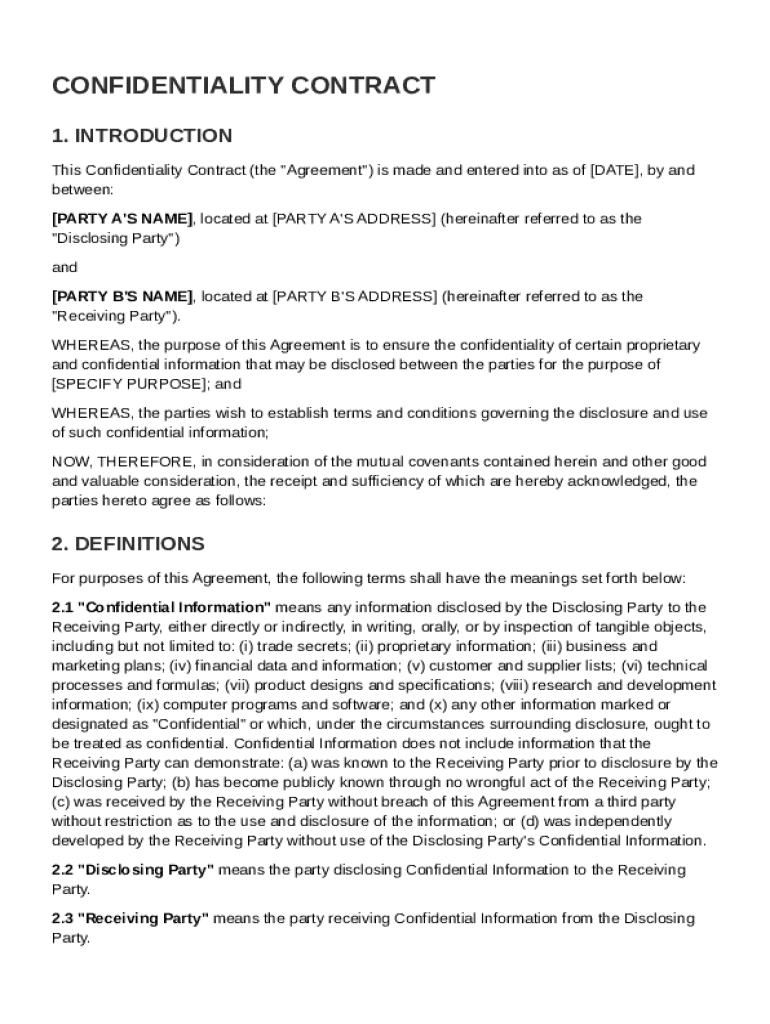







Definition & Meaning
A Confidentiality Contract, also known as a Non-Disclosure Agreement (NDA), is a legally binding document between two parties: a Disclosing Party and a Receiving Party. Its primary function is to protect proprietary and confidential information shared for a specific purpose, ensuring that sensitive information remains secure and is used only for agreed purposes. This agreement outlines essential details like the obligations of the Receiving Party regarding the protection and non-disclosure of confidential information, permitted disclosures under legal requirements, the duration of confidentiality obligations, return of materials, ownership rights, and the governing law.
Key Components Explained
- Disclosing Party: The individual or entity sharing the confidential information.
- Receiving Party: The individual or entity receiving the information who agrees to keep it confidential.
- Confidential Information: Specific data or knowledge deemed proprietary and requires protection.
- Obligations: The duties and responsibilities of the Receiving Party to refrain from disclosing or misusing the information.
Key Elements of the Confidentiality Contract Template
Understanding the integral parts of a Confidentiality Contract is critical for drafting a comprehensive agreement tailored to specific needs. Key elements include:
- Definitions: Clarification of terminologies used throughout the contract to prevent misunderstandings.
- Purpose: Explanation of why the confidential information is being shared.
- Obligations of the Receiving Party: Specification of how the information must be handled, including security measures and restrictions.
- Permitted Disclosures: Circumstances under which disclosure of information is allowed, like legal obligations or court orders.
- Duration: The timeframe during which confidentiality must be maintained.
- Consequences of Breach: Legal implications or penalties for failing to comply with the agreement’s terms.
Steps to Complete the Confidentiality Contract Template
Creating a confidentiality contract involves several detailed steps to ensure all necessary components are appropriately addressed. Follow these steps for a thorough approach:
- Identify Parties Involved: Clearly state the names and contact details of the Disclosing and Receiving Parties.
- Define Confidential Information: Specify what constitutes confidential information to avoid ambiguity.
- Set the Purpose: Clearly outline why the information is being shared and the intended use.
- Detail Obligations: Include specific instructions on how the Receiving Party should manage the information, emphasizing confidentiality.
- Outline Disclosure Terms: Specify conditions under which information can be disclosed.
- Set Timeframes: Detail how long the confidentiality obligations will last.
- Include Legal Provisions: Incorporate legal terms such as governing law and jurisdiction, and outline repercussions for breach of the contract.
- Finalize & Sign: Ensure both parties sign and date the contract, confirming their understanding and agreement to the terms.
Practical Tips for Completion
- Use Clear Language: Avoid complex language to prevent misinterpretation.
- Legal Advice: Consult with a legal professional to ensure compliance with applicable laws.
Legal Use of the Confidentiality Contract Template
Confidentiality contracts must adhere to various legal standards to be enforceable. They serve multiple purposes in protecting business interests, intellectual property, and sensitive data. Legal considerations include:
- Jurisdiction: Ensuring the contract aligns with state and federal laws.
- Compliance with ESIGN Act: If using electronic signatures, they must comply with the Electronic Signatures in Global and National Commerce Act.
- Governing Law: Specifying which state’s law will govern the contract is crucial in case of legal disputes.
Common Legal Scenarios
- Employee Agreements: Used to protect company information when employees have access to proprietary data.
- Business Partnerships: Essential for trust when sharing sensitive information between partners.
Who Typically Uses the Confidentiality Contract Template
Confidentiality contracts are widely used across various industries and professions where sensitive information is routinely shared. Typical users include:
- Businesses: To protect trade secrets, product plans, and financial information.
- Healthcare Institutions: For safeguarding patient information and research data.
- Tech Companies: Ensuring proprietary software or application details remain confidential.
- Employment Situations: When employees or freelancers have access to sensitive information.

Software Compatibility and Digital vs. Paper Version
With the increased reliance on digital tools for document management, understanding how to use the Confidentiality Contract Template digitally is crucial for efficient workflows. This template can be utilized both digitally and in paper format, with each offering distinct advantages.
Software Compatibility
- DocHub: Allows for seamless editing, signing, and sharing of the template directly within the platform.
- Google Workspace: Integration allows for easy import and export directly from Google Drive and Gmail.
- Other Platforms: Compatible with various document management systems.
Advantages of Digital Over Paper
- Efficiency: Digital completion and signing streamline the process.
- Security: Digital formats often have enhanced security features, such as encryption and access control.
- Accessibility: Documents can be accessed from anywhere, facilitating remote collaboration.
State-Specific Rules for the Confidentiality Contract Template
Given the localized nature of laws across the United States, it’s important to understand any state-specific regulations or variations that could affect a confidentiality contract.
Examples of Variations
- California: Has strict rules on employee-related confidentiality agreements, especially concerning non-compete clauses.
- New York: Recognizes NDAs so long as they don’t conflict with state public policies.
- Texas: Enforces confidentiality agreements under the Texas Uniform Trade Secrets Act.
Ensuring Compliance
- Review State Laws: Understand specific state requirements before drafting.
- Legal Consultation: Engage legal counsel to ensure agreement validity across different jurisdictions.
Important Terms Related to Confidentiality Contract Template
Familiarity with key legal and contractual terminology ensures proper understanding and enforcement of confidentiality contracts. Important terms include:
- Non-Disclosure: An obligation to not reveal confidential information to others.
- Proprietary Information: Data or information that is owned by a company or individual and requires protection.
- Intellectual Property: Creations of the mind (inventions, designs) that have legal rights.
- Indemnification: Protection against damages or losses as specified within the contract.
By thoroughly understanding and appropriately filling out a Confidentiality Contract Template, parties involved can effectively protect and manage sensitive information.