
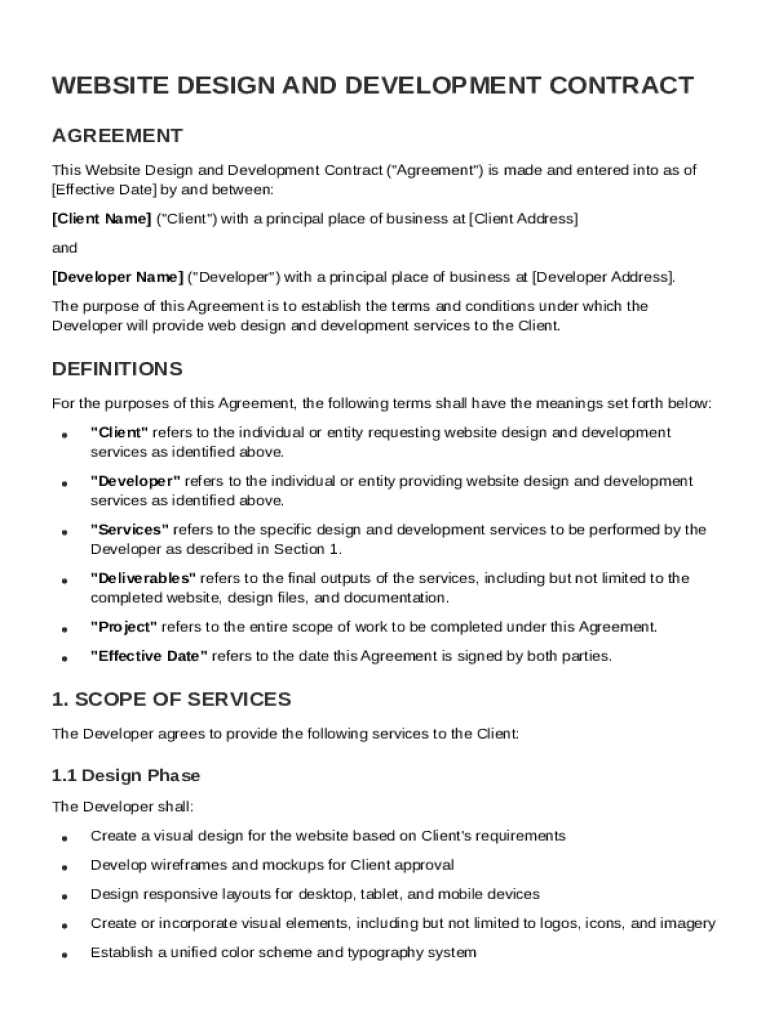







Definition & Meaning
The Website Design and Development Contract Template is an essential legal document that outlines the terms and conditions between a client and a developer for creating, designing, and maintaining a website. Its primary objective is to ensure that both parties have a mutual understanding of the project's scope, responsibilities, and expectations. It serves as a formal agreement detailing various aspects, such as project timelines, payment terms, and ownership rights, providing clear guidelines to prevent misunderstandings and disputes.
- Clarity and Structure: By specifying each party's roles and responsibilities, the contract helps define the project's workflow, ensuring expectations are met.
- Legal Protection: This template serves as a legally binding framework that can be referred to in case of disputes, protecting the interests of both parties involved.
Key Elements of the Website Design And Development Contract Template
The contract is comprised of several critical components that detail the framework and operation of the agreement. These elements ensure comprehensive coverage of all aspects of the web design and development process.
- Scope of Services: Defines the specific tasks that will be performed, including design, coding, testing, and deployment.
- Project Timelines: Establishes deadlines for different phases, ensuring the project stays on schedule.
- Compensation Structures: Details payment amounts, schedules, and any conditions for bonuses or penalties.
- Ownership of Deliverables: Specifies the rights to the final design and code, including intellectual property considerations.
- Confidentiality Obligations: Protects proprietary information shared during the project, requiring non-disclosure from both parties.
- Termination Conditions: Outlines the circumstances under which the contract can be terminated by either party.
- Governing Law: States the jurisdiction whose laws will be used to interpret the agreement, typically reflecting where the client or developer is based.
How to Use the Website Design And Development Contract Template
Utilizing this template effectively involves tailoring it to suit the specific needs of your project and the parties involved. Here is a step-by-step breakdown:
- Download the Template: Obtain the template from a reliable source, such as a legal document provider or a web development resource.
- Customize the Agreement: Adjust sections like timelines, payment structures, and special terms to match the project specifics.
- Review with Legal Counsel: Have a legal professional review the contract to ensure it complies with local regulations and thoroughly protects both parties.
- Discuss with the Client/Developer: Go over the document with the other party to ensure all terms are clear and agreeable.
- Finalize the Contract: Both parties should sign the document digitally or physically, depending on preference and legal stipulations.
Who Typically Uses the Website Design And Development Contract Template
This template is beneficial for a variety of individuals and organizations involved in the web development industry.
- Freelance Developers: Use the contract to clearly outline project terms with clients, reducing the risk of miscommunication.
- Web Development Agencies: Larger firms employ this template to standardize their agreements across projects.
- Clients and Businesses: Companies looking to hire developers to build or redesign their website can use the template to ensure their requirements are clearly understood.


Steps to Complete the Website Design And Development Contract Template
Completing the contract requires careful attention to detail to ensure all aspects of the project are covered adequately.
- Input Project Details: Start by detailing the project scope, including all services to be rendered.
- Establish Timelines and Milestones: Clearly define expected delivery dates for each phase.
- Set Payment Terms: Include specifics on when and how payments will be made.
- Clarify Ownership and IP Rights: Clearly state who will own the final product and any proprietary materials.
- Include Confidentiality Clauses: Ensure there are terms protecting sensitive information.
- Specify Termination and Legal Terms: Establish conditions for ending the contract and the governing law.
Legal Use of the Website Design And Development Contract Template
The contract is a formal agreement subject to applicable laws which can vary based on jurisdiction.
- Compliance with Local Laws: It is crucial to adapt the contract according to the state laws applicable to both the client and developer.
- Legally Binding Nature: Once signed, the contract acts as a binding document, enforceable in legal settings.
- Dispute Resolution: It should outline acceptable methods for addressing any disputes, such as mediation or arbitration, to avoid costly litigation.
Important Terms Related to Website Design And Development Contract Template
Several technical and legal terms are integral to understanding the contract and its implications.
- Intellectual Property (IP): Refers to the proprietary rights over the design and code created during the project.
- Non-Disclosure Agreement (NDA): A clause within the contract that ensures confidentiality of shared information.
- Milestone-Based Payments: A payment structure based on completion of specific project phases rather than a single lump sum.
- End-User License Agreement (EULA): Specifies how the client can use the final product within their operations.
Examples of Using the Website Design And Development Contract Template
Understanding how this template is used in real-world scenarios can offer practical insights for future projects.
- Small Business Website: A startup uses the contract to hire a developer for a comprehensive web application, detailing necessary functionalities and integrations specific to their industry.
- Freelance Web Developer: An independent developer customizes the template for various clients, adjusting the terms based on project scope and client requirements.
- Design Agency Collaboration: An agency teams up with an external developer to complement their in-house resources, adopting clear terms for ownership and confidentiality through the contract.




