






Definition and Meaning
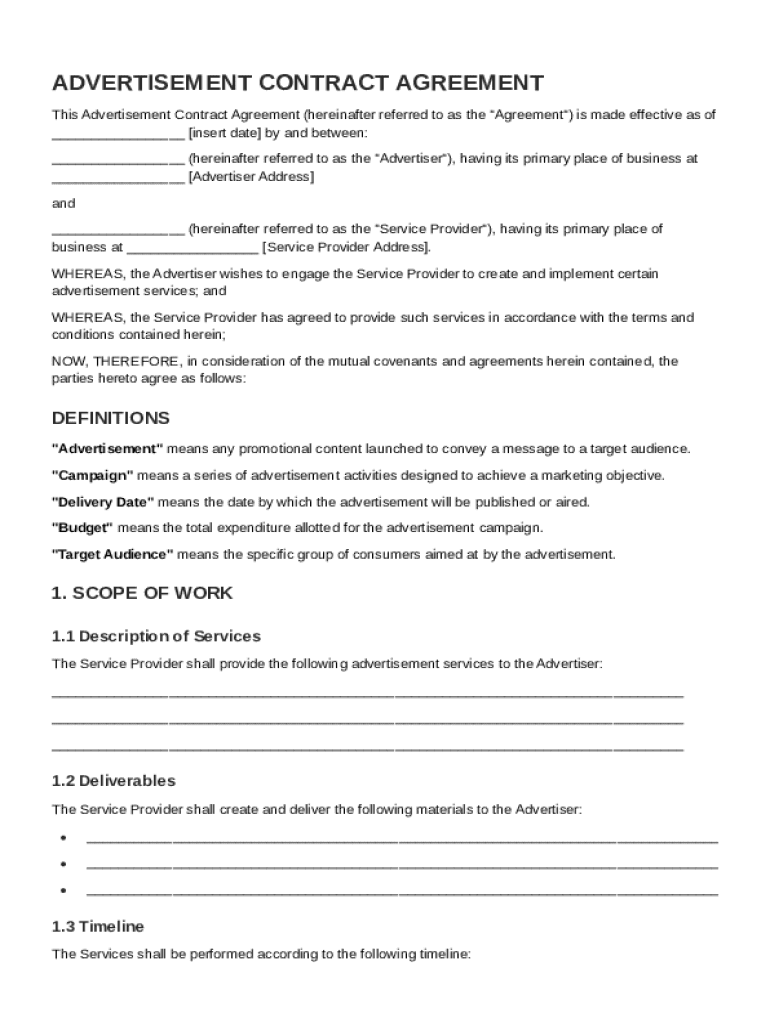
An Advertisement Contract Template is a legally binding agreement between an advertiser and a service provider. It defines the terms and conditions under which advertisement services will be conducted. This document typically includes detailed provisions related to the scope of work, payment terms, rights and ownership of creative materials, and performance metrics. A properly constructed template ensures both parties understand their responsibilities and the expectations for the advertising campaign.
For example, in a contract where a local business hires a digital marketing agency, the advertisement contract would outline precisely what kinds of digital ads will be created, how they will be distributed, and metrics for measuring the campaign's success. This clarity helps prevent misunderstandings and disputes.
Key Elements of the Advertisement Contract Template
At the heart of an Advertisement Contract Template are several critical components that structure the business relationship:
- Definitions: Clarifies terminology used throughout the contract, ensuring both parties have a mutual understanding of terms.
- Scope of Work: Details the specific advertising services to be delivered, including the medium, duration, and any particular strategies or technologies to be employed.
- Payment Terms: Describes the fee structure, due dates, and any contingencies related to payment.
- Rights and Ownership: Specifies which party owns the advertisement materials and rights after creation.
- Performance Metrics: Outlines how success will be measured, using metrics like impressions, clicks, conversions, or sales.
- Termination Clauses: Conditions under which the agreement can be terminated, including notice requirements and potential penalties.
- Confidentiality Obligations: Protects proprietary information shared during the collaboration.
These key elements ensure a thorough understanding of each party's roles and responsibilities and provide a basis for measuring the advertising campaign's success.
Steps to Complete the Advertisement Contract Template
Filling out an Advertisement Contract Template involves several critical steps, which can vary depending on the specific requirements of the campaign and the parties involved:
- Identify Parties: Clearly list the names and contact details of the advertiser and the service provider.
- Define Services: Specify the advertising services to be delivered, including the platforms and mediums to be used.
- Set Payment Terms: Agree upon the fee structure, detailing amounts, payment methods, and schedule.
- Outline Ownership: Confirm who owns creative rights both during and after the campaign.
- Establish Performance Metrics: Identify metrics for success evaluation, such as KPIs (Key Performance Indicators).
- Include Legal Clauses: Add termination, confidentiality, indemnification, and dispute resolution clauses.
- Sign and Date: Both parties must sign and date the document to make it legally binding.
By following these steps, parties can ensure that their advertising efforts are clearly outlined and agreed upon, reducing the risk of conflicts down the line.
Legal Use of the Advertisement Contract Template
Utilizing an Advertisement Contract Template aligns with various U.S. legal standards, ensuring that both parties meet their contractual obligations. The document is designed to be compliant with advertising laws, intellectual property rights, and data protection regulations.
For instance, when including clauses on ownership rights, the template ensures compliance with copyright law. Similarly, confidentiality obligations align with privacy laws and non-disclosure agreements (NDAs), safeguarding sensitive information exchanged during the project.
Adhering to these legal guidelines is crucial, as violations can lead to penalties, voided contracts, or litigation. Therefore, leveraging legally sound templates is a best practice for businesses engaging in advertising endeavors.
Who Typically Uses the Advertisement Contract Template
Advertisement Contract Templates are indispensable tools for various entities involved in the advertising ecosystem:
- Businesses: Seeking to promote their products or services through third-party agencies.
- Advertising Agencies: Offering creative content, media buying, or strategy services to clients.
- Freelance Marketers: Contracting directly with businesses for digital marketing efforts.
- Media Outlets: Engaging in promotional services on behalf of advertisers.
- Sponsored Events: Where companies wish to advertise through event-driven ventures.
Each of these entities relies on structured templates to detail their advertising collaborations' specifics, ensuring clear communication and formalizing commitments.


Software Compatibility and Integration
In today's digital work environment, software compatibility is a critical aspect of managing contract documents effectively. Platforms like DocHub simplify this process by being compatible with various file formats (PDF, DOC, PPT, XLS, and TXT). This flexibility allows users to edit, sign, and manage Advertisement Contract Templates without conversion hassles.
DocHub's seamless integration with Google Workspace enhances this efficiency, as users can import contracts directly from Google Drive, edit them in DocHub, and export completed documents back to their original location. This fluid functionality is beneficial for maintaining version control and ensuring easy access from anywhere.
Examples of Using the Advertisement Contract Template
Real-world scenarios demonstrate the versatility of Advertisement Contract Templates:
- A retail company contracts a digital agency to run an ad campaign for a holiday sale. The agreement specifies the use of social media and search engine ads with success measured by increased online store traffic and sales conversions.
- A local service provider hires a marketing consultant for rebranding efforts. The template outlines TV and radio ad broadcasting, print materials, and event sponsorship, along with timelines and creative control rights.
- An online publication partners with brands to place banner ads on their site. Performance metrics are based on click-through rates and brand awareness surveys.
These examples underscore the importance of precise terms, mutual understanding, and structured agreements in achieving advertising goals.
Important Terms Related to Advertisement Contract Template
Understanding the terminology used in an Advertisement Contract Template is essential for all involved parties:
- Impression: A metric that counts how many times an ad is displayed.
- Conversion: An action that signifies the success of an ad (e.g., a purchase, sign-up, or inquiry).
- Intellectual Property: Legal rights to creative works produced and used during the campaign.
- Indemnification: A provision within the contract that holds one party harmless from liabilities.
- Force Majeure: A clause that frees both parties from liability due to extraordinary events beyond their control.
Familiarity with these terms fosters better negotiation and greater clarity in outcomes between advertisers and service providers.