




Definition and Purpose of the Sponsor Contract Template
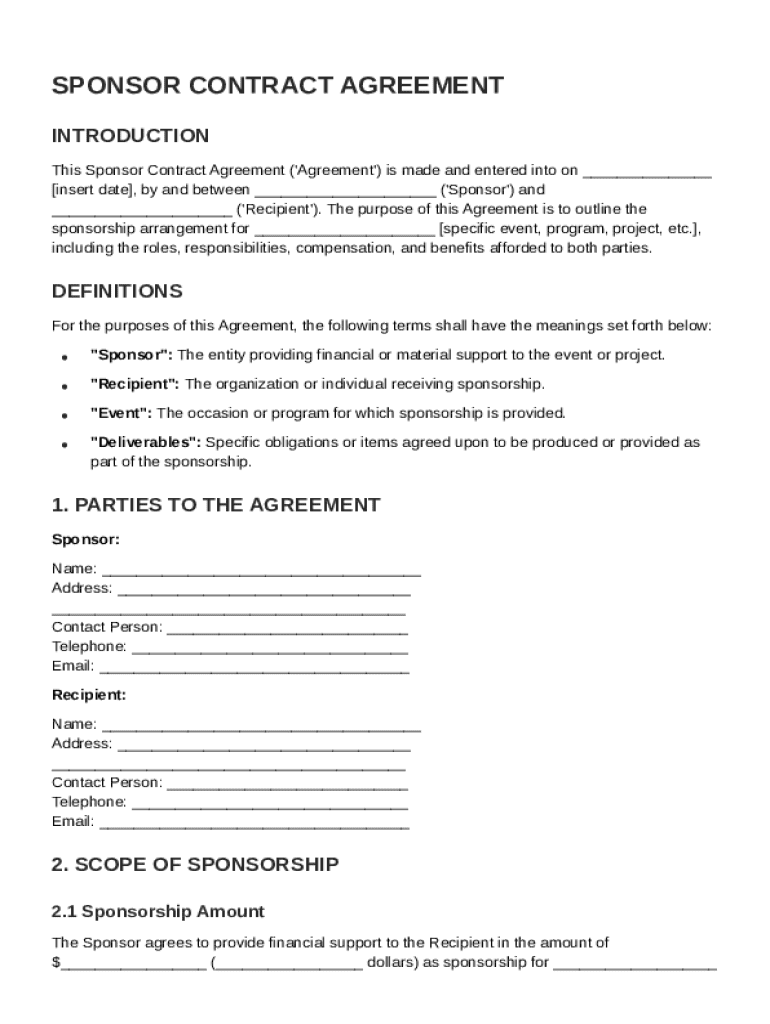
The Sponsor Contract Template serves as a foundational document that formalizes the terms of sponsorship agreements between a Sponsor and a Recipient. By clearly delineating each party's roles and responsibilities, the template ensures a mutual understanding, preventing potential disputes. This template specifies the financial contributions, promotional activities, and recognition obligations both entities must fulfill. Moreover, it incorporates confidentiality clauses, termination conditions, and dispute resolution methodologies, providing a comprehensive legal framework. For instance, a company sponsoring a charity event might use this template to ensure tangible support and promotional goals are met, while maintaining legal protections.
Common Scenarios and Examples
- Charity Events: Organizations often collaborate with sponsors to fund charitable events. The template includes specifics on financial support, promotional obligations, and rights to use logos and brand materials.
- Educational Programs: Schools or colleges may obtain sponsorships for events or scholarship programs. This document outlines how sponsor contributions will be acknowledged and utilized.
- Sports Sponsorships: Sports teams frequently require clear agreements to secure funding and endorsements from companies, detailing branding and media engagement plans.
How to Use the Sponsor Contract Template
Effectively utilizing a Sponsor Contract Template involves a few strategic steps to tailor it to specific sponsorship needs. Start by gathering detailed information about both the sponsoring and recipient parties, such as organizational goals, event details, and financial structures. Next, carefully review the template to ensure clarity and mutual understanding on conditions like contribution timelines, promotional obligations, and legal terms.
Steps for Customizing
- Identify Key Parties: Clearly define the Sponsor and Recipient entities, including key stakeholders.
- Outline Contributions: Specify monetary or in-kind contributions and how they will be utilized.
- Detail Promotional Activities: Describe how each party will fulfill marketing and promotional obligations.
- Set Legal Parameters: Include clauses for confidentiality, intellectual property usage, and liability limits.
- Review Termination Terms: Discuss the conditions under which the contract can be dissolved.
Key Elements of the Sponsor Contract Template
A well-structured Sponsor Contract Template consists of several critical elements that collectively define the obligations and expectations of both parties.
Main Components
- Financial Obligations: Specifics on amount, timing, and method of sponsorship payment.
- Promotional Duties: Agreed-upon activities for promoting both the Sponsor and Recipient.
- Confidentiality Clauses: Rules for keeping sensitive information private.
- Liability and Indemnification: Allocation of legal responsibility in case of breaches.
Detailed Considerations
- Recognition: Clear terms on how the Sponsor will be acknowledged in communications and events.
- Duration: Contract validity period and any provisions for extensions.
- Amendment Process: Guidelines for making changes to the contract post-signing.
Legal Context and Compliance of Sponsor Contracts
Navigating the legal landscape is crucial in drafting and executing a sponsor contract. These agreements need to comply with both federal and state laws, especially in terms of contract enforcement and dispute resolution.
Federal and State Law Compliance
- Federal Laws: Adherence to the ESIGN Act for electronic signatures and agreements.
- State Regulations: Different states may require modifications to confidentiality or termination clauses based on local law.
Important Legal Clauses
- Jurisdiction: Specify which state’s law will govern the contract.
- Dispute Resolution: Include arbitration or mediation clauses to handle potential conflicts amicably.
Steps to Complete the Sponsor Contract Template
Completing the Sponsor Contract Template effectively requires a methodical approach with cross-verifications from both parties involved to ensure all terms meet their expectations and legal standards.
Step-by-Step Process
- Initial Drafting: Populate the template with basic information regarding the event/program/project.
- Consultation: Seek legal advice to tailor the document to your specific situation and ensure compliance.
- Review and Negotiate: Exchange drafts between parties to refine terms and iron out potential disagreements.
- Finalization: Both parties sign the agreement, ensuring all electronic or physical copies are appropriately executed.
Business Types That Benefit Most from Sponsor Contract Templates
Different business types can leverage Sponsor Contract Templates to optimize partnership strategies and secure beneficial agreements.
Beneficiary Business Models
- Non-Profit Organizations: Secure sponsorship for fundraising and awareness events.
- Entertainment Firms: Partner with brands for event promotions and productions.
- Start-Ups and Tech Firms: Engage with larger companies for sponsorship that aids market visibility.
Differences Between Digital and Paper Versions
The choice between a digital and a paper version of a Sponsor Contract Template impacts efficiency, accessibility, and security.
Key Differences
-
Digital Version:
- Pros: Easier sharing, electronic signatures, real-time collaboration.
- Cons: Requires digital literacy and software compatibility.
-
Paper Version:
- Pros: Tangible proof of agreement, no tech dependence.
- Cons: Potential for slower processing times and storage issues.
Who Typically Uses the Sponsor Contract Template
Understanding who commonly employs Sponsor Contract Templates can provide insights into its adoption and utility across various sectors.

User Profiles
- Event Organizers: Professionals managing corporate or non-profit events that require financial backing.
- Marketing Professionals: Those involved in creating promotional strategies spanning multiple platforms.
- Legal Counsels: Advisors who ensure that sponsorship agreements align with legal standards and organizational goals.