






Definition and Purpose
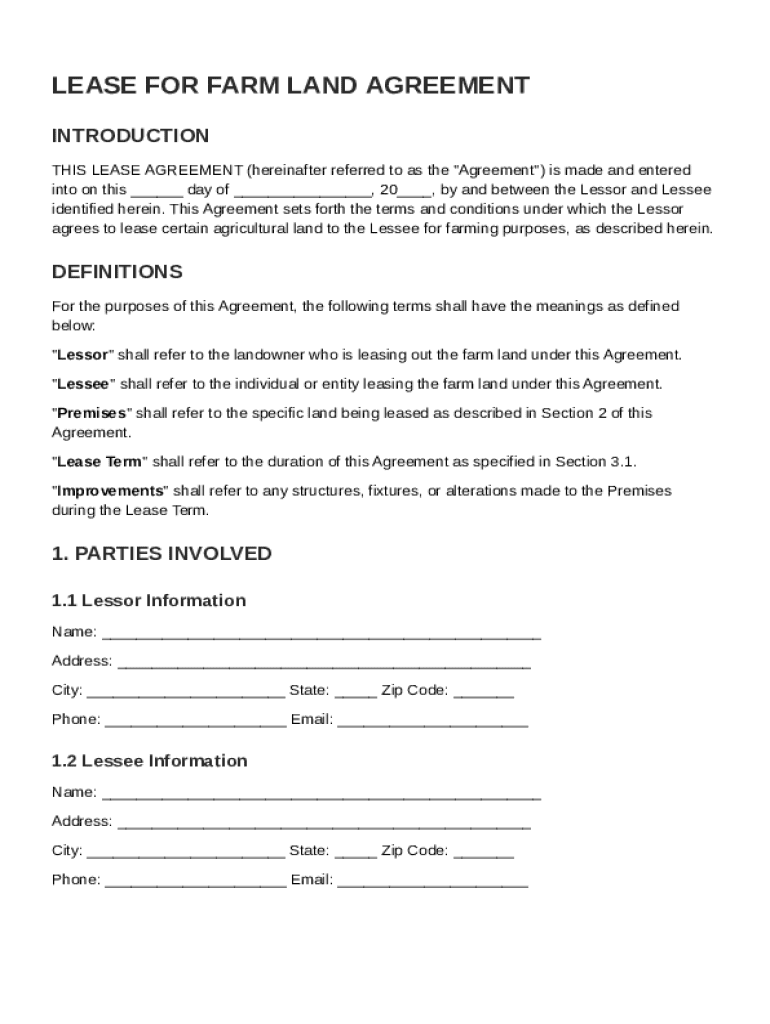
The Lease for Farm Land Agreement Template is a legal document that facilitates the leasing arrangement between a landowner, referred to as the Lessor, and a farmer or entity, known as the Lessee. This agreement outlines the terms under which the farmland will be used, helping to formalize the relationship and ensure mutual understanding of each party's responsibilities. Common elements of this template include the description of the leased land, duration of the lease, rental terms, use restrictions, and provisions for modifications.
Importance of Defining Roles
- Lessor: Typically the owner of the land who grants leasing rights to the Lessee. The Lessor retains ownership but provides usage rights under specific conditions.
- Lessee: The individual or entity granted the right to use the land for agricultural purposes. The Lessee is responsible for adhering to lease terms and maintaining the land in good condition.
Understanding these roles helps avoid disputes and provides a clear framework for accountability.
How to Use the Lease for Farm Land Agreement Template
Utilizing the Lease for Farm Land Agreement Template involves several key steps tailored to your specific needs and legal requirements. The process starts by downloading the template from a reliable source.
Customization and Personalization
- Identify Parties Involved: Fill in details about both the Lessor and Lessee, including names and contact information.
- Describe the Premises: Clearly outline the size, location, and boundaries of the property involved in the lease.
- Set Lease Term: Define the start and end dates of the lease, including options for renewal or termination clauses.
By customizing these areas, users can tailor the template to fit specific agricultural practices and legal conditions.
Key Elements of the Lease for Farm Land Agreement Template
The template is structured to include essential components that legally bind both parties and ensure proper use of farmland.
Main Clauses
- Rental Amount and Payment Schedule: Specifies the agreed-upon rent and its frequency (e.g., monthly, quarterly).
- Use of Property: Details permissible uses, ensuring the land is only utilized for agreed-upon agricultural activities.
- Maintenance and Repairs: Outlines responsibilities each party has regarding land upkeep and infrastructure.
Including these clauses is vital for the financial and operational clarity of the lease arrangement.
Legal Use and Compliance
The Lease for Farm Land Agreement Template must adhere to relevant federal and state laws to be enforceable. It's crucial to ensure the agreement complies with property and lease regulations.
State-Specific Legislation
Land leases often vary based on regional laws concerning agricultural use, environmental protection, and zoning. Users should adapt the template according to the state's legal requirements where the farmland is located.
Compliance Measures
- Governing Law: The lease should specify which state's laws govern the agreement.
- Amendments and Addenda: Procedures for making lawful modifications to the lease should be included.
By addressing these legal considerations, the agreement remains valid and enforceable.
Steps to Complete the Lease for Farm Land Agreement Template
Completing the Lease for Farm Land Agreement Template involves a straightforward process to ensure clarity and legality.
Step-by-Step Guide
- Gather Information: Obtain full details about the Lessor, Lessee, and property.
- Draft the Lease: Use the template to draft the lease, ensuring all sections are accurately filled in.
- Review and Verify: Check all details for accuracy, and if necessary, engage legal counsel for verification.
This structured approach minimizes errors and enhances the agreement's enforceability.
Important Terms Within the Template
Understanding key terms within the Lease for Farm Land Agreement Template helps ensure both parties are fully informed and the lease is executed as intended.
Common Terms
- Indemnity: A provision whereby one party agrees to protect the other from certain losses or liabilities.
- Force Majeure: Clauses that free parties from liability or obligation due to unforeseeable events.
Each term serves a practical purpose by defining the rights and duties of the involved individuals or entities.
State-Specific Rules for Lease Agreements
Lease agreements may be subject to state-specific guidelines that influence how these arrangements can be formulated and enforced.
Examples of State Variations
- Zoning Restrictions: Certain states maintain specific zoning laws impacting agricultural leases.
- Land Use Regulations: Different rules may apply concerning crop types or environmental conservation practices.
Awareness of these variations ensures that lease agreements remain compliant and mitigate potential legal conflicts.
Examples of Lease for Farm Land Agreement Utilization
Real-world application of the Lease for Farm Land Agreement Template highlights its versatility across different farming contexts.
Case Studies
- Organic Farming Lease: A Lessor leases land for organic farming; the agreement includes specific clauses about pesticide usage.
- Livestock Grazing Lease: A rancher enters a lease focused on pastureland, detailing livestock capacity and maintenance duties.
These examples demonstrate the customizable nature of such leases, accommodating diverse agricultural purposes.